

China, Shenzhen: Shenzhen Technology University
Exchange programme: when to apply?
Applications for the exchange programme for a stay abroad in Non-EU countries (exception: North America) in the following year are due in May/June.
For the current call for applications please visit our website or check out our Study abroad newsletter.
Links & Downloads
-
 Shenzhen University of Technology Factsheet
 -
 School of Artificial Intelligence, Shenzhen Technology University Information leaflet
China, Shenzhen: Shenzhen Technology University
-
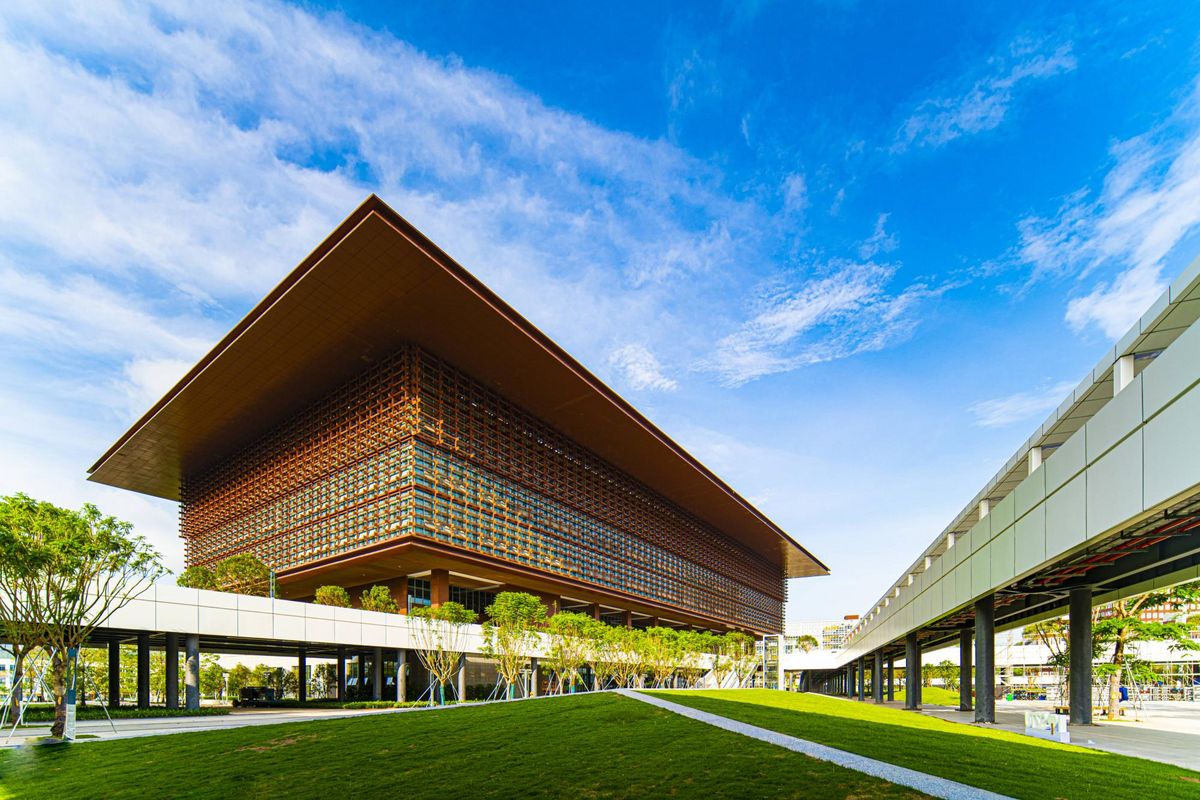
Shenzhen Technology University: https://english.sztu.edu.cn/ABOUT/Infrastructure/1.htm -

Shenzhen Technology University: https://english.sztu.edu.cn/ABOUT/Infrastructure/1.htm -

Shenzhen Technology University: https://english.sztu.edu.cn/ABOUT/Infrastructure/1.htm -

Shenzhen Technology University: https://english.sztu.edu.cn/ABOUT/Infrastructure/1.htm -

Shenzhen Technology University: https://english.sztu.edu.cn/ABOUT/Infrastructure/1.htm -

Shenzhen Technology University: https://english.sztu.edu.cn/ABOUT/Infrastructure/1.htm

Application
Students from all disciplines at Bachelor’s and Master’s level (at least the third semester of their Bachelor’s degree) are eligible to apply. The programme is taught primarily in English, but also (if desired) in Chinese. The academic focus of the exchange is on Computing Science, but students from other subjects may also apply for an exchange. Proof of language skills in English (B2) is required. SZTU’s academic calendar generally follows the national university calendar, starting in September and ending in January or March to July.
Degree course
Shenzhen Technology University (SZTU) is a state-funded university in the Pingshan District of the Chinese megacity of Shenzhen (Guangdong Province), which was officially approved by the Chinese Ministry of Education in 2018. The university was founded with the aim of adapting the model of internationaluniversities of applied sciences – particularlythose based on the German and Swiss models – to the Chinese higher education system.
Following the admission of its first regular students in 2019, the student body now (as of 2026) comprises around 16,200 students (approximately 14,900 at undergraduate level and approximately 1,290 at postgraduate level). The academic programme is organised into 17schools offering a total of 40 Bachelor’s degree programmes. The curriculum focuses on application-oriented disciplines such as engineering, information technology, materials science, mechatronics, semiconductor technology, economics and design.
Teaching is strongly practice- and industry-oriented. SZTU maintains partnerships with over 260 industrial companies (including regionally based corporations such as BYD, Tencent and Huawei) to firmly integrate laboratory work, industrial projects and internships into the curricula.
The language of instruction in the regular degree programmes is predominantly Chinese. For international and exchange students, there are many selected English-taught modules as well as language courses in Chinese as a foreign language.
Everyday life
Student life in Shenzhen differs greatly from that in more traditional Chinese university towns. As the country’s most modern high-tech metropolis, the city offers an extremely international and dynamic infrastructure.
Until 1980, the region around Shenzhen was a border town characterised by fishing and agriculture, with a population of around 30,000. Following its designation as China’s firstSpecial Economic Zone in 1980, the city experienced historically unprecedented growth. Within four decades, Shenzhen developed from a manufacturing hub into Asia’s leading technology and innovation metropolis (‘China’s Silicon Valley’). The number of registered residents now stands at over 18 million (over 20 million in the wider metropolitan area).
As aTier 1 metropolis, Shenzhen is one of the more expensive cities in China. However, compared with many major cities in Western Europe, living costs for students – particularly when staying in campus accommodation – remain manageable. You should expect to pay around 500–700 EUR per month for a place in campus halls of residence. If you opt for a private flat, the cost rises slightly to around 700–900 EUR.
Formalities & Useful Information
Once you have received your admission letter, you can apply for a student visa (Type X1) at the Chinese Embassy in Germany. This visa is valid for more than 180 days. To do this, you will need your letter of acceptance, a visa application form, your passport, a passport-sized photograph and possibly other documents, depending on the requirements of the Chinese authorities.
Please also note that you must register officially within the first 30 days of your stay in China.
As part of a semester abroad, you are required to provide proof of health insurance. This must cover medical costs in China.
Transferring relevant credits for your studies in Germany is easy via the Academic Examinations Office of the University of Oldenburg. Information on credit transfer for studying in Oldenburg