

Monitoring

Monitoring
The development of non-invasive methods for monitoring the seabed
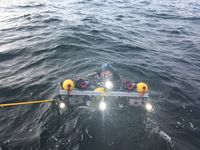
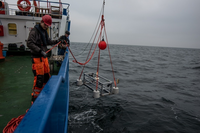

The aim of this project is to develop non-invasive monitoring methods to investigate the population density and species composition of fish and invertebrate communities and sessile epifauna in the Natura 2000 areas around the Sylt Outer Reef, the Borkum Reef Ground and the Dogger Bank. In addition, the aim is to determine how these population sizes and species compositions change if the Natura 2000 areas are excluded from mobile bottom fishing. These newly developed or adapted methods will complement traditional monitoring methods to detect changes in benthic communities in response to established no-fishing zones.
We will deploy baited remotely operated underwater video stations (BRUVs) with stereo cameras to survey fish and invertebrate communities. Stereo BRUVs are not only able to record species abundance, but also to determine the size of individuals and their biomass. In addition, we will conduct video transects via dives to assess the sessile epifauna communities and how they will recover after the ban on bottom trawling. We will also deploy autonomous reef monitoring structures (ARMS). These standardised 3D structures mimic the complex structure of seabed habitats and will be used to assess how hidden reef communities respond to different management measures.
see MGF-North Sea