

The marine habitats
Dr Sven Rohde
Phone: +49-(0)4421-944-215
Fax: +49-(0)4421-944-140
Email:
Location:
ICBM Terramare
Schleusenstraße 1
26382 Wilhelmshaven
Germany
Location/Approach
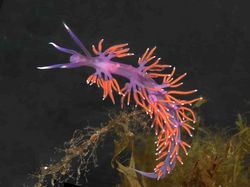

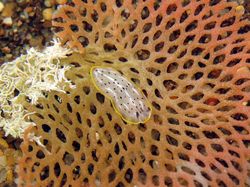
The marine habitats
Marine ecosystems are generally divided into the two habitats benthic and pelagic.
The benthal (gr. benthos = depth) includes all habitats of the sea floor, whereas the pelagial (gr. pelagos = open sea) refers to the open water area of a body of water or the entirety of all habitats in the open water zone. A common feature of pelagic and benthal is their bathymetric division into different zones along their vertical extent.
Subdivision of the habitats
With increasing depth, the benthal is subdivided into the littoral, bathyal and abyssal (and hadal).
The littoral zone (littoral) is further subdivided into supra-, medio-, infra- and circalittoral.
This zonation is explained in the entry on hard bottoms. The bathyal is the part of the seabed between 200 and 2,000 metres deep. The abyssal covers depths from 2,000 to 6,000 metres.
As the trueabyssal plains only begin at a depth of 4,000 metres, only a few places in the Mediterranean can be considered abyssopelagic. Characteristic isotherms of the deep sea, which occur at around 3 °C, are not found there. Nevertheless, many places are categorised as abyssal. Although there are deep-sea trenches in the Mediterranean, these are not categorised as hadal (deep-sea trenches below 6,000 m, some with steeply sloping walls). The deepest known point in the world ocean to date, the Witja Deep 1 in the Mariana Trench of the Pacific Ocean, is 11,034 metres deep. To the west of the Peloponnese in the Hellenic Trench lies the Calypso Deep, the deepest point in the Mediterranean with a depth of 5,267 metres.
The somewhat inconsistent terminology of the littoral also includes the terms eulittoral (intertidal zone) and sublittoral. The latter describes the area from the low water line to the lower limit of the euphotic zone.
The pelagic is divided vertically into epi-, meso-, bathy- and abyssopelagic (and hadopelagic) depending on the amount of light available. The zonation is explained in the entry on Pelagial.
Special features of the Mediterranean
- Relatively low in nutrients
- Negative water balance (compensated by inflows at Gibraltar and the Bosporus)
- High salt content
- Varying salinity (increase from west to east from around 36 to over 39.5 psu)
- High deep water temperature (13°C on average)
- Low tidal range