
Energy information systems project group
Energy information systems project group
The aim of the "Energy Information System" project group is to design and develop an information system for planning energy production and distribution. To this end, new developments in the energy sector are taken up and taken into account in the implementation. The increasing liberalisation of the market is decisive for the changes currently taking place in the energy sector. For the former monopoly companies, a competitive situation is emerging in which the economic planning of energy procurement and distribution is becoming a decisive competitive advantage (see section on liberalisation).
Planning is also made more difficult by the growing number of decentralised energy generation plants, such as wind turbines or photovoltaic systems. Energy production with these plants is generally dependent on the weather, meaning that they cannot be controlled as precisely as traditional coal or nuclear power plants (see section on decentralisation).
Liberalisation
The first step towards liberalisation of the energy market was taken in Germany with the revision of the Energy Industry Act. It obliges supply companies to transport energy from other electricity providers through their grid. The companies can charge a usage fee for this. The Act made it possible for the first time for energy providers to offer their product nationwide, thus creating competition. This led to increased cost pressure in the area of energy generation.
In contrast, the cost pressure in the area of energy distribution is currently still low, as there is still a territorial monopoly for the operation of the grid. Thanks to their monopoly position, the operators can refinance the costs of their energy network through the utilisation fees paid by the energy producers. However, this monopoly area will be subject to stricter cost control in future. The 2nd amendment to the Energy Industry Act passed on 17 June 2005 provides for detailed regulations on determining the costs of an energy network. In particular, it also regulates the calculation of usage fees and requires operators to rationalise the management of their network. This will also increase the cost pressure on energy grid operators in the future.
Decentralisation
In addition to the new market economy requirements, further technical challenges arise for grid operators, for example as a result of the "Act on the Prioritisation of Renewable Energies". It stipulates that energy from renewable sources must be prioritised by the grid operators for the general power supply. This leads to a reorganisation of the existing grid.
On the one hand, the number of energy generation plants that are integrated into the grid is increasing. In the area of wind power, which accounts for a large proportion of renewable energy sources, the number of installations has been increasing for years.
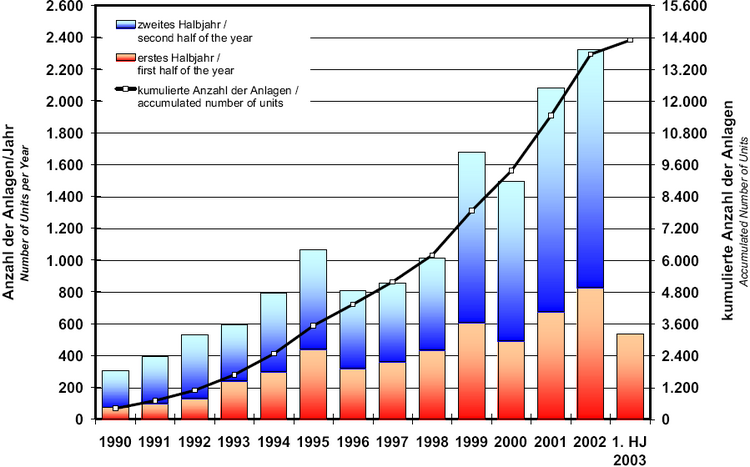
On the other hand, the grid level at which the energy is fed in also changes. The energy grid is categorised into four different grid levels based on the voltage used: the
- Extra-high voltage grid (220 - 380 kV),
- High-voltage grid (50 - 150 kV),
- medium-voltage grid (10 - 30 kV) and
- low-voltage grid (230 - 400 V).
The energy is generally transmitted from a higher grid level to the levels below and transported through the increasingly finely meshed grid levels to the end consumer. Households and smaller companies are typically connected to the low-voltage grid. Depending on their energy requirements, medium-sized and large industrial companies are also connected to the medium-voltage or high-voltage grid.
Traditional energy producers, such as coal or nuclear power plants, are usually connected to the high or extra-high voltage grid. Energy from renewable sources, on the other hand, is usually fed into the lower grid levels. This is also where some of it is withdrawn by households.
The hierarchically organised grid, which transports the generated energy from a few power plants to the consumers, is thus transformed into a highly meshed grid in which the energy flows between numerous consumers and producers.