
Tasks carried out by a simulation patient
Tasks carried out by a simulation patient
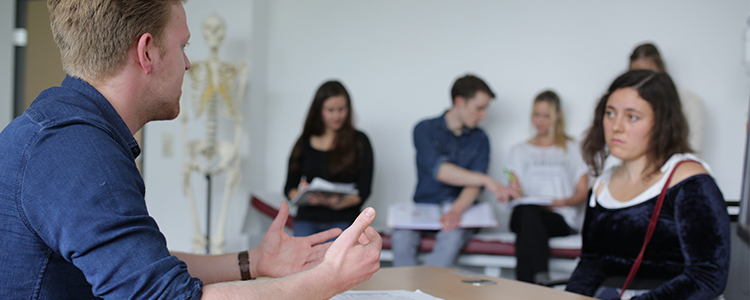
What exactly does a simulation subject do?
An open-minded attitude, empathy, enthusiasm and a sense of responsibility are essential qualities that a simulation patient must possess. The role of a simulation patient involves not only portraying a patient; rather, they must also be able to provide constructive feedback following a consultation with the students. On the one hand, therefore, a simulation patient must play a role, incorporating the specified complaints and the psychosocial background that we all bring with us when we attend a doctor’s consultation; on the other hand, they must also take note of details during the consultation that will subsequently form part of feedback that is as specific as possible.
In which teaching formats are simulation patients used?
During the initial consultation, communication skills are combined with specialist knowledge. Depending on the clinical presentation, a physical examination may also be carried out.
Assignments with different focuses, for example:
- Delivering serious news
- Dealing with aggressive patients
- Dealing with suicidal patients
- End-of-life care
- Dealing with hypochondriac patients
- Discussions with relatives
- Informative discussions
Interprofessional collaboration
SPs are also used in examinations where a high degree of standardisation is required to ensure equal opportunities for students. In so-called OSEs (Objective Structured Clinical Examinations), skills in physical examinations are assessed, as are clinical communication skills and professional conduct during emergency simulations.