
OER for students and teachers

Contact
Project leader
Management team (advisory board)
Project coordination
Student assistants
Project evaluation
Academic support for participation
Scientific support development area 2
Digital support programmes
Teaching Lab
Learning Lab
Open Educational Resources (OER)
AskOne portal (sub-project has been completed)
OER for students and teachers
OpenEducational Resources (OER) are seen as the key to a change towards equal opportunities in education. The project aims to use these to make it easier for students to start and complete their studies.
The OER are aimed at students for self-study, but also at lecturers who can use the materials for their courses. All OER from the project are published under the CC BY 4.0 licence and are released for use and further processing.
The following materials are already available:
Let's Talk about Racism by S. M. Gerhards, N. Ellerich-Groppe and M. Schweda
- Simon M. Gerhards, Niklas Ellerich-Groppe and Mark Schweda (2025) for participate@UOL
- licenced under CC BY 4.0 (for the learning unit)
- published in October 2025
Description
Racism in medicine and healthcare has not yet been systematically addressed in medical studies. At the same time, students repeatedly experience that teachers also have problems teaching the topic in a differentiated way.
Since dealing with racism in medicine and healthcare is often accompanied by negative feelings, defence and other difficulties, we recommend carefully embedding the video material (see below) in a racism-critical learning unit and also ensuring that participants are provided with support and contact points in the event of experiences of racism. The following description of the digital asynchronous learning unit "Let's Talk about Racism" is intended to provide suggestions for integrating the video material into a learning unit in this way. The interactive digital learning environment described here is currently being evaluated, revised and will probably also be published as an OER at a later date.
The video material "Let's Talk about Racism" (Gerhards et al., 2025) published in parallel as OER is intended to encourage self-reflection on the personal and professional imprints that influence one's own approach to racism in medicine and healthcare.
Materials
Learning unit "Let's Talk about Racism" (available at twillo.de)
Video material: Simon M. Gerhards, Niklas Ellerich-Groppe and Mark Schweda (2025). Let's talk about Racism - Video material for racism-critical teaching in human medicine studies.
Licensed under CC BY-SA 4.0. https://doi.org/10.5446/71560
Maths self-test by J. Peters and H. Schencke
- by J. Peters and H. Schencke on behalf of the student body Computing Science for participate@UOL
- licenced under CC BY 4.0
- published in October 2025
Description:
This is a useful self-test for enrolment in the BSc Computing Science programme at the University of Oldenburg. It is designed for prospective students who want to test how suitable their maths skills are for studying computer science. For this purpose, the maths lecturers of the relevant modules were asked what they would like first-year students to know. In addition, the core curriculum of the sixth form and the cosh minimum requirements catalogue for mathematics were consulted. This resulted in this collection of tasks.
The test is designed to help assess whether and where there are gaps in knowledge.
All you need is a pen and paper to complete some of the tasks and then enter the solution online. (...)
The browser's print function can be used to take the results with you at the end of the test - they can be saved as a PDF and brought to a tutorial, for example.
Click here to go directly to the self-test.
Target group
Prospective students who are interested in studying Computing Science at UOL as well as students of Computing Science in their first semesters.
Language
German
Credits - we appreciate the use of this OER at
J. Peters and H. Schencke on behalf of the student body Computing Science for participate@UOL (2025). Maths self-test. Licensed under CC BY 4.0.
For reusers
All files of the OER - on request by email to:
AI guide: Briefly explained: The checklist for the authorised use of AI systems
- by S. Schorer and J. Horn for participate@UOL
- licenced under CC BY 4.0
- published in November 2025
Description:
This AI guide is about data protection and copyright in the use of AI. What is data protection and copyright? What aspects need to be considered when using AI systems? You can find out in this episode of the AI guide based on the checklist for the admission of AI systems.
The following materials are also available to accompany this explanatory video:
The AI guide was created as part of the participate@UOL project at the University of Oldenburg.
We would be pleased if it could be reused under the following conditions: Horn, J. and Schorer, S. for participate@UOL (2025). Briefly explained: The checklist for the permissible use of AI systems. Licensed under CC BY 4.0. With marked exceptions, the materials are licenced under CC BY 4.0.
The video is also available with German subtitles. We also provide transcription files (incl. slides).
The Video is also available with german subtitles.
If you are interested in additional files to these OER, please contact us at (AP Susanne Schorer).
If you are interested in additional files to these OER, feel free to contact (contact Susanne Schorer).
Zielgruppe/Target Group:
Students at UOL, lectures and other interessted people.
Students at UOL, lectures and other interessted people.
Sprache/ Language:
Video in German, Transcript including slides is available
Video in German. Transcript including slides is available.
Credits:
We are happy if you reuse these OER with the following credits:
We are happy if you reuse these OER indicating:
- Video : Horn, J. and Schorer, S. for participate@UOL (2025). Briefly explained: The checklist for the admissible use of AI systems. With marked exceptions, the materials are licenced under CC BY 4.0.
- Transcript incl. slides: Horn, J. & Schorer, S. for participate@UOL (2025). Transcript with additional materials for the video "Briefly explained: The checklist for the admission of AI systems", licenced under CC BY 4.0.
AI guide: Learning with AI
- by S. Schorer and E. V. Keding for participate@UOL
- licenced under CC BY 4.0
- published in October 2025
Description:
This AI guide describes the many ways in which AI can be used in learning, especially in the context of studying. It also emphasises that the results of AI are not always reliable and need to be checked. Nevertheless, when used efficiently, AI can be an aid to learning, e.g. for structuring. In addition, learning with an AI is different from learning with fellow students.
The following additional materials are available for this explanatory video:
The AI guide was created as part of the participate@UOL project at the University of Oldenburg.
We are happy about a re-use under the following conditions: Schorer, S. and Keding, E. V. for participate@UOL (2025). Learning with AI. Basic knowledge. Licensed under CC BY 4.0. With marked exceptions, the materials are licensed under CC BY 4.0.
The video is also available with German subtitles. We also provide transcription files (incl. slides).
The Video is also available with german subtitles.
If you are interested in additional files to these OER, please contact us at (AP Susanne Schorer).
If you are interested in additional files to these OER, feel free to contact (contact Susanne Schorer).
Zielgruppe/Target Group:
Students at UOL, lectures and other interessted people.
Students at UOL, lectures and other interessted people.
Sprache/ Language:
Video in German, Transcript including slides is available
Video in German. Transcript including slides is available.
Credits:
We are happy if you reuse these OER with the following credits:
We are happy if you reuse these OER indicating:
- Video (with and without subtitles): Schorer, S. and Keding, E. V. for participate@UOL (2025). Learning with AI. Basic knowledge. Licensed under CC BY 4.0. Apart from labelled exceptions, the materials are licensed under CC BY 4.0.
- Transcript incl. slides: Schorer, S. & Keding, E. V. for participate@UOL (2025). Transcript with additional materials for the video "Learning with AI - basic knowledge", licenced under CC BY 4.0.
AI guide: Applying with AI
- by S. Schorer and V. Dierks for participate@UOL
- licenced under CC BY 4.0
- published in October 2025
Description:
This AI guide deals with a topic that will become interesting at the latest at the end of your studies: applying with AI. It looks at what makes a good application, where AI can provide support and where it cannot. Both the applicant and the employer side are examined and tips for an AI-friendly application are given.
The following materials are also available to accompany this explanatory video:
The AI guide was created as part of the participate@UOL project at the University of Oldenburg.
We are happy about a re-use under the following conditions: Schorer, S. and Dierks, V. for participate@UOL (2025). Applying with AI. Basic knowledge. Licensed under CC BY 4.0. Apart from marked exceptions, the materials are licenced under CC BY 4.0.
If you are interested in additional files to these OER, feel free to contact us at (contact Susanne Schorer).
If you are interested in additional files to these OER, feel free to contact (contact Susanne Schorer).
Zielgruppe/Target Group:
Students at UOL, lectures and other interessted people.
Students at UOL, lectures and other interessted people.
Sprache/ Language:
Video in German, transcript with slides in German u available
Video in German. Transcript including slides is available.
Credits:
We are happy if you reuse these OER with the following credits:
We are happy if you reuse these OER indicating:
- Video (with and without subtitles): Schorer, S. and Dierks, V. for participate@UOL (2025). Applying with AI. Basic knowledge. Licensed under CC BY 4.0. With marked exceptions, the materials are licensed under CC BY 4.0.
- Transcription (incl. slides) in German: Bruns, Patrick for participate@UOL (2025). Transcript with additional materials for the video "Bewerben mit KI", licenced under CC BY 4.0.
AI guide: 5 tips for effective prompting
- by S. Schorer and W. J. Legtenborg for participate@UOL
- licenced under CC BY 4.0
- published in October 2025
Description:
This AI guide is about prompting. What is prompting? How do I get good answers from AI? After explaining what prompting is, five tips for effective prompting are given that can improve your AI results.
The following materials are also available to accompany this explanatory video:
The AI guide was created as part of the participate@UOL project at the University of Oldenburg.
We are happy about a re-use under the following conditions: Schorer, S. and Legtenborg, W. J. for participate@UOL (2025). 5 tips for effective prompting. Basic knowledge. Licensed under CC BY 4.0.
If you are interested in additional files to these OER, feel free to contact us at (contact Susanne Schorer).
If you are interested in additional files to these OER, feel free to contact us at (contact Susanne Schorer).
Zielgruppe/Target Group:
Students at UOL, lectures and other interessted people.
Students at UOL, lectures and other interessted people.
Sprache/ Language:
Video in German, Transcript including slides is available in German
Video in German. Transcript including slides is available.
Credits:
We are happy if you reuse these OER with the following credits:
We are happy if you reuse these OER indicating:
- Video (with and without subtitles): Schorer, S. and Legtenborg, W. J. for participate@UOL (2025). 5 tips for effective prompting. Basic knowledge. Licensed under CC BY 4.0. With marked exceptions, the materials are licensed under CC BY 4.0.
- Transcription (incl. slides) in German: Transcript incl. slides: (to follow): Bruns, Patrick for participate@UOL (2025). Transcript with additional materials for the video "Literature research with AI", licenced under CC BY 4. 0.
AI Guide: Literature research with AI
- by S. Schorer and W. J. Legtenborg for participate@UOL
- licenced under CC BY 4.0
- published in October 2025
Description:
This episode of the AI guide on the topic of literature research with AI first shows you what makes a good literature search. This foundation is essential before a literature search can be carried out both with and without AI. We then go on to discuss whether and how AI can support literature research. Depending on the subject area and individual interests, the support can be very diverse.
The following additional materials are available for this explanatory video:
The AI guide was created as part of the participate@UOL project at the University of Oldenburg.
We are happy about a re-use under the following conditions: Schorer, S. and Legtenborg, W. J. for participate@UOL (2025). Literature research with AI. Basic knowledge. Licensed under CC BY 4.0. With marked exceptions, the materials are licensed under CC BY 4.0.
If you are interested in additional files to these OER, feel free to contact us at (contact Susanne Schorer).
If you are interested in additional files to these OER, feel free to contact (contact Susanne Schorer).
Zielgruppe/Target Group:
Students at UOL, lectures and other interessted people.
Students at UOL, lectures and other interessted people.
Sprache/ Language:
Video in German, Transcript including slides is available in German
Video in German. Transcript including slides is available.
Credits:
We are happy if you reuse these OER with the following credits:
We are happy if you reuse these OER indicating:
- Video (with and without subtitles): Schorer, S. and Legtenborg, W. J. for participate@UOL (2025). Literature research with AI. Basic knowledge. Licensed under CC BY 4.0. With marked exceptions, the materials are licenced under CC BY 4.0.
- Transcription (incl. slides) in German: Bruns, Patrick for participate@UOL (2025). Transcript with additional materials for the video "Literature research with AI", licenced under CC BY 4. 0.
AI guide: Transcribing with AI
- by S. Schorer and W. J. Legtenborg
- licenced under CC BY 4.0
- published in October 2025
Description:
In this AI guide, we present NoScribe, a tool for transcribing audio files such as interviews. NoScribe is data protection compliant and can be installed on your own computer. We briefly describe the range of functions and highlight the advantages and disadvantages.
The following materials are also available to accompany this explanatory video:
We would be pleased if you could reuse the video with the following information: Schorer, S. and Legtenborg, W. J. for participate@UOL (2025). Transcribing with AI. Basic knowledge. Licensed under CC BY 4.0. With marked exceptions, the materials are licensed under CC BY 4.0.
If you are interested in additional files to these OER, feel free to contact us at (contact Susanne Schorer).
If you are interested in additional files to these OER, feel free to contact us at (contact Susanne Schorer).
Zielgruppe/Target Group:
Students at UOL, lectures and other interessted people.
Students at UOL, lectures and other interessted people.
Sprache/ Language:
Video in German, Transcript including slides is available
Video in German. Transcript including slides is available.
AI guide: How can I register with Chat-AI? by S. Schorer
- by Susanne Schorer for participate@UOLlicensed under CC BY 4.0
- published in June 2025
- with update from September 2025
Description:
The video shows how to log in to the chatbot of the Academic Cloud, Chat-AI.
Click here to go directly to the Academic Cloud, further information on Chat-AI is available here.
The Academic Cloud is currently working intensively on Chat-AI and other GKI offerings, so the screenshots shown may differ from the current version. The registration process remains the same.
Target group:
Students and other users of the Academic Cloud and its tools.
Credits:
We appreciate the use of this OER under the following credits:
Schorer, S. for participate@UOL (2025): How can I register for Chat-AI? Basic knowledge. Licensed under CC BY 4.0.
Video "AI at the UOL. What you should know!" by S. Schorer, P. Bruns and W. J. Legtenborg
The same video with subtitles (German)
- by S. Schorer, P. Bruns and W. J. Legtenborg for participate@UOL
- licenced under CC BY 4.0
- published in December 2024
Description:
This video from the participate@UOL project provides an overview of the use of (generative) AI at the University of Oldenburg and is aimed at students and other interested parties. It explains what AI tools such as ChatGPT can do, where their limits lie and how they can be used sensibly in everyday university life, for example in learning, to create exercises or to improve texts. It also sheds light on why AI cannot replace search engines and what potential risks, such as so-called "hallucinations", can occur when using it. It also explains why using a university email address for AI tools is problematic and which sensitive data should never be entered. In addition, it is shown that the rules for the use of AI in examinations are determined individually by the lecturers. It therefore emphasises why it is important to consult in advance and avoid misunderstandings. At the end, references to contact persons and links to further information are provided.
The video is also available with German subtitles. We also provide transcription files (incl. slides) in German and English.
The Video is also available with German subtitles.
Files available for Download:
- Video ohne Untertitel, German (s. oben)/ Video without subtitles, in german (see above)
- Video mit deutschen Untertiteln / Video with German subtitles (see above)
- Transcription (incl. slides) in German
- Transcription (incl. slides) in English
If you are interested in additional files to these OER, feel free to contact us at (contact Susanne Schorer).
If you are interested in additional files to these OER, feel free to contact (contact Susanne Schorer).
Zielgruppe/Target Group:
Students at UOL, lectures and other interessted people.
Students at UOL, lectures and other interessted people.
Sprache/ Language:
Video in German, transcript with slides available in German and English
Video in German. Transcript including slides is both in german and english available.
Credits:
We are happy if you reuse these OER with the following credits:
We are happy if you reuse these OER indicating:
- Video (with and without subtitles): Schorer, S.; Bruns, P. and Legtenborg, W. L. for participate@UOL (2024). AI at the UOL. What you should know! With marked exceptions, the materials are licensed under CC BY 4.0.
- Transcript incl. slides: Bruns, P. and Schorer, S. (2024). Transcript of the video "AI at the UOL". Licensed under CC BY 4.0.
Flashcards methodology and statistics - W. Müskens
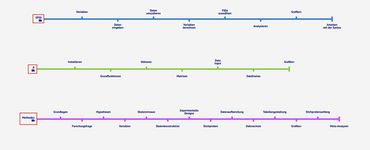
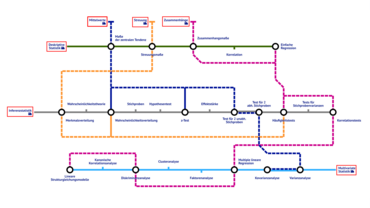
- by Dr Wolfgang Müskens for participate@UOL
- licenced under CC BY 4.0
- published in April 2025
Click here to view the learning map R, SPSS and methods
Click here to view the learning map descriptive statistics, inferential statistics and multivariate statistics
Description:
This learning map provides an overview of helpful self-learning materials that explain how to use the methods in the field of quantitative statistics. The linked resources contain introductions as well as useful tips and tricks. Navigate through the map and select the topics that interest you.
Note: The software names mentioned in this learning map may be subject to trademark, brand or patent protection even without special labelling.
Target group:
First-year students and all other interested parties
Language:
German
Credits - We welcome the use of this OER with the following credits:
Learning map SPSS, R and methods by W. Müskens for participate@UOL, licenced under CC BY 4.0.
Learning map Descriptive statistics, inferential statistics, multivariate statistics by W. Müskens for participate@UOL, licenced under CC BY 4.0.
For subsequent users:
All files of the OER learning map SPSS, R and methods as download (in the ZIP folder)
All files of the OER learning map descriptive statistics, inferential statistics, multivariate statistics as download (in the ZIP folder)
Self-study course: Your SoWi statistics course: From theory to practice in R - materials for self-learning and teaching by S. Schnettler and S. Heinecke
- by S. Schnettler & S. Heinecke for participate@UOL
- licensed under CC BY 4.0
- published in February 2025
You can start the course by clicking on the individual module sections.
Modules 0 – Overview
Module 1 – Introduction and Motivation
Module 2 – Properties of Variables and Data Sets
Module 3 – Univariate Descriptive Statistics
Module 4 – Bivariate Descriptive Statistics
Module 5 - Data visualisation
Module 6 – Inferential statistics
Module 7 – Linear regression – Introduction
Module 8 – Linear regression – Polynomials and interactions
Module 9 – Linear regression – Regression assumptions
Description:
This self-study course on statistics and statistical programming with ‘R’ was developed as part of the ‘Participate’ project at the University of Oldenburg, based on existing teaching materials from the Working Group on Methods of Empirical Social Research (AG Methoden) at the Institute of Social Sciences at the University of Oldenburg. It is primarily aimed at self-learners who wish to master the basics of descriptive and inferential statistical methods independently within a structured course. Furthermore, the course offers valuable content to lecturers who teach quantitative methods. The materials, which are subject to a Creative Commons BY 4.0 licence, may be used for personal preparation or directly for teaching purposes, and may be shared and modified for these purposes, provided that the authors are credited and any changes are acknowledged.
The course begins by covering theoretical foundations through lecture videos produced in recent semesters by Prof. Dr Sebastian Schnettler, Head of the Methods Working Group, and used in the ‘Statistics 1’ and ‘Statistics 2’ modules as part of a blended learning format. In recognition of its successful integration into the blended learning format, the “Statistics I” module was awarded the “Teaching Prize” in the “Best Course” category at the University of Oldenburg in the summer semester of 2019. A selection of these videos has been made for this self-study course to teach the key statistical fundamentals and to enable learners to continue their studies independently. The videos lay the foundations for understanding statistical data analysis, which is also applicable outside the social sciences.
Building on the theoretical foundations, the self-study course offers a practical R section for each module, in which the theoretical content is put into practice using the statistical software “R”. The materials in this section are based on statistics lecture notes developed by Prof. Dr Sebastian Schnettler and Dr Andreas Filser for the statistics modules of the Methods Working Group, as well as for a GESIS online module entitled ‘Introduction to Statistical Data Analysis’ in 2023. For the self-study course, this section was revised and expanded by Svenja Heinecke, a research assistant and lecturer at the Methods Working Group. Following an introduction to the practical use of R, the modules contain exercises that enable learners to consolidate what they have learnt independently. Solution files are provided for each exercise.
Target audience:
Students and self-learners wishing to independently master the fundamentals of descriptive and inferential statistical methods, as well as lecturers
Language:
German
Credits – we would be delighted if you were to use this OER, provided you include the following details:
Sebastian Schnettler and Svenja Heinecke 2024. Your Statistics Course: From Theory to Practice in R. Materials from the social sciences for self-study and teaching. University of Oldenburg, licensed under CC BY 4.0.
Learning lab Wadden Sea
OER collection by A. Wübben

- by Anja Wübben for participate@UOL
- The collection contains different materials with different licences - see there.
- published in Sept. 2024 - the collection is constantly being expanded, most recently in Feb. 2025
Link to the entire collection: https://doi.org/10.57961/49KJ-G123
What is it about?
This collection contains learning materials on the topics of the Wadden Sea habitat , coast and ocean. They are mainly 90-minute teaching units with illustrative small experiments, digital learning components and elements of education for sustainable development (ESD).
The collection is currently being expanded and new topics are regularly selected in consultation with scientists from the University of Oldenburg, prepared as learning units for school lessons and tested and optimised in cooperation with various schools in the region.
Topics include (as of Feb. 2025):
- Noise in the North Sea - suffering for harbour porpoises (The materials were developed by twillo.de as "OER of the month").
- Microplastics in the sea - formation and distribution
- Phytoplankton - Small but mighty
- Fishing in the North Sea - and its dangers
- North Sea coastal salt marshes
- Oil pollution in the Wadden Sea
- Ocean acidification
- The freshwater lens
- Light pollution in coastal areas
How can the OER be used?
The learning units (or individual modules) can be easily integrated into science lessons in schools or in environmental education at extracurricular learning centres , as in addition to exercise booklets , their sample solutions, the technical background as a factual analysis, complete material lists for the experiments and tabular lesson plans including possible lesson discussions are provided.
The teaching units were developed under the guidance of Anja Wübben for participate@UOL in the "Lernlabor Wattenmeer"(http://www.lernlabor-wattenmeer.de/) together with students in various biology didactics seminars, tested several times in practice with pupils and optimised.
Contact:
Anja Wübben
Target group:
Teachers and student teachers at secondary levels I and II
Language:
German
Credits:
We look forward to the subsequent use of these materials. The exact details vary depending on the material and can be found there.
Short series "Correct argumentation" by M. Siebel and W. J. Legtenborg
This short series of self-study videos on the topic of "Arguing correctly!" contains three videos:
| The interview introduces the topic and emphasises the importance of good argumentation. Click here to go directly to the interview for the self-study course "Arguments", |
 | In the second, interactive video, the most important components of arguments and their evaluation are explained. Click here to go directly to the video "Recognising, understanding and evaluating arguments". The download link for the interactive video is here. |
 | In the third video in this series, three types of argument are presented and evaluated as examples. Click here to go directly to the video "The evaluation of special argument types". |

- by M. Siebel and W. J. Legtenborg for participate@UOL
- licenced under CC BY 4.0
- published in June 2024
Description:
Discover our short series "Arguing the right way!" and improve your argumentation skills. Start with the welcome video, which highlights the relevance of persuasive argumentation in today's world.
The first self-study video then explains important components of arguments and how to analyse them in a practical way. Interactive tasks allow you to directly apply and consolidate what you have learnt.
In the second self-study video, you will learn all about the argument types "enumerative induction", "causal inference" and "straw man arguments" - presented in an understandable and clear way.
Why not take a look!
Target group:
Students and other interested parties who want to know what makes a good argument.
Language:
German
Credits:
We look forward to the re-use of our videos with the following information:
- Interview on the self-study course "Arguments" by Mark Siebel and Wiebke J. Legtenborg for (2024). With the exception of the logos, the material is licenced under CC BY 4.0.
- Recognising, understanding and evaluating arguments by Mark Siebel and Wiebke J. Legtenborg for (2024). With the exception of the logos, the material is licenced under CC BY 4.0
- The evaluation of special argument types by Mark Siebel and Wiebke J. Legtenborg for participate@UOL(2024). With the exception of the logos, the material is licenced under CC BY 4.0.
Feedback:
We welcome feedback on the material.
For reusers:
Video 1+3 are in MP3 format, the second, interactive video is designed with H5P.
Click here to download the corresponding files:
"Game-based learning and virtual reality medicine and natural sciences" - a padlet compilation of freely available offers for use in teaching by S. Quintes
- by Dr Susanne Quintes for participate@UOL
- licensed under CC BY 4.0 - all templates, graphics or other elements created by Padlet itself are excluded from the licence
- published in March 2024
Description:
This padlet provides an overview of teaching and learning offers that prepare and convey content with game elements (also known as game-based learning or edutainment ). The focus is on free offers that are as freely accessible as possible and can be easily integrated into your own teaching.
Target group:
Teachers and students as well as all other interested parties
Language:
German
Credits - We appreciate the use of this padlet under the following credits:
"Game-based Learning and Virtual Reality Medicine and Natural Sciences" by Susanne Quintes, licensed under CC BY 4.0 - all templates, graphics or other elements created by the padlet itself are excluded from the licence.
Feedback:
We welcome feedback on the material.
Learning map with self-learning materials for Office applications by W. Müskens
- by Dr Wolfgang Müskens for participate@UOL
- licenced under CC BY 4.0
- published in December 2023
Click here to view the learning map
Description:
Are you actually familiar with the software you have to use during your studies?
This learning map provides an overview of helpful self-study materials that explain how to use Office software during your studies. The linked resources contain introductions as well as useful tips and tricks for the following programmes: Word, Excel, LaTeX, PowerPoint and Citavi. Navigate through the map and select the topics that interest you.
Note: The software names mentioned in this learning map may be subject to trademark, brand or patent protection even without special labelling.
Target group:
First-year students and all other interested parties
Language:
German
Credits - We appreciate the use of this OER under the following terms:
Learning map Office applications by W. Müskens for participate@UOL, licenced under CC BY 4.0.
Feedback:
We welcome feedback on the material.
For subsequent users:
All files of the OER as download (in the ZIP folder)
Sociometry and social network analysis in pedagogical contexts - a self-study course for the programming language R by P. R. Kulawiak
- by P. R. Kulawiak for participate@UOL
- licenced under CC BY 4.0
- published in September 2023
Click here to view or start the course.
Description:
This self-study course teaches the first steps in using the software R (or R Studio) to analyse sociometric data for social networks and to display them graphically. Previous knowledge of R is recommended, technical requirements will be clarified at the beginning of the course. The material contains exercises to try out as well as extensive literature references for further reading. The material consists of the self-study course and the two sample files that can be used to carry out the exercises.
Target group:
Students with previous knowledge of the R software. The installation of R Studio and necessary components is covered in the course under "3 Prerequisites".
Language:
German
Credits - We are pleased about the use of this OER under the following specifications:
Sociometry and social network analysis in pedagogical contexts with R by P. R. Kulawiak for participate@UOL, licenced under CC BY 4.0.
Feedback:
We welcome feedback on the material.
For subsequent users:
All files of the OER as download (in ZIP folder)
Systematic Reviews in Educational Research - an Interview by D. Ifenthaler and O. Zawacki-Richter (in English)
- from / by Dirk Ifenthaler and / and Olaf Zawacki-Richter for participate@UOL
- licenced under / licensed under CC BY 4.0 - https://creativecommons.org/licenses/by/4.0/
- published in März 2023 / published in March 2023
Description / Description
Prof Dr Dirk Ifenthaler interviews Prof Dr Olaf Zawacki-Richter on conducting systematic review studies for pedagogical research in terms of approach, general problems, advantages, tools, experiences and other relevant content. The interview provides many valuable insights into a relatively new and growing field of research.
Prof. Dr Dirk Ifenthaler interviews Prof. Dr Olaf Zawacki-Richter on conducting systematic reviews in educational research regarding the approach, general problems, benefits, tools, experiences and other relevant topics. The interview provides many valuable insights in a relatively new and growing field of research.
Target group / target group
Master's ordoctoral students in Education and related fields and for use in teaching in higher education.
Master or doctoral students in Education an related fields and for use in teaching in higher education.
Language / Language
Englisch / English
Credits - We appreciate the use of this OER under the following conditions:
Systematic Reviews in Educational Research by D. Ifenthaler and O. Zawacki-Richter, for participate@UOL, licenced under CC BY 4.0.
or: Systematic Reviews in Educational Research by D. Ifenthaler and O. Zawacki-Richter for participate@UOL, licenced as CC BY 4.0.
Feedback:
We welcome feedback on the material.
Other / other
Video (MP4) - Dauer ca. / duration aprox. 55 min.