Programme
Contact
Email
School Development Centre (AS)
at the Centre for Teacher Education -
Didactic Centre (DiZ)
Programme
Welcome and keynote speech (08:30 to 10:00)
"Visible leadership - leading schools effectively"
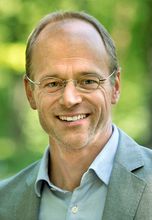
Prof Dr Klaus Zierer, University of Augsburg
Global crises not only challenge politics and society, but also local schools, which are often overloaded with tasks as society's repair centre. In order to be effective as a school in this jungle of tasks, school leaders have an outstanding role to play. But what can provide school leaders with guidance to orientate the compass of their school management activities towards what really works?
The keynote lecture will present new research findings to answer this key question, such as those analysed in the update of the Hattie study. The research results show that successful school leaders above all have a certain attitude.
The presentation will explain key findings from effectiveness research in order to develop a vision for a good school and derive practical recommendations for effective day-to-day school management behaviour.
PROF. DR. KLAUS ZIERER is an educational scientist and has been a full professor of school education at the University of Augsburg since 2015. Before that, he researched and taught as a professor of educational science specialising in general didactics / school pedagogy at the University of Oldenburg since 2011. He originally studied to become a primary school teacher and worked as a teacher at primary, secondary and intermediate schools after completing his doctorate.
Klaus Zierer is best known for his collaboration with John Hattie. He translated his work "Visible Learning" into German in 2013 and subsequently published several works together with John Hattie, including "Kenne deinen Einfluss", "Visible Learning Unterrichtsplanung" and "Hattie 2.0".
Klaus Zierer regularly contributes to education policy debates and writes for Süddeutsche Zeitung, FAZ, Welt, NZZ and Die Zeit. He is one of the country's most influential school educators and was invited to the Blue Sofa at the 2021 Frankfurt Book Fair with his book "Ein Jahr zum Vergessen" (2021), in which he takes a critical stance on the measures to contain the coronavirus pandemic from an educational perspective.
Impulse programme A (10:30 to 12:00)
Impulse offer A1
"Professional relationship management and social-emotional learning at school"
Dr Tijs Bolz, University of Oldenburg, Oldenburg

Social-emotional skills form the basis for learning success at school, psychosocial health and active participation and involvement in our society. The concept of social-emotional learning is a starting point for the relationship-orientated promotion of social-emotional skills at school.
The following questions are the focus of this impulse programme:
- Which methods and concepts for promoting social-emotional learning are effective and how exactly?
- What is needed from a school development perspective to implement these methods and concepts in everyday school life?
- How can you as school leaders sensitise your teachers to value and specifically promote pedagogical relationship work and social-emotional learning?
As part of a short presentation, selected empirical findings on the influence of pedagogical relationships on social-emotional development will first be categorised and the relevance of promoting social-emotional learning processes will be derived. Which support approaches are particularly effective and for what reasons will then be analysed and discussed together in an action-oriented manner against the background of school and teaching practice.
DR. TIJS BOLZ teaches and researches as a special needs teacher at the University of Oldenburg, specialising in relationship-based support in schools as well as prevention and intervention in cases of impairment in emotional and social development. He also works as a reviewer for various specialist journals, advises schools and institutions and lectures at other universities. He currently holds the professorship for Education and Didactics of Emotional and Social Development at the University of Oldenburg.
Impulse programme A2
"Diversity management - (not) an issue for schools?"
Prof Dr Ayça Polat, University of Oldenburg, Oldenburg
Kimberly Naboa Menzel, SchlaU-Werkstatt, Munich


School leaders have a decisive influence on the school culture through their attitude - from the perception and integration of diversity in the staff to the promotion of discrimination-sensitive interaction among pupils.
The impulse programme "Diversity management - (not) an issue for schools?" offers practice-oriented input that considers school leaders as key players in school development and also looks at the dynamics within the teaching staff.
This impulse programme focuses on the following questions:
- How can school management teams actively shape diversity management together with the teaching staff?
- What do school management teams and the teaching staff need for this?
Inclusive diversity not only strengthens the staff and pupils, but also the innovative power and well-being of the entire school community. By providing well-founded approaches and practical options for action, the article shows how diversity can be used as a resource without viewing it as a burden. This includes approaches for preventing burnout among staff and for the social integration of pupils in order to create an appreciative and discrimination-sensitive school community.
Practical examples from the SchlaU workshop offer support for sustainable school development. They illustrate how school leaders can initiate and support concrete measures - from small changes in everyday school life to strategic development projects.
PROF. DR. AYÇA POLAT is Professor of Social Pedagogy in the Migration Society and Director of the Centre for Migration, Education and Cultural Studies at the University of Oldenburg. Her research focus is on theories and approaches to diversity awareness, criticism of racism and migration education.
KIMBERLY NABOA MENZEL is an education officer at SchlaU-Werkstatt für Migrationspädagogik gGmbH, Munich, and is responsible for the Lower Saxony location. She specialises in anti-discrimination skills as part of pedagogical professionalism as well as raising awareness of multilingualism and the linguistic complexity of the German language in the classroom context. She also works as a lecturer in teacher training.
Impulse offer A3
"Mental strengthening for challenging situations at school"
Prof Dr Marcus Eckert, APOLLON University of Applied Sciences, Bremen

"I'm happy when it rains". The sentence comes from Karl Valentin. The text continues: "It also rains when I'm not happy". Applied to school, this could mean: "How do you manage to remain optimistic and happy despite all the challenges? Because you also have challenges when you are not happy.
Prof Dr Marcus Eckert explains this in a scientifically sound manner, providing small, practical impulses that enable you to deal with stress and challenges in a good and healthy way. The decisive factor here is that you can implement these impulses quickly and easily in everyday school life - when dealing with colleagues and/or pupils.
- How can you grow in the face of challenges and invite others to grow?
- Where do courage and resources come from?
- How can you encourage your colleagues and pupils with simple impulses so that school becomes a place of growth for everyone?
This programme provides you with action-oriented, concrete impulses for mental strengthening for challenging situations at school.
PROF. DR. MARCUS ECKERT is a former secondary school teacher who went on to study clinical psychology. He is now Professor of Developmental and School Psychology at the APOLLON University of Applied Sciences in Bremen. His research focus includes the topics of emotion and stress regulation, self-regulation and procrastination. He was co-founder and managing director of the Institute for Learning Health and is the author of specialist books and articles on the topics of teacher health and classroom management. And is the main author of the "Strong in Stress" programme.
Impulse offer A4
"Parental work as an educational partnership: Parents as the key to success at school"
Wilfried Steinert, former headmaster of Waldhofschule, Templin

Parents are crucial partners in the educational process of their children. But how can you actively involve them and build a trusting working relationship? This interactive impulse programme offers you practical strategies for creating a successful educational partnership.
- Learn how to turn parents into active learning partners through clear communication, targeted workshops and low-threshold offers.
- Learn how to create attractive educational and exchange formats that motivate parents and strengthen their skills by building networks with other schools. This results in practical programmes that take into account both diversity and the individual needs of parents. Take away concrete ideas for working with parents to develop sustainable solutions for school success, improve the school climate and provide the best possible support for pupils.
Together with parent partnerships, we can achieve more at school!
WILFRIED STEINERT is the former head teacher of the inclusive all-day school Waldhofschule in Templin, which was honoured with the German School Award for its work. As an education expert, he has been working freelance on inclusive education and the development of inclusive education regions since 2010. In addition to his countless commitments on various educational topics, he is also a member of the Speakers' Council of the 'Expert Group on Inclusive Education' of the German UNESCO Commission and a former member of the scientific advisory board on inclusion of the Brandenburg Ministry of Education. He has also been active on the jury of the Jacob Muth Prize for Inclusive Education and the preliminary jury of the German School Award on several occasions.
Impulse offer A5
"Balance in self-management: inner balance in a challenging school world"
Antje Mein, Institute Healthy Career, Hanover

This interactive impulse programme supports you as school leaders in developing and strengthening a deeper awareness of healthy self-management in challenging times. This is all about you!
The starting point is the principles of salutogenesis (Antonovsky) of meaningfulness, manageability and comprehensibility, which are reflected in a practical and action-orientated way. From this you will gain reflective perspectives and insights into the extent to which your leadership work is characterised by your personal attitude and your inner map of values and can be experienced in your daily leadership actions.
Be inspired to review your individual strategies and behavioural patterns and/or to reorient yourself in order to experience greater inner independence from uninfluenceable framework conditions in your leadership work.
ANTJE MEIN is a process facilitator and coach at the Institute Gesunde Karriere. For 20 years, she has been working with leaders on success factors for (healthy) leadership in various contexts of the organisational world. The core of her work is supporting individual and organisational change processes.
Impulse offer A6
"Making school effective through relationships and participation: An insight into IGS Franzsches Feld"
Silke Gralfs and Benjamin Sauerland, IGS Franzsches Feld, Braunschweig


This impulse programme aims to remove the demand for democratic education and democratic participation from its often abstract educational and socio-political context and transform it into a lively, meaningful experience. To this end, this interactive and practice-orientated contribution focuses on the influencing factor "relationships", which is seen as the key to democratic participation and effective schools.
Using the school concept of the IGS Franzsches Feld as an example, you will gain insights into relevant formats and the lived practice of the teaching staff and pupils. One thing in particular will become clear: "The WHAT only works through the HOW."
The tandem of school management and school social work illustrate how they put these elements into practice at their school in order to create a tangible impact. The pupils' perspectives are also incorporated into this. They learn what tangible impact focussed relationship work has on the school community and what benefits this way of working has had for the school as a whole.
- Focus on the school management perspective: The role of the school management is one of the focal points. What is the role model function of the school management? What attitudes and values influence how the school management directs and what structures and support systems it offers to promote relationships in a targeted manner?
- Focus on the pupils' perspective: In this article, we give our pupils the floor to describe from their perspective how they experience participation and involvement at our school. The students will report on which specific formats contribute to this in particular and which attitudes and support they perceive as beneficial from their teachers.
The aim of the event is to provide insights into a school concept that sees relationships as the basis for an effective and participatory school culture.
BENJAMIN SAUERLAND has been Head of School at IGS Franzsches Feld in Braunschweig since 2023. Previously, he held various positions at comprehensive schools, in particular as a permanent representative of the school management and head of department, as well as for the Regional State Office for Schools and Education in Braunschweig.
DIPL. PÄD. SILKE GRALFS has been working at IGS Franzsches Feld since 1990. She specialises in counselling as well as team and school development.
Impulse offer A7
"Uncertainty as an opportunity in school development for individualisation - a theory-practice dialogue"
Antje Mismahl, PRIMUS School, Minden and Prof Dr Till-Sebastian Idel, University of Oldenburg, Oldenburg


The school should do justice to all pupils and support and challenge them according to their individual needs.
- But how is this supposed to work if a teacher is supposed to cater to a heterogeneous learning group full of individual needs and treat everyone equally?
- And even if the answers to this are obvious: How can such a school be developed?
In this impulse programme, conducted as a theory-practice tandem, the Primus school trial from North Rhine-Westphalia is presented and explained from the perspective of a head teacher and a member of the accompanying scientific research. The uncertainties, opportunities, limitations, challenges and possible solutions that can arise when developing individualised learning arrangements will be revealed and reflected upon.
We thus offer you opportunities for reflection and exchange on how fundamental pedagogical objectives and values can be implemented as formative guiding principles in practical school development in a lively and tangible way for all those involved.
ANTJE MISMAHL has been working as a comprehensive school teacher since 1997. In 2008, she was appointed head of department. In this role, she set up the sub-site: "Think school differently!". Since 2013, she has been Head of School at the PRIMUS School in Minden, which she played a key role in setting up and supporting.
TILL-SEBASTIAN IDEL has been Professor of School Pedagogy and General Didactics at the Institute of Educational Sciences in School I - School of Educational and Social Sciences at the University of Oldenburg since 2020. He previously taught in Mainz, Heidelberg and Bremen. He researches the change and development of schools, pedagogical professionalism and the school learning culture.
Impulse offer A8
"Democracy education - now!"
Prof Dr Klaus Zierer, University of Augsburg

The state of democracy has been discussed for years and the demand has been raised time and again that schools must make a contribution to democracy education.
- But what exactly is democracy?
- Why do values play such an important role in democracy?
- How is democracy connected to education?
- How can schools fulfil their claim to be a democratic school in a democracy?
These questions guide the discourse of the impulse programme in order to develop answers to fundamental social challenges based on the impact potential of schools. The aim is to derive opportunities and effective structures for the organisation of schools and lessons.
Impulse offers B (13:00 to 14:30)
Impulse offer B2
"Diversity management - (not) an issue for schools?"
Prof Dr Ayça Polat, University of Oldenburg, Oldenburg
Kimberly Naboa Menzel, SchlaU-Werkstatt, Munich
School leaders have a decisive influence on the school culture through their attitude - from the perception and integration of diversity in the staff to the promotion of discrimination-sensitive interaction among pupils.
The impulse programme "Diversity management - (not) an issue for schools?" offers practice-oriented input that considers school leaders as key players in school development and also looks at the dynamics within the teaching staff.
This impulse programme focuses on the following questions:
- How can school management teams actively shape diversity management together with the teaching staff?
- What do school management teams and the teaching staff need for this?
Inclusive diversity not only strengthens the staff and pupils, but also the innovative power and well-being of the entire school community. By providing well-founded approaches and practical options for action, the article shows how diversity can be used as a resource without viewing it as a burden. This includes approaches for preventing burnout among staff and for the social integration of pupils in order to create an appreciative and discrimination-sensitive school community.
Practical examples from the SchlaU workshop offer support for sustainable school development. They illustrate how school leaders can initiate and support concrete measures - from small changes in everyday school life to strategic development projects.
PROF. DR. AYÇA POLAT is Professor of Social Pedagogy in the Migration Society and Director of the Centre for Migration, Education and Cultural Studies at the University of Oldenburg. Her research focus is on theories and approaches to diversity awareness, criticism of racism and migration education.
KIMBERLY NABOA MENZEL is an education officer at SchlaU-Werkstatt für Migrationspädagogik gGmbH, Munich, and is responsible for the Lower Saxony location. She specialises in anti-discrimination skills as part of pedagogical professionalism as well as raising awareness of multilingualism and the linguistic complexity of the German language in the classroom context. She also works as a lecturer in teacher training.
Impulse offer B3
"Mental strengthening for challenging situations at school"
Prof Dr Marcus Eckert, APOLLON University of Applied Sciences, Bremen
"I'm happy when it rains". The sentence comes from Karl Valentin. The text continues: "It also rains when I'm not happy". Applied to school, this could mean: "How do you manage to remain optimistic and happy despite all the challenges? Because you also have challenges when you are not happy.
Prof Dr Marcus Eckert explains this in a scientifically sound manner, providing small, practical impulses that enable you to deal with stress and challenges in a good and healthy way. The decisive factor here is that you can implement these impulses quickly and easily in everyday school life - when dealing with colleagues and/or pupils.
- How can you grow in the face of challenges and invite others to grow?
- Where do courage and resources come from?
- How can you encourage your colleagues and pupils with simple impulses so that school becomes a place of growth for everyone?
This programme provides you with action-oriented, concrete impulses for mental strengthening for challenging situations at school.
PROF. DR. MARCUS ECKERT is a former secondary school teacher who went on to study clinical psychology. He is now Professor of Developmental and School Psychology at the APOLLON University of Applied Sciences in Bremen. His research focus includes the topics of emotion and stress regulation, self-regulation and procrastination. He was co-founder and managing director of the Institute for Learning Health and is the author of specialist books and articles on the topics of teacher health and classroom management. And is the main author of the "Strong in Stress" programme.
Impulse offer B4
"Leadership with clarity and vision: Mastering a lack of resources and leading schools for the future"
Wilfried Steinert, former headmaster of Waldhofschule, Templin
In times of scarce resources, the task of school management becomes a real challenge. But this is where the true strength of leadership is revealed: it requires clarity in action, foresight in planning and the courage to take innovative paths.
This interactive impulse programme opens your eyes to how you can set up your school for the future despite limited resources:
- We focus on practical strategies for a clear vision, efficient school organisation and the targeted use of existing potential.
- You will learn how to create more room for manoeuvre and strengthen your team through clever delegation, transparent communication and the development of strong networks.
- Take the opportunity to deepen your leadership skills and take away valuable impulses that you can transfer directly into everyday life. Because good leadership turns obstacles into opportunities and scarce resources into a basis for growth.
WILFRIED STEINERT is the former headmaster of the inclusive all-day school Waldhofschule in Templin, which was honoured with the German School Award for its work. As an education expert, he has been working freelance on inclusive education and the development of inclusive education regions since 2010. In addition to his countless commitments on various educational topics, he is also a member of the Speakers' Council of the 'Expert Group on Inclusive Education' of the German UNESCO Commission and a former member of the scientific advisory board on inclusion of the Brandenburg Ministry of Education. He has also been active on the jury of the Jacob Muth Prize for Inclusive Education and the preliminary jury of the German School Award on several occasions.
Impulse offer B5
"Balance in self-management: inner balance in a challenging school world"
Antje Mein, Institute Healthy Career, Hanover
This interactive impulse programme supports you as school leaders in developing and strengthening a deeper awareness of healthy self-management in challenging times. This is all about you!
The starting point is the principles of salutogenesis (Antonovsky) of meaningfulness, manageability and comprehensibility, which are reflected in a practical and action-orientated way. From this you will gain reflective perspectives and insights into the extent to which your leadership work is characterised by your personal attitude and your inner map of values and can be experienced in your daily leadership actions.
Be inspired to review your individual strategies and behavioural patterns and/or to reorient yourself in order to experience greater inner independence from uninfluenceable framework conditions in your leadership work.
ANTJE MEIN is a process facilitator and coach at the Institute Gesunde Karriere. For 20 years, she has been working with leaders on success factors for (healthy) leadership in various contexts of the organisational world. The core of her work is supporting individual and organisational change processes.
Impulse offer B6
"Making school effective through relationships and participation: An insight into IGS Franzsches Feld"
Silke Gralfs and Benjamin Sauerland, IGS Franzsches Feld, Braunschweig
This impulse programme aims to remove the demand for democratic education and democratic participation from its often abstract educational and socio-political context and transform it into a lively, meaningful experience. To this end, this interactive and practice-orientated contribution focuses on the influencing factor "relationships", which is seen as the key to democratic participation and effective schools.
Using the school concept of the IGS Franzsches Feld as an example, you will gain insights into relevant formats and the lived practice of the teaching staff and pupils. One thing in particular will become clear: "The WHAT only works through the HOW."
The tandem of school management and school social work illustrate how they put these elements into practice at their school in order to create a tangible impact. The pupils' perspectives are also incorporated into this. They learn what tangible impact focussed relationship work has on the school community and what benefits this way of working has had for the school as a whole.
- Focus on the school management perspective: The role of the school management is one of the focal points. What is the role model function of the school management? What attitudes and values influence how the school management directs and what structures and support systems it offers to promote relationships in a targeted manner?
- Focus on the pupils' perspective: In this article, we give our pupils the floor to describe from their perspective how they experience participation and involvement at our school. The students will report on which specific formats contribute to this in particular and which attitudes and support they perceive as beneficial from their teachers.
The aim of the event is to provide insights into a school concept that sees relationships as the basis for an effective and participatory school culture.
BENJAMIN SAUERLAND has been Head of School at IGS Franzsches Feld in Braunschweig since 2023. Previously, he worked in various roles at comprehensive schools, in particular as a permanent representative of the school management and head of department, as well as for the Regional State Office for Schools and Education in Braunschweig.
DIPL. PÄD. SILKE GRALFS has been working at IGS Franzsches Feld since 1990. She specialises in counselling as well as team and school development.
Impulse offer B7
"Uncertainty as an opportunity in school development for individualisation - a theory-practice dialogue"
Antje Mismahl, PRIMUS School, Minden and Prof Dr Till-Sebastian Idel, University of Oldenburg, Oldenburg

The school should do justice to all pupils and support and challenge them according to their individual needs.
- But how is this supposed to work if a teacher is supposed to cater to a heterogeneous learning group full of individual needs and treat everyone equally?
- And even if the answers to this are obvious: How can such a school be developed?
In this impulse programme, conducted as a theory-practice tandem, the Primus school trial from North Rhine-Westphalia is presented and explained from the perspective of a head teacher and a member of the accompanying scientific research. The uncertainties, opportunities, limitations, challenges and possible solutions that can arise when developing individualised learning arrangements will be revealed and reflected upon.
We thus offer you opportunities for reflection and exchange on how fundamental pedagogical objectives and values can be implemented as formative guiding principles in practical school development in a lively and tangible way for all those involved.
ANTJE MISMAHL has been working as a comprehensive school teacher since 1997. In 2008, she was appointed head of department. In this role, she set up the sub-site: "Think school differently!". Since 2013, she has been Head of School at the PRIMUS School in Minden, which she played a key role in setting up and supporting.
TILL-SEBASTIAN IDEL has been Professor of School Pedagogy and General Didactics at the Institute of Educational Sciences in School I - School of Educational and Social Sciences at the University of Oldenburg since 2020. He previously taught in Mainz, Heidelberg and Bremen. He researches the change and development of schools, pedagogical professionalism and the school learning culture.