


The federal and state governments recognise the university's gender equality concept by including it in the programme for female professors. This is about academic appointments - but also much more.
An above-average number of women study and conduct research at the University of Oldenburg. For some time now, the university has even been one of the top universities in Germany for female professors: The proportion of women holding one of the approximately 260 professorships in Oldenburg is currently 32.4 per cent - 3.4 percentage points above the national average last surveyed in 2023. The federal and state governments are now once again recognising this commitment and success in terms of Gender equality with funding as part of the Women Professors Programme. Over the next few years, up to around 2.5 million euros can flow into Oldenburg for the academic appointment of new female professors.
"We are delighted with the visible success we have already achieved with our gender equality strategy - and with the fact that, as in previous funding rounds of the Women Professors Programme, we have been able to make a convincing case. This has not only enabled us to appoint outstanding female academics to the University of Oldenburg, but also to implement numerous measures that will have a long-term, university-wide positive impact on Gender equality," says Prof Dr Katharina Al-Shamery, who as Vice President is responsible for Gender equality, among other things.
One of these academics is physicist Prof Dr Caterina Cocchi, who has been researching and teaching in Oldenburg since 2020. "The Women Professors Programme was a turning point in my career," she says. After two and a half years as a junior professor without tenure track, i.e. without a guarantee of subsequent tenure-track professorship, she moved from Humboldt University in Berlin to the Hunte. The professorship, which was well-funded by the programme, enabled Cocchi to expand her research group. "It was invaluable for my scientific work," she says. "The support allowed me to realise my own ideas independently and drive my research forward." She therefore considers the programme to be important in tackling the "leaky pipeline" problem, i.e. the phenomenon that the proportion of women in science is falling rapidly, especially at higher career levels, even though more and more women are graduating. "By providing targeted funding and flexible funding opportunities, structural barriers that often hinder women on their career path are broken down," says Cocchi.
The "Female Professorship Programme 2030" covers the costs of the professorship of three female academics who are appointed to a permanent position for the first time in their career for five years. This enables universities to either appoint female professors earlier than planned or, in the case of scheduled academic appointments, to invest the funds actually earmarked in their budget for these costs in measures that promote Gender equality across the university.
Numerous projects funded
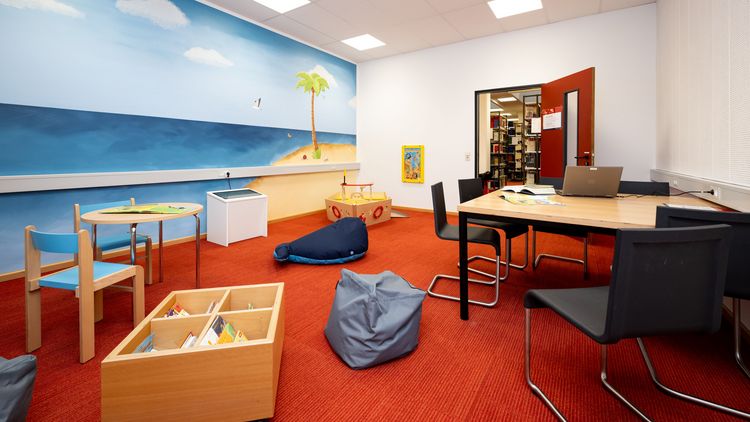
And there have been quite a few of these in recent years: for example, the funds have enabled the first four rounds of the Helene Lange Mentoring Programme, which supports female academics in their careers with various programme lines from the dissertation completion phase to junior professorships. Further funds have been channelled into the development of a teaching concept in which prospective teachers learn how to teach Computing Science in a gender-sensitive way, or into the recently completed family-friendly learning space in the library, where children can play and parents can learn in equal measure.
The "Helene Lange Visiting Professorship" funded by the programme has already brought four international female visiting professors to the university, who conduct research in areas in which women are traditionally underrepresented and who also made special offers for female students and scientists in early career phases during their stay in Oldenburg. "I am very pleased that the funds that flowed to the university in connection with my regular position via the Women Professors Programme have made this programme possible," says Prof. Dr Anne Frühbis-Krüger, who has been teaching and researching as Professor of Mathematics at the university since 2020. She not only co-initiated the visiting professorship programme, but also welcomed the cryptographer Prof. Dr Renate Scheidler, who has been researching in Canada for many years, as the first Helene Lange Visiting Professor in Oldenburg in 2022 together with her colleague Prof. Dr Andreas Stein. "Her stay was not only scientifically fruitful, but also provided many young people at the Institute with an excellent mentor with a wealth of experience," says Frühbis-Krüger.
In the various funding rounds since 2008, money has flowed to Oldenburg from the Women Professors programme for a total of six professorships. Three more can now be added. It has already been decided which ideas will be realised with the funds released as a result. The successful Helene Lange Visiting Professors Programme will be continued. For the first time, a one-week holiday taster course in Computing Science is also planned to introduce schoolgirls in the eighth grade to the degree programme, which has been dominated by men to this day. This is the university's response to the fact that the proportion of female students in Computing Science has fallen to 14 per cent. Further funds are being invested in career counselling services for female scientists and a campaign against sexualised discrimination and violence.
Currently, the university can draw a pleasing balance of equality. Women currently make up 57 per cent of students. The ratio of men and women among academic staff is balanced. Among professors, one in three is currently female - if you only consider those newly appointed to the university in recent years, the figure is almost one in two. While parity between men and women has already been achieved in the - at least initially - temporary junior professorships, the proportion of women decreases with higher salary levels, especially in tenure-track professorships.