About the replication method
About the replication method
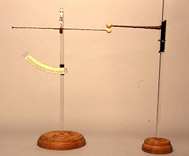
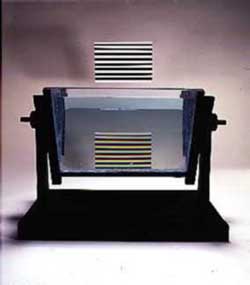
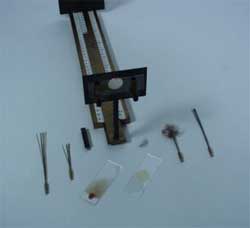
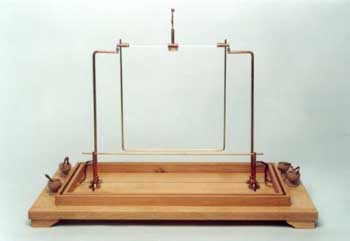
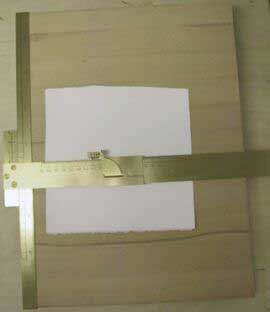
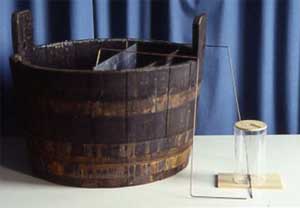
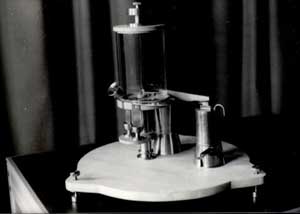
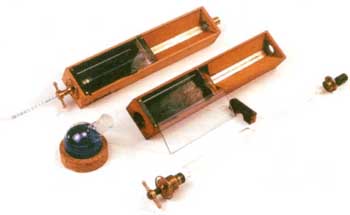
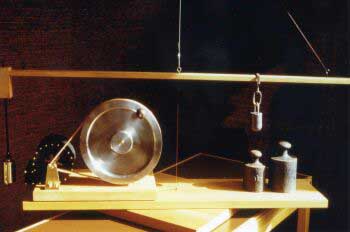
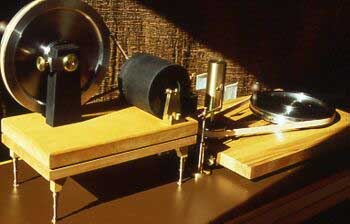
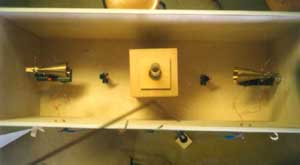
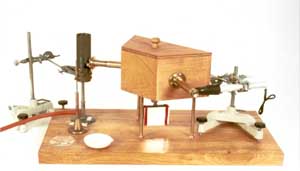
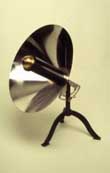
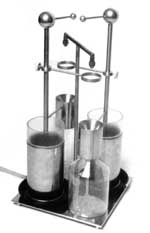
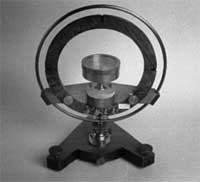
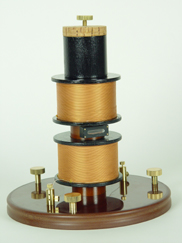
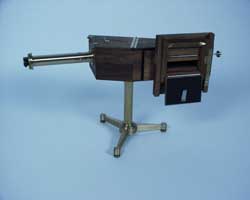
For many years, we have been researching the history of experiments and experimentation using a method that is unique in the world: the reconstruction of historical experiments with largely faithful replicas. We refer to this procedure as the "replication method".
This method is characterised in particular by two advantages. Firstly, the analysis of the original apparatus required for a replication, the production of a replica and the subsequent performance of the experiments necessitates an extremely intensive examination of the "materiality" of scientific research. This includes, for example, the materials and production techniques used, but also the rooms in which the experiments were carried out. In this way, it is possible to gain a more precise understanding of the material culture of a particular time in a particular place.
List of replicas
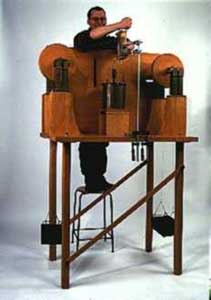
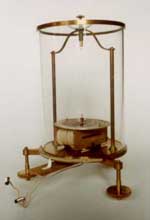
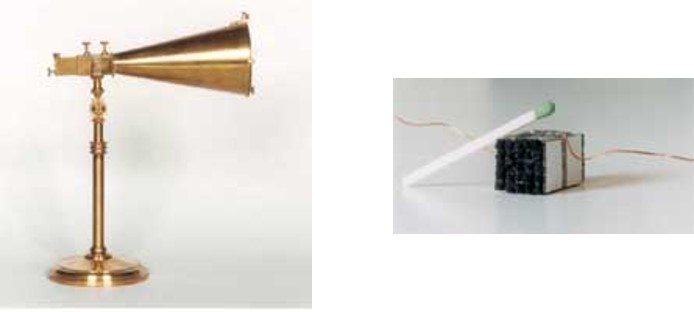
The following devices were used by the Didactics and History of Physics working group at the Physics Department of the University of Oldenburg in the context of replications of experiments from the history of physics. They were all built in the university's central workshops.
The order of the list is based on the time of manufacture or use of the respective historical original. The links refer to images of the respective devices. All illustrations and photos on the following web pages of the Didactics and History of Physics working group may not be used, reproduced or distributed without the authorisation of the working group.
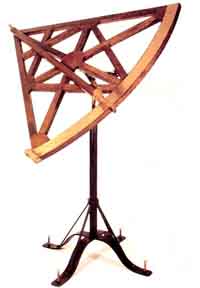
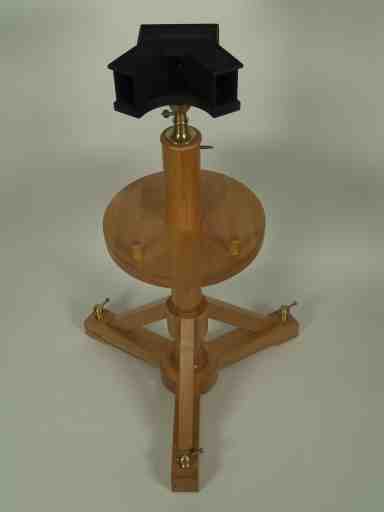
- Sextant (Sextans Astronomicus Trigonicus pro Distantiis) after T. Brahe (around 1569)
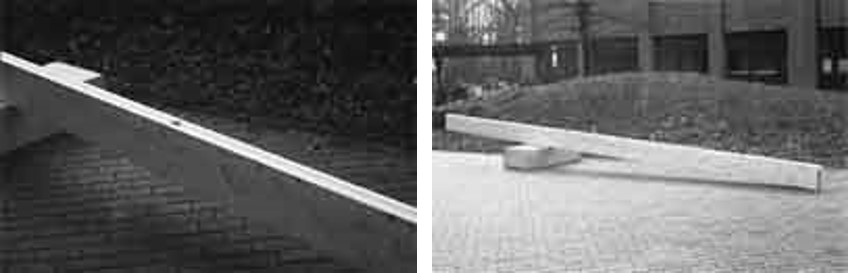
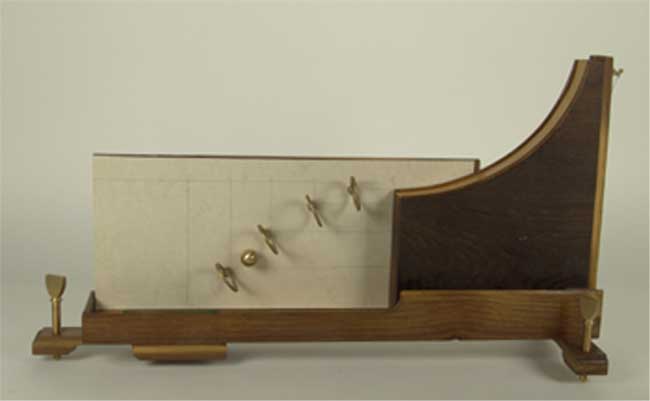
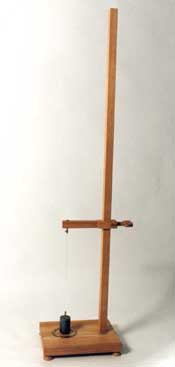
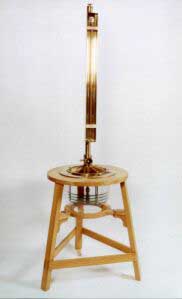
- Falling chute for determining the law of gravity after G. Galilei (around 1638)
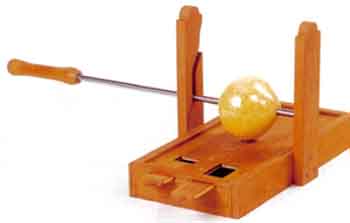
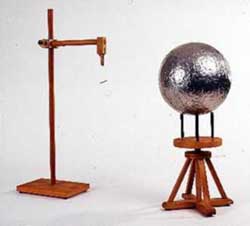
- Friction apparatus (sulphur ball) to prove elementary electrical effects according to O.v. Guericke (around 1650)
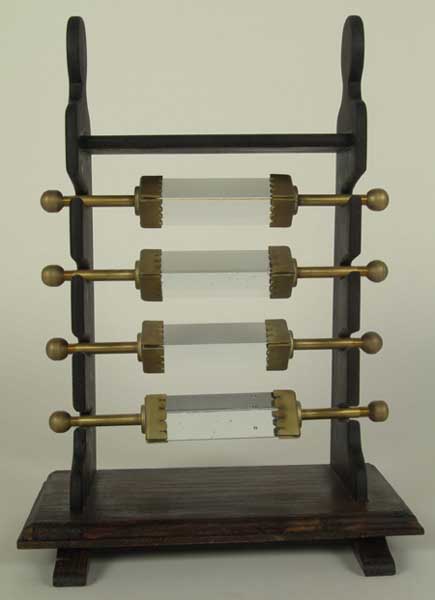
- Prisms for colour decomposition according to I. Newton (ca. 1672)
- Device for demonstrating the superposition of movements by Jan van Musschenbroek after Willem Jacob s' Gravesande (around 1720)
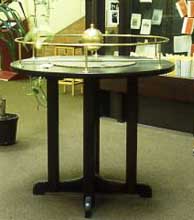
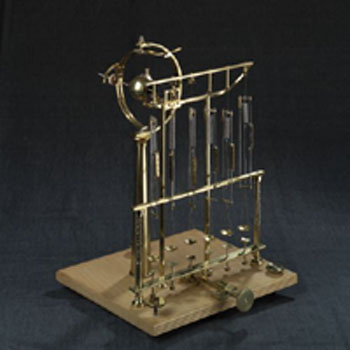
- "Electric planetarium" after G. Wheeler and S. Gray (around 1736)
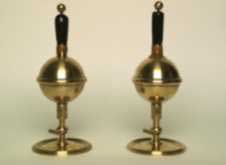
- Electrifying machine with friction pad, suction comb and conductor after F. Hawksbee, J.H. Winkler and Ch.A. Hausen for the generation and accumulation of electricity (around 1740)
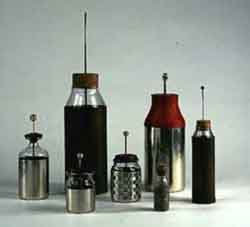
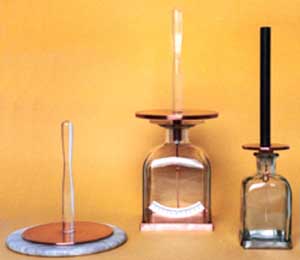
- Leyden jars according to P. v. Musschenbroek for storing and "amplifying" electricity (around 1750)
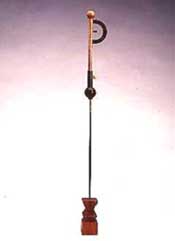
- Set-up for determining the electrostatic force-distance relationship according to J. Robison (around 1769)
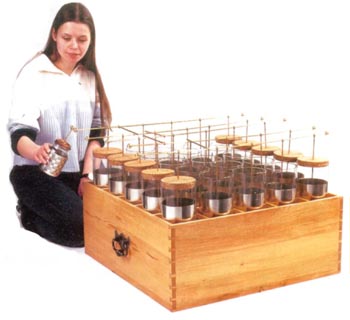
- Leyden battery according to P. v. Musschenbroek for storing and "amplifying" electricity (around 1770)
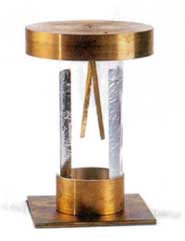
- Electroscope after W. Henley (around 1770)
- Electrophorus and resin cake after C.G. Lichtenberg to produce Lichtenberg's figures (1777)
- Solar microscope after B. Martin (around 1780)
- Ice calorimeter by Laplace and Lavoisier (around 1780)
- Various devices for investigating optical phenomena after J.P. Marat (around 1780)
- Various devices for investigating electrical phenomena according to J.P. Marat (around 1782)
- Condenser electroscope according to A. Volta (1783)
- Declination compass according to Coulomb and Cassini (around 1780)
- Apparatus for investigating the torsional behaviour of metal wires according to C.A. Coulomb (1784)
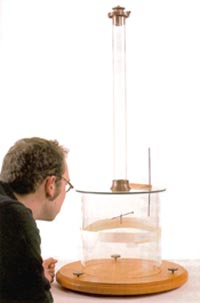
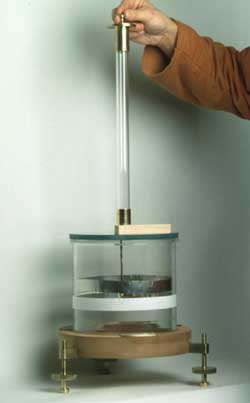
- Torsion balance to prove the 1/r² law (repulsion) of electrostatics according to C.A. Coulomb (1785)
- Apparatus for proving the 1/r² law in the case of electrostatic attraction according to C.A. Coulomb (around 1785)
- A. Bennet's electroscope (around 1786)
- Photometer according to B. Thompson, Count Rumford (ca. 1793)
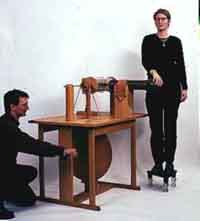
- Friction electrifying machine for teaching purposes (early 19th century)
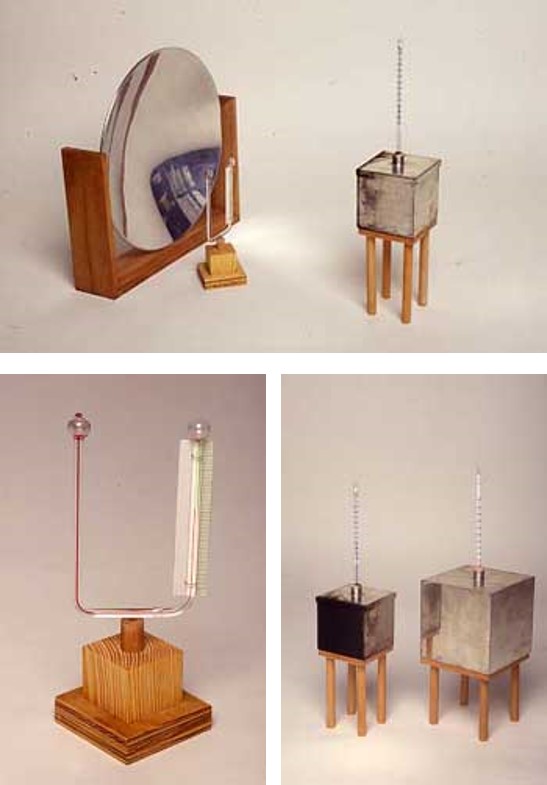
- Apparatus for detecting invisible rays (infrared radiation) and for analysing thermal radiation in the spectrum of the sun according to William Herschel (ca. 1800)
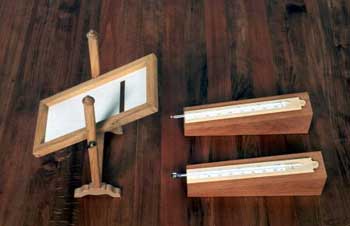
- Apparatus for analysing thermal radiation according to B. Thomson, Count Rumford (around 1804)
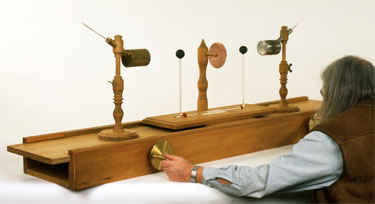
- Heat radiation experiment by John Leslie (around 1804)
- Various Volta elements according to A. Volta and J.W. Ritter for generating electricity (around 1806)
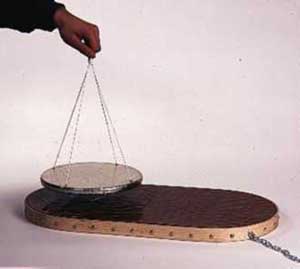
- Simon's glass balance for determining the electrostatic force-distance relationship (around 1808)
- Glass prisms and large water prism according to J.W. Goethe's "Theory of Colours" (before 1810)
- Measuring device for the diffractometric determination of the diameter of small particles and fibres (eriometer) in various designs, after T. Young (around 1810)
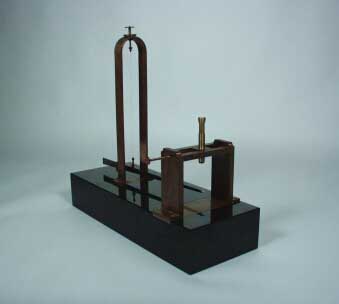
- Current balance according to A.M. Ampère for measuring the interaction of currents (1820)
- Drawing apparatus after K. Steinheil (around 1820)
- Trough apparatus with current measuring balance for researching the laws of the galvanic chain according to G.S. Ohm (around 1825)
- G.S. Ohm's rotating balance for investigating the conductive behaviour of various metal wires (1826)
- Galvanic element according to Becquerel for generating constant currents (ca. 1829)
- Measuring device for the heat radiation of the sun (actinometer) according to J. Herschel (around 1830) (in collaboration with the Physics History Group, HPS, Cambridge)
- M. Faraday's apparatus for investigating and proving the law of induction: Induction ring, unipolar generator and galvanometer with an astatic needle pair (1831)
- Two spherical capacitors to determine the capacitance differences of various gases, liquids and solids according to M. Faraday (around 1836)
- Torsion balance with glass thread according to M. Faraday (around 1836)
- Apparatus for the detection of electrostatic "induction in curved lines" according to M. Faraday (around 1837)
- Unipolar induction machine according to M. Faraday for testing the field line model (around 1832), modified according to Felici and von Fessel
- Electric motor after M.H. v. Jacobi (around 1834), with battery
- Unifilar magnetometer by M. Meyerstein to determine the intensity of the earth's magnetic force in absolute units, after C.F. Gauss and W. Weber (ca. 1835)
- Simple apparatus for determining the earth's horizontal magnetic field in absolute units, after W. Weber (around 1837)
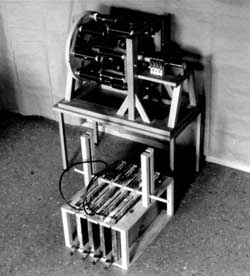
- Disc electrification machine for generating high voltages (mid-19th century)
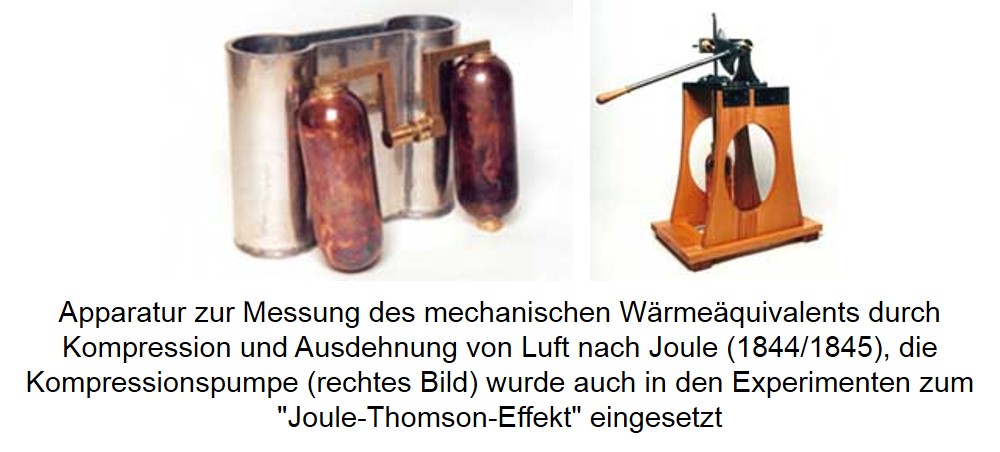
- Apparatus for measuring the mechanical heat equivalent by compression and expansion of air according to Joule (1844/1845)
- Measuring set-up for the terrestrial determination of the speed of light according to H. Fizeau (1849)
- Device for determining the mechanical equivalent of heat (paddle-wheel experiment) by J.P. Joule (around 1849)
- Astatic galvanometer , Louis Joseph Deleuil ca. 1850
- Two thermopiles for measuring thermal radiation, probably Heinrich Daniel Ruhmkorff (ca. 1850)
- Eye mirror after Hermann v. Helmholtz (1851)
- Pendulum for demonstrating the rotation of the earth according to J.B.L. Foucault (1852)
- Apparatus for demonstrating and explaining the lateral deviation of fast-moving rotating bodies according to G. Magnus (Magnus effect) (1852)
- Apparatus for demonstrating the forces on a flying rotating body according to G. Magnus (Magnus effect) (1852)
- J.P. Joule and W. Thomson apparatus for investigating cooling by adiabatic expansion of escaping gases (Joule-Thomson effect) (1852)
- Fizeau's apparatus for detecting the ether wind (1852)
- Bunsen and Roscoe fat spot photometer (ca. 1857)
- Reproduction of a spectral apparatus by G. Kirchhoff and R. Bunsen (1859)
- Photometer to determine the brightness of stars according to F. Zoellner (1859) (in collaboration with the Physics History Group, HPS, Cambridge)
- Ophthalmotrope (eye muscle model) according to W.M. Wundt (ca. 1862)
- Resonators after H. Helmholtz (around 1863)
- J.C. Maxwell's apparatus for determining the viscosity ("internal friction") of gases (1865/1866)
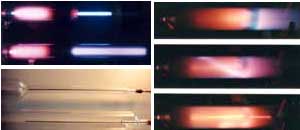
- Various gas discharge tubes according to Hittorf (between 1865 and 1879)
- Apparatus for the relative determination of sound velocities in different media (dust figure experiment) according to A. Kundt (1867)
- Solar furnace designed by A. Mouchot to generate heat using solar energy (around 1870)
- Water-influencing machine for generating high voltages ("water dropper") according to W. Thomson, Lord Kelvin (around 1872)
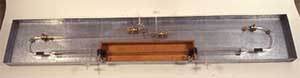
- Apparatus for detecting and analysing the propagation of the "electric force" according to H. Hertz (1886/87)
- Rotating apparatus for measuring lift on flat and curved surfaces according to O. Lilienthal (around 1888)
- Tangent bussole for measuring small currents (around 1890)
- Model to visualise the inductive coupling of two circuits according to H. Ebert (1897); based on a design by J.C. Maxwell (around 1872)
- Expansion cloud chamber according to C.T.R. Wilson
- Geiger-Müller counter tube
- Device for detecting Ampere molecular currents (Einstein-de Haas effect) (1915)
- Experimental set-up described by Raman for the investigation and demonstration of secondary radiation (Raman effect) (ca. 1928)