
Ocean Sampling Day 2015
Ocean Sampling Day 2015
Ocean Sampling Day 2015 - Worldwide sampling of the microbial diversity of the oceans on the summer solstice
Oldenburg/Wilhelmshaven. The Institute of Chemistry and Biology of the Marine Environment (ICBM) once again took part in this year's Ocean Sampling Day (OSD) with the Marine Sensor Systems (MSYS) working group. Initiated by the EU project Marine Microbial Biodiversity, Bioinformatics and Biotechnology (Micro B3), OSD 2015 took place worldwide for the second time(www.microb3.eu). The aim of the campaign is to sample the genetic diversity of microorganisms in the ocean. The activity of these tiny sea creatures is particularly high on the brightest day in the northern hemisphere, the day of the summer solstice on 21 June. Around the world, some 191 marine research facilities took surface samples on this day - whether in the Arctic, on Heligoland or on the coasts of New Zealand and the USA. This year's OSD was also supplemented by measurements for the EU project Citzen's Observatory for Coast and Ocean Optical Monitoring (Citclops)(www.citclops.eu). The ICBM is a partner in this project, which is concerned with analysing the water quality of the sea.
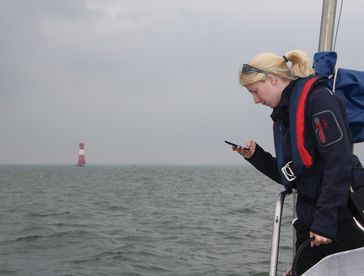
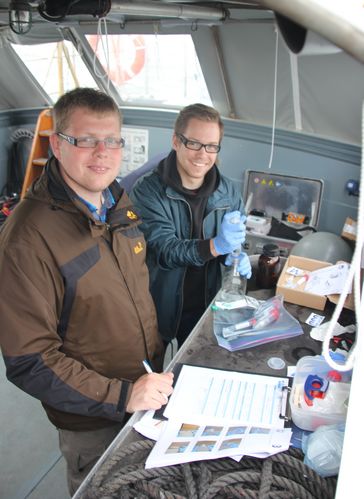
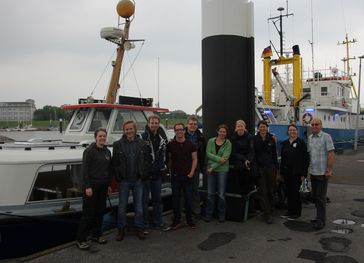
A small group of scientists and students, coordinated by Dr Julia Busch, research assistant at the ICBM, sailed out into the Jade Bay on the research boat OTZUM and took water samples at two locations. Using various sensors and a small CTD (Conductivity, Temperature, Depth) probe, the students from the Marine Engineering degree programme at Jade University Wilhelmshaven recorded various environmental parameters, such as the pH value, temperature, salinity and oxygen content of the water. The measured parameters not only provide important information on the samples taken for the OSD, but also give the scientists an impression of the state of the North Sea in the Jade Bay area. The students also had the opportunity to familiarise themselves with the handling of the measuring devices in practice. Dipl. Ing. Daniela Meier, a member of the MSYS working group, supported the OSD from the North Frisian island of Spiekeroog. She took samples following routine investigations on artificial islands as part of the Biodiversity - Ecosystem Functioning across marine and terrestrial ecosystems(BEFmate) project. The Max Planck Institute for Marine Microbiology in Bremen (MPI) is responsible for the subsequent analysis of the biodiversity samples taken worldwide. As soon as the DNA extraction and sequencing of the microorganisms has been completed and the first qualitative results are available, they will be published so that further research can be carried out jointly.
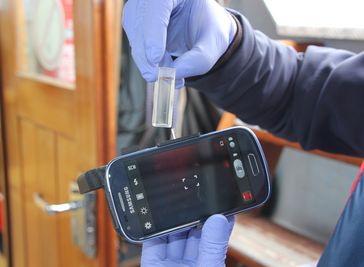
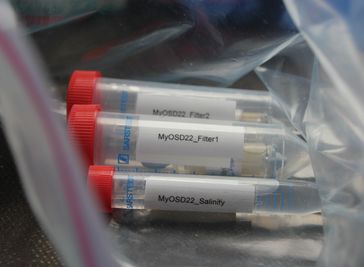
Although everything is still written down with pen and paper in science today, new methods of data collection, such as smartphone apps, are also being used. Easy-to-use apps that lead to the goal with just a few clicks make participation in marine research attractive for citizens. At the OSD, interested parties were able to turn to so-called OSD hubs, contact persons at marine research institutions, who provided them with the MyOSD Sampling Kit. This contains all the necessary materials, from gloves to thermometers and sample bottles, so that sampling could be carried out together with the OSD app. Dr J. Busch also acted as an OSD hub this year and distributed MyOSD sampling kits to interested members of the public. "The combination of Micro B3 and Citclops, with the aim of covering a large geographical area with measurements in one day, is ideal," says Dr J. Busch, contact person for Citclops at the ICBM, and adds, "The statistics for the measurements with the Citclops app show us a strong participation of scientists and also citizens in this year's OSD, which I am particularly pleased about." Citclops also enables the involvement of citizens in marine observation. As part of the project, apps are being developed for various measurements of the water status. For example, with a photo of the water surface, on which the water colour is clearly visible, anyone can contribute important data to the research in a short amount of time. PhD student Anna Friedrichs (MSYS working group) also had the opportunity to test the fluorescence adapter for smartphones that she developed for Citclops during the trip for the OSD 2015.