

Why?
Why?
Seven things everyone should know about the ocean.
Researchers, politicians and many other interested parties agree that the ocean is of great importance for life on earth and for each and every one of us! Together with educational scientists, these people have formulated seven principles that everyone should know about the oceans. This knowledge describes the uniqueness of the oceans. It is called "Ocean Literacy"!
1. the earth has a large ocean with many characteristics

- 70 % of the earth's surface is covered by the ocean.
- All bodies of water are directly or indirectly connected to each other.
- The highest elevations, the deepest valleys and the widest plains on earth are found in the oceans.
2 The characteristics of the earth are decisively determined by the ocean
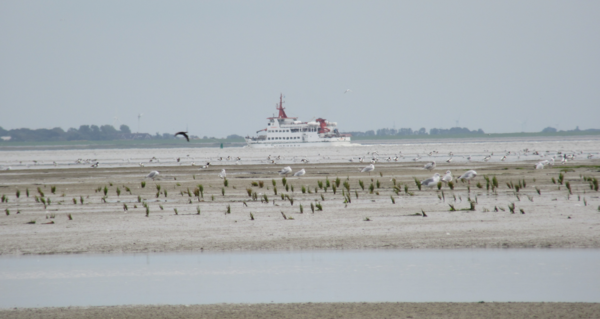
- Over the millennia, different sea levels have led to different coastlines.
- Even on a small scale, with every low tide and every high tide, the coastal area changes a little.
3. climate and weather are largely determined by the ocean

- We constantly benefit from this: the Gulf Stream brings warm water to the north. This also warms the air. It ensures that the climate here in north-west Europe is very mild. Siberia, for example, lies at the same latitude as Germany, but it is much colder there on average!
4 Only the ocean makes the earth habitable
- More than half of the oxygen we breathe is produced by small plant organisms in the ocean, the phytoplankton.
- In addition to oxygen, the ocean provides us with nutrients and, of course, water.
5 The biodiversity in the ocean is the greatest of all ecosystems on earth
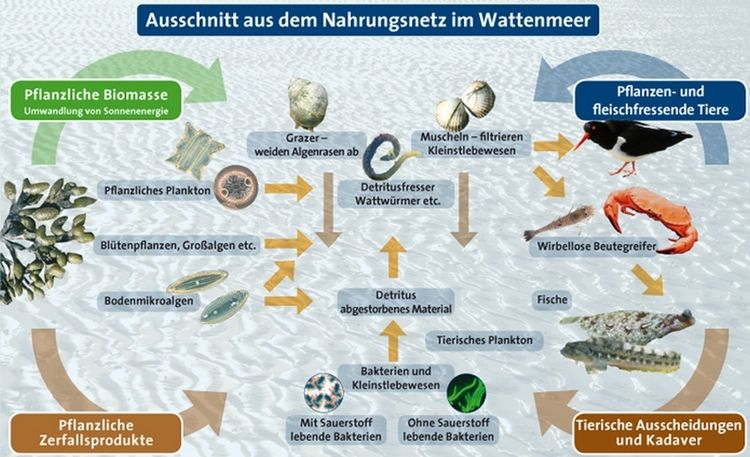
- The smallest to largest organisms live in the sea.
- However, there are so many of the smallest that they make up the largest mass in the oceans.
- Many groups of organisms only exist in the oceans.
6 We humans and the ocean are inextricably linked
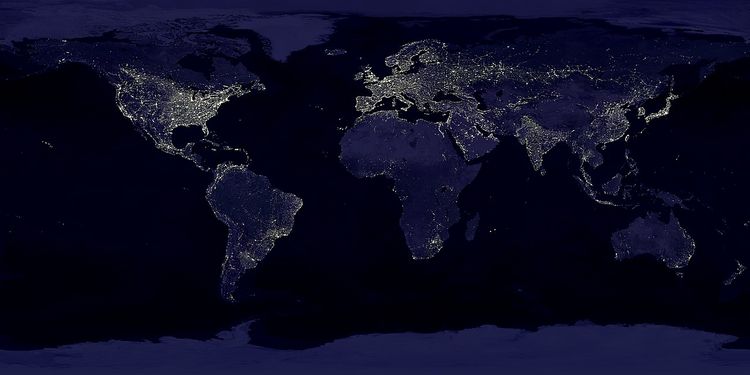
- 50 % of people live on the coast (< 100 km from the sea)
- Every 3rd person uses the oceans as a source of food
- Most of the world's trade passes through the oceans.
- Recreation and tourism.
7. most of the ocean is unexplored
- We do not yet know many of the ocean's organisms!
- In many cases, we have not yet understood how the ocean works in detail!
Only a research vessel can take you to (almost) any point on the ocean
When you consider the vastness of the ocean, it quickly becomes clear that ships are the only way to get to any point on the seas!
The German research fleet consists of many ships of different sizes. Depending on their main purpose, the large and well-known ships are also equipped differently and have special capabilities. The FS Polarstern mainly investigates the polar regions, while the research vessels Meteor, Maria S. Merian and Sonne are deployed in various areas of the open ocean.
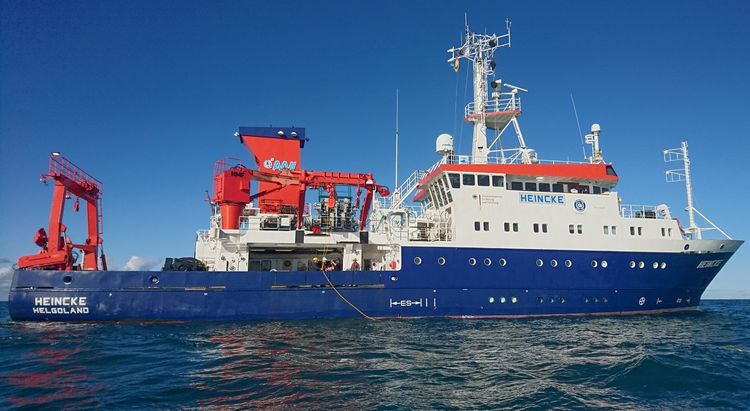
This contribution to the Day of the Sea will mainly focus on the medium-sized research vessel Heincke. It mainly sails the North Sea and is frequently used by the Institute of Chemistry and Biology of the Sea for research and student training!
The ship is operated by the Alfred Wegener Institute, Helmholtz Centre for Polar and Marine Research in Bremerhaven. You can find lots of interesting information about the ship on their website!