

Seagrass meadow
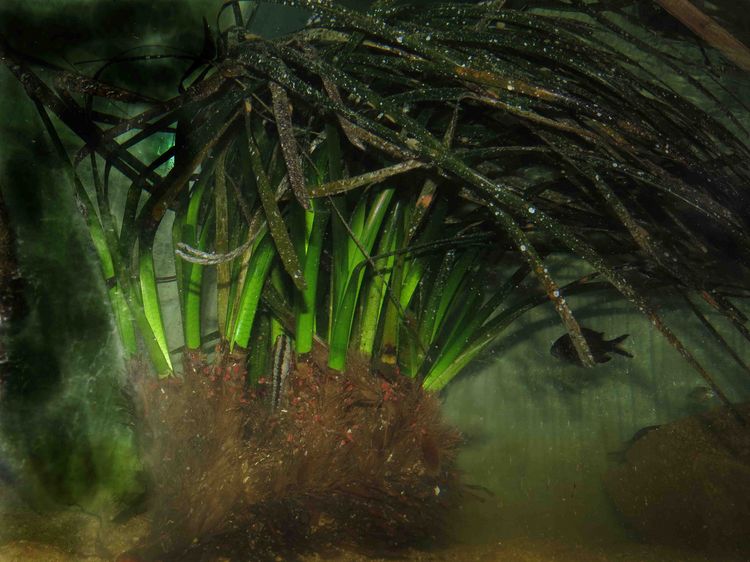
Seagrass meadow
The phytal of the sediment bottoms is dominated by seagrass meadows, which provide habitats for a remarkable fauna with some highly specialised species. The only marine flowering plants (Spermatophyta) are of terrestrial origin, but as monocotyledonous plants they belong to a different family than the terrestrial grasses.
Only 5 of the 40 species identified worldwide occur in the Mediterranean.
These include P. oceanica (Neptune grass), Zostera marina (small or true seagrass),
Zostera noltei (dwarf seagrass), Cymodocea nodosa (kelp grass), Halophila stipulacea
and the rarer species Ruppia maritima.
Occurrence
With good visibility, seagrasses can still occur at depths of up to 50 metres and in sheltered bays they can grow just below the water surface. The vertical spread is characterised by the limitations of hydrodynamics and temperature at the upper limit and insufficient light conditions in the littoral at the lower limit.
Reproduction
Although seagrasses are capable of sexual reproduction, they mainly reproduce vegetatively by drifting pieces of rhizome. The rhizomes are capable of root formation, with which they can anchor themselves in the mobile substrate of sedimentary soils, in contrast to most algae. The latter prefer to attach themselves with their rhizoids to hard substrates such as rocks. Nevertheless, there are a few algae species that can also colonise sediments.
Ecological significance
Seagrass meadows are characterised by extremely high productivity and are therefore very important carbon fixers. Posidonia oceanica, for example, can fix 3,000 g Cm(-2)a(-1), whereas phytoplankton near the coast can only fix a maximum of one tenth of this amount, even with a very good nutrient supply. Nevertheless, the share of seagrass meadows in the overall productivity of the oceans is relatively low due to the spatially limited occurrence of macrophytes.
In addition to their function as an oxygen supplier and the aeration of the sediment through an air tube system, seagrass meadows provide complex and structurally rich habitats for their biocoenoses. Representatives of the megafauna find refuge and hiding places here, while the settlement area is generally increased for sessile and hemisessile organisms. Epibionts, including sponges, hydrozoans, bryozoans and polychaetes, benefit from a very rich food supply on the seagrasses.