
Liebe in den Zeiten - Love through time - Amor entre tiempos
The performances
Performances
30. May to 1 June 2013 in the university auditorium
2. June, Werkstatt der Kulturen, Berlin
13 and 15 September at Towson University
Here is a compilation from 1 June 2013.
The participants
University of Oldenburg, School III:
30 students from the fields of Music, Integrated Media and Material Culture
Petra Eller, Institute of Material Culture, Theory and Practice of Aesthetics
Axel Fries, Institute of Music, Head of the Percussion Department
Gertraude Spier, Vocal Teacher
Peter Vollhardt, Institute of Music, Artistic Associate for Theatre Music (overall direction)
Arne Wachtmann, Coordinator Master's Degree Programme Integrated Medin
Prof. Dr Lars Oberhaus, Professor of Music Education
Towson University (Baltimore, USA), Department of Music:
20 students from the fields of singing/vocal pedagogy, dance and media
Dr Phillip Collister, Head of the Department of Singing
Dr Leneida Crawford, singing teacher
Dr Gerald Phillips, singing teacher and author of various articles on music philosophy
Instituto Pedagógico Havana in co-operation with the Instituto Cubano de la Música and the Instituto Superior de Arte:
6 students of singing/choral conducting, 1 student of percussion
Corina de la Caridad Campos Morales, professor of choral conducting
Accompanying research project
The artistic-educational project was scientifically monitored and evaluated. Prof Dr Lars Oberhaus (Oldenburg) is responsible for this evaluation.
The aim of the quantitative and qualitative evaluation is to record transcultural knowledge/experiences, ideas and ways of dealing with love songs in the mixed vocal ensembles at the end of the project (longitudinal study). Using standardised questionnaires, the project participants were asked about their expectations, experiences, knowledge and attitudes from a quantitative perspective at different points in time. From a qualitative perspective, subjective attitudes and experiences during the musical work in the various ensembles were reconstructed during the joint rehearsals in Oldenburg (May 2013) (stimulated recall, participant observation). The accompanying scientific research should be completed by the end of 2014, after which the results will be presented at various conferences or published in anthologies.
Liebe in den Zeiten - Love through time - Amor entre tiempos


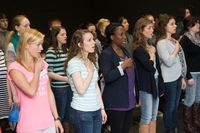
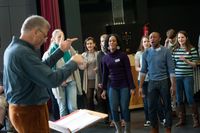
A Cappella + Percussion
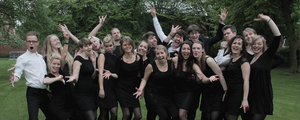
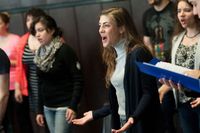
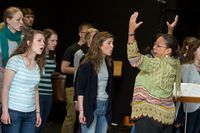
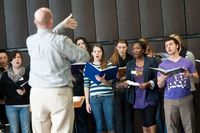
A vocal-percussion revue by music students from Germany, the USA and Cuba on the all-encompassing theme of "LOVE".
A total of 47 vocal students from the University of Oldenburg, Towson University (Baltimore) and the Havana School of Music worked together to develop and present love songs from all periods of music history from the three participating countries in the three participating languages. The programme included choral music from the three countries, opera arias and songs from jazz, musicals, rock, son, salsa and pop. The group experimented with a mixture of classical and popular singing as well as mouth percussion and beat boxing.
Students from the Institute of Material Culture at the University of Oldenburg explored the topic from a different angle. What is love? Which symbols, which objects show differences and similarities from an American, German and Cuban perspective? The results of their work enriched the evening with a variety of sensory experiences: sweet things to take away, delicious experiments to snack on, beguiling fragrances, intimate favourites, an experimental radio play and video clips from the respective countries of origin.
Like Daniel Barenboim's "West-Eastern Divan Orchestra", the project was based on the idea that joint artistic (music) projects contribute significantly to understanding between people from different countries and social systems.
For the audience, the revue was an encounter with many unknown songs from Cuba, the USA and Germany, but also with well-known songs in a completely new guise, for example when the Low German love song "Dat du mien Leevsten büst" was interpreted together by young Americans, Germans and Cubans with Cuban rhythms.