

Sea and climate
Sea and climate
Sea and climate
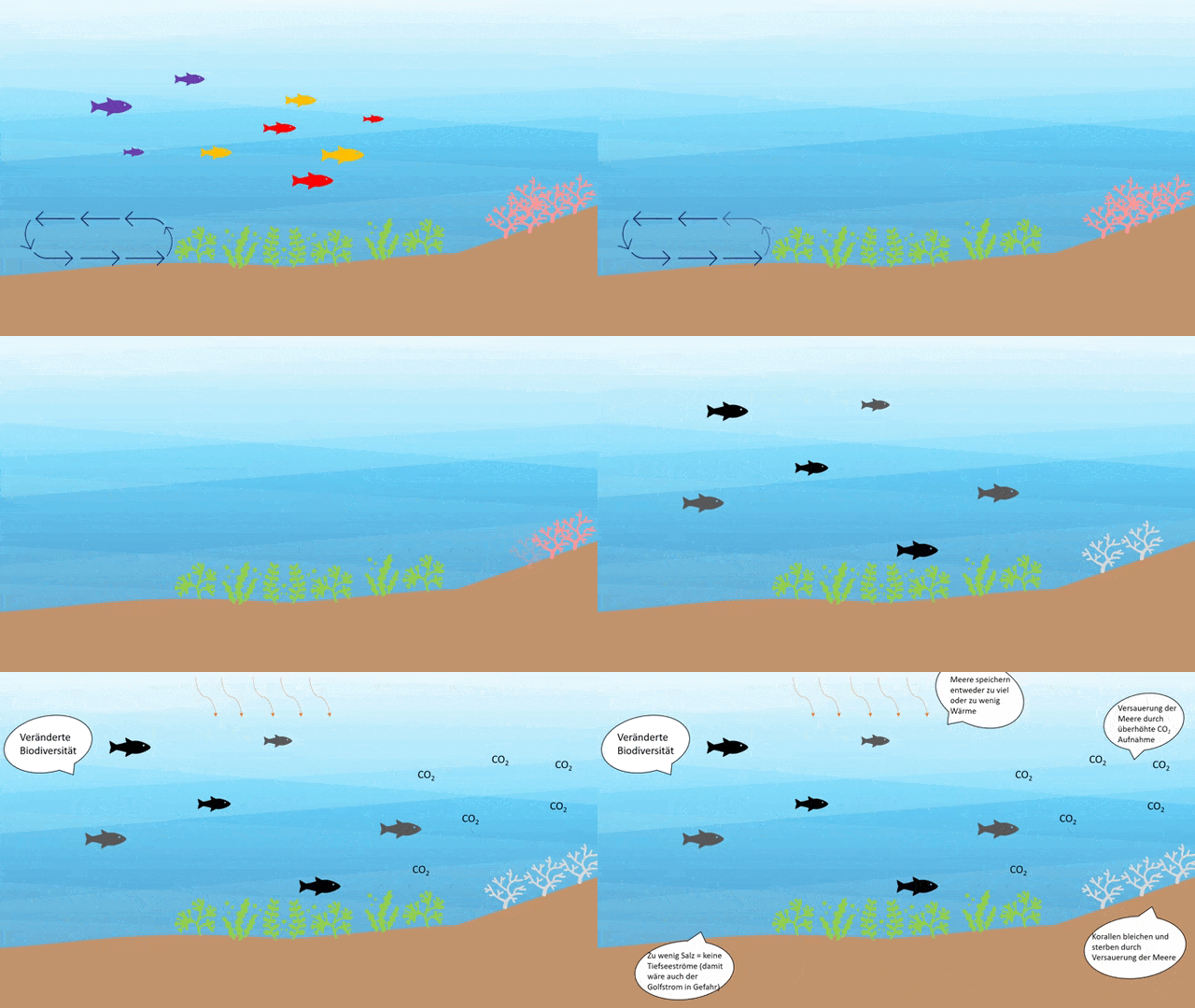
Global warming is causing glaciers to melt. If the glacier water flows into the world's oceans, the changed salt content creates a more stable arrangement of the ocean layers. They can exchange less. For example, deep water currents are no longer driven. They normally circulate through the sinking of cold, salty seawater. If these currents disappear, other currents such as the Gulf Stream will also stop. This could be really uncomfortable for us - "ice age uncomfortable"!
The shifting of the oceans influences how heat and carbon dioxide are stored. A chemical reaction occurs between the water and the excess carbon dioxide, making the sea increasingly acidic . This affects the biodiversity of animals and plants. They are not adapted to the new factors and are replaced by more robust species.
How do we know that the temperature and salinity are changing? Or that there are different layers of seawater?
That's right! Through our measurements with the CTD probe over several years and at different depths.
Read more here:
Global warming is salting the oceans - wissenschaft.de
Salt in our water: a danger for humans and the environment - Blog der Universität Koblenz - Landau (uni-koblenz-landau.de)
The Southern Ocean is getting sweeter and sweeter | pro-physik.de