This year, the Oldenburg University Society (UGO) celebrated its 50th anniversary. In this interview, Chair Werner Brinker talks about milestones, future tasks and new events.
Sarah Schulte plays in the women's national football league and is also doing her doctorate at the university's Institute of Sport Science. A balancing act between two worlds.
What we have learnt about solidarity during the pandemic also applies to other current crises, say medical ethicists Mark Schweda and Niklas Ellerich-Groppe. Their new podcast therefore sheds light on yesterday, today and tomorrow.
Around 1,900 students started their studies this autumn – many with the goal of becoming a teacher. What most of them take for granted is special for Esra Yasin, who is starting her Bachelor’s degree in teaching. Below, she explains why.
Using AI to operate critical infrastructure autonomously
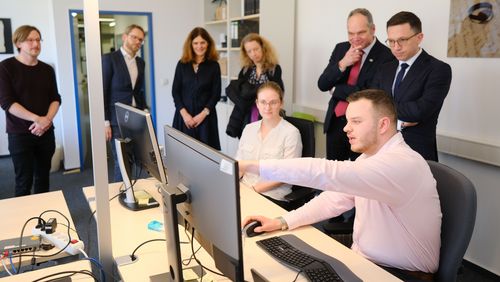
Developing an interdisciplinary approach to using artificial intelligence methods for the secure operation of critical infrastructure systems is the goal of a new research group led by Eric Veith at the Department of Computing Science.
Contact point for researchers from all over the world
The Institute for Advanced Study has been promoting cutting-edge research in the North West since 1997 - and has developed into an interdisciplinary meeting place.
"Celebrating the start of your studies here and now, together and in-person, means a lot to our university and to me personally.” With these words, University President Prof. Dr Ralph Bruder welcomed the first-year students on Monday.
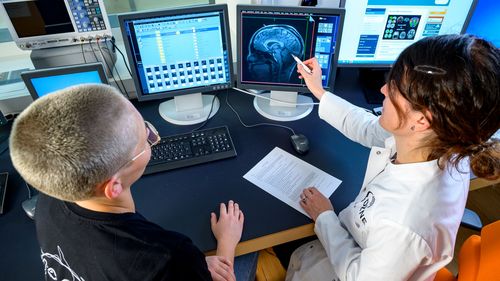
Can music improve the quality of life of people with disorders of consciousness? In her doctoral thesis, cognitive linguist Teresa Grimm examined this question from different perspectives.
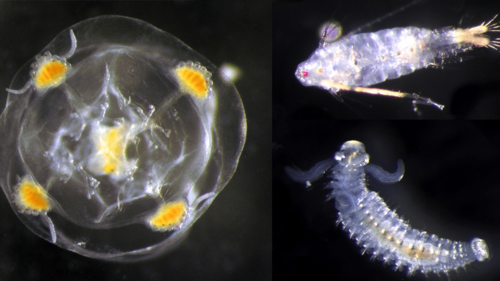
Glacial meltwater carries thousands of tiny rock fragments into the sea. Using a special camera, researchers at the University of Oldenburg can make these mineral particles visible in all their diversity – and investigate their impact on ecosystems.
The energy crisis also affects our university. The ultimate aim is to ensure continued in person teaching. What is the overall situation? What is the university doing to save energy? What can we all contribute? An overview.
Running a university at a time when energy resources are scarce is a challenging task. In this interview Jörg Stahlmann, Vice President of the university, talks about the top priorities for the winter semester and new opportunities regarding the university's goal of climate neutrality.
Goal: reduce electricity and gas consumption by a fifth
Generating electricity with solar panels, applying LEDs as lighting or using waste heat - there are many possibilities for obtaining energy from renewable sources or reducing the consumption of electricity and gas on campus.
Energy saving tips for the University of Oldenburg
Use electricity and heat as economically as possible – if we can do that, we will get through the winter well on campus. Everyone can contribute to this. Tips for the office, the seminar room, the laboratory and the kitchenette.
Major potential to cut emissions from electricity and gas consumption
The University has set itself the goal of becoming climate neutral. This goal was turned into a project. The first milestone has already been reached: the working group Climate Neutral University presented a Greenhouse Gas Balance.
Making teacher training more international and enabling future teachers to approach the issue of cultural diversity in the classroom is at the heart of the programme Lehramt.International. The project runs until the end of 2024.
Counteracting deforestation in Tanzania and mitigating potential climate risks is the goal of a new project led by ecological economist Bernd Siebenhüner.
Newly constituted University Council begins its work
It brings together seven personalities from science, business and culture in a central advisory and supervisory body of the university: the University Council. At the constituent meeting, the committee elected Felix Thalmann as Chair.
Interested guests, current research topics and lively dialogue - the ingredients for the University Society's popular science soirée, which has now been held again. The evening was once again characterised by chance.
When his namesake predecessor held the throne, England seemed "turn’d upside down" - Charles III also enters his reign in turbulent times. Historian Dagmar Freist on dynastic tradition, political culture and strong women.
The state of Lower Saxony is funding another future laboratory: the "Future Laboratory Water" research network, headed by Oldenburg marine researcher Oliver Zielinski, will begin its work on 1 October.