
Research
Research
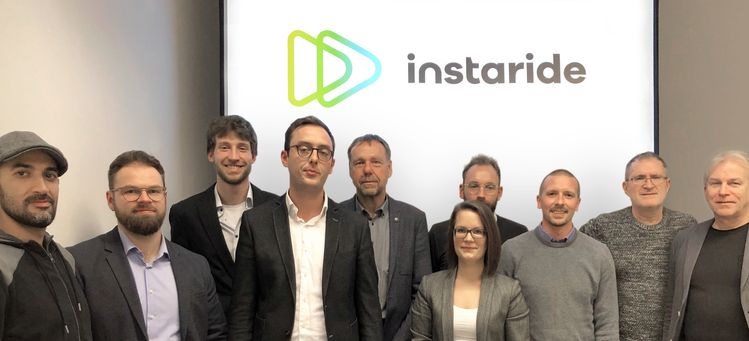
instaride - Development of an innovative ride-hailing solution
2019-2021
funded by the European Union - European Regional Development Fund
supported by the City of Oldenburg
Project partner:
- Department of Very Large Business Applications, University of Oldenburg, Prof. Dr Jorge Marx-Gómez
- ZRI - Interdisciplinary Centre for Information Society Law, University of Oldenburg, Prof. Dr. Prof. h. c. Jürgen Taeger
- Granny&Smith
Website:
Mobility is one of the critical design tasks of modern societies. This applies more than ever in times of climate change. Inevitably, immense ecological, economic and social challenges arise. In urban centres in particular, the often outdated infrastructure, problematically high levels of air pollution and rising living costs pose massive challenges. Future mobility concepts must therefore combine many aspects in order to continue to enable personal mobility within an affordable and ecologically sensible framework.
Ride-hailing is a form of mobility in which private car drivers offer to share a journey with other private individuals. The instaride project focuses on everyday journeys over short distances that take place anyway - for example to work or university. These journeys pass numerous destinations for which there are potential passengers who are currently still driving themselves. The interested people just need to be brought together.
The instaride project aims to use communication technology to bring drivers and passengers together intelligently, safely and immediately, thereby reducing costs and traffic. It is a convenient way to reduce CO2 emissions and make a contribution to environmental protection. With the efficiency gains that benefit nature and users, this form of ride-hailing can represent a central building block of future mobility.
By tying in with "anyway" journeys, instaride sets itself apart from traditional taxi services. The aim of the research is to develop a state-of-the-art communication technology ride-hailing application for this purpose. Ride-hailing is currently subject to numerous questions of German law and requires a lot of planning, which still hinders a spontaneous and intuitive application. In addition to the technical problems, legal issues relating to the conclusion of contracts between riders and passengers, liability for accidents or for the cancellation of agreed journeys and data protection will therefore be topics of research in the project.
Contact person:
- Prof. Dr.-Ing. habil. Jorge Marx Gómez
- Julian Rawe, M.Sc.
Collection and analysis of cycling data to support infrastructure optimisation (ECOSense)
2019/20 funded by the Federal Ministry of Transport and Digital Infrastructure (BMVI)
Project partner:
- baron mobility service GmbH, Oldenburg (network coordinator)
- University of Oldenburg, School II, Business Informatics/VLBA, Prof Dr Jorge Marx Gómez
- CoSynth GmbH & Co. KG, Oldenburg
Website:
www.bmvi.de/SharedDocs/DE/Artikel/DG/mfund-projekte/ecosence.html
Cycling should become more attractive. However, in order to improve the infrastructure for cycling, there is often a lack of important information - in particular information that specifies the actual need for cycle path networks and maps the condition and road safety of existing paths.
The ECOSense project aims to improve the information basis for future planning of the cycle path network. To this end, a sensor (see photo) will be attached to the bicycles of around 400 test subjects in two survey phases in winter 2019/20, which will record various parameters such as position, speed, vibrations and environmental factors over a period of around eight weeks. By linking the sensor data obtained in this way with other relevant data, many new insights can be gained into the quality of the cycling infrastructure and the use of bicycles in everyday life. These findings will be available to local decision-makers in Oldenburg so that the special requirements of cycling can be better taken into account when planning the infrastructure.

The overarching research objective of ECOSense is to investigate the informative value and analysis options that such sensor data can provide in the future. The aim is to technically optimise the effectiveness of the collection and evaluation of data obtained from sensors on bicycles. Further developments should also be available for future surveys in other cities.
mein-dienstrad.de (baron mobility service GmbH), the University of Oldenburg - School II, Department of Information Systems (VLBA) and CoSynth GmbH & Co KG are involved in the ECOSense study. The project is funded by the Modernity Fund (mFUND) of the Federal Ministry of Transport and Digital Infrastructure (BMVI).
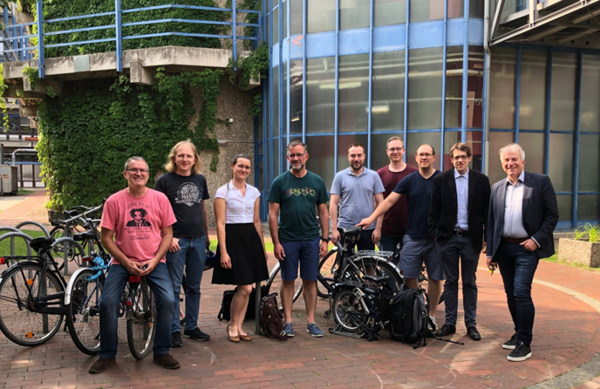
The ZRI is an associated partner in the ECOSense project and has addressed data protection issues for personal research data with regard to the sensor surveys. The example of ECOSense shows how optimal data protection can be realised in the best possible way for the test subjects involved in the project in accordance with the rules of the GDPR.
Sustainability and mobility in the context of smart cities (SuMoCoS)
2019 funded by the BMBF (keyword: Travelling Conferences)
Project partner:
- Department of Software Engineering, University of Oldenburg, Prof. Dr Andreas Winter (project leader)
- German Aerospace Centre (DLR), Institute for Traffic System Technology, Prof. Dr. Frank Köster
- Department of System Software and Distributed Systems, University of Oldenburg, Prof. Dr Oliver Theel
- Department of Very Large Business Applications, University of Oldenburg, Prof. Dr Jorge Marx-Gómez
- Interdisciplinary Centre for Information Society Law (ZRI), University of Oldenburg, Prof. Dr. Prof. h. c. Jürgen Taeger
- OFFIS Institute for Computing Science, Prof. Dr Wolfgang Nebel, Prof. Dr Sebastian Lehnhoff
- Oldenburg Energy Cluster OLEC e.V.
- embeteco GmbH & Co. KG
- erminas GmbH
- ecology + communication Unternehmensberatung GmbH (ecco)
- Electric-Special Photronicsysteme GmbH
- OECON Products & Services GmbH
- City of Oldenburg
- Tashkent University of Information Technologies (TUIT)
- City of Samarkand
- City of Urgench
- City of Nukus
- JV MAN Auto-Uzbekistan
- Mustofo Software LDT
- Mongolian Ministry of Transport
- Mongolian Academy of Science
- City of Ulaanbaatar
The aim is to strengthen the cooperation between all project partners and to further deepen the understanding of the theoretical and practical challenges of smart city projects in Central Asia. There will also be an exchange of knowledge between the participants with the aim of deepening and promoting cooperation in research and business projects.
Co-operation on topics such as environmental protection and mobility can lead to new solutions for preventing or reducing air pollution. For cities facing the possibility of driving bans, such as the city of Oldenburg, and for cities with high levels of pollution, such as the city of Ulaanbaatar, effective methods for reducing exhaust emissions are urgently needed. Other participating cities may be able to apply the lessons learnt directly and proactively before they also face similar problems. In view of this major task, the SuMoCoS project aims to strengthen international collaboration between researchers and provide relevant scientific input for the development of sustainable solutions based on the smart city approach.
The participation of partners from Mongolia and Uzbekistan will provide the added value that the two cities of Ulaanbaatar and Tashkent will not only learn about practical smart city applications from German cities, but also from cities in another emerging country with similar (but regionally different) conditions, challenges and approaches to solutions. In addition, the German partners can compare the approaches in both cities and potentially gain valuable information and insights from the differences.
The two international partners have similar core interests (including smart city applications to reduce environmental pollution and improve mobility), but also have different emphases: While topics such as improved safety and reducing corruption are important to the Uzbek partners, the Mongolian partners tend to focus on topics such as improved traffic control. These different aspects of smart city applications complement each other well and are to be synchronised via the German partners.
The following measures are planned to realise the objectives:
- Workshop in Ulaanbaatar: A four-day workshop with technical presentations by the German and Uzbek partners, industry presentations, PhD student presentations and planning meetings.
- Visit to Ulaanbaatar: Exchange with representatives of the city on the topics of sustainability and mobility.
- Workshop in Tashkent: A four-day workshop with expert presentations by the German and Uzbek partners, industry presentations, doctoral student presentations and planning meetings.
- Visit to Tashkent: Exchange with representatives of the city on the topics of sustainability and mobility
- Excursion to Samarkand: One-day excursion and dialogue with representatives of MAN on the topic of urban mobility.
- Workshop in Oldenburg: One-day workshop at the end of the project and for more in-depth networking between the German project partners.
The added value of the international co-operation lies both in the deepening of existing contacts (Oldenburg/Uzbekistan and Braunschweig/Mongolia) and the initiation of new contacts and partnerships. Young researchers are actively promoted by reserving one day each of the workshops in Tashkent and Ulaanbaatar for lectures and discussions by German, Uzbek and Mongolian doctoral candidates and young researchers. The workshops and, in particular, the participation of both scientific and entrepreneurial partners should make it possible to exchange knowledge and experience on sustainability and mobility in the context of a smart city with the Uzbek and Mongolian partners. In this context, both the partners in the target countries with their urgent issues in this area and the German partners such as the City of Oldenburg can benefit from the experience of the other international partners. It is also possible to showcase the capabilities of German companies and research institutions, which can lead to the exploration of joint activities and research and application in the field of smart city technologies.
The international partners in Mongolia and Uzbekistan support the project organisationally by providing space and infrastructure, as well as through the participation of competent and experienced scientists, representatives of the cities and representatives of companies.
The planned project strengthens and expands the existing co-operation with two emerging countries. This effect will be reinforced by the fact that not only local representatives from the respective cities (Tashkent, Ulaanbaatar) will take part in the planned international workshops, but also representatives from other cities and institutions in the region (Urganch, Nukus, Samarkand, Mongolian Ministry of Roads and Transport, Mongolian Academy of Sciences). The international partners include outstanding research and teaching institutions in the region (TUIT University Tashkent with several branches, Mongolian Academy of Sciences).
Contact:
Prof. Dr Andreas Winter
Tradability of physical goods through tokens in consortium networks (HAPTIK)
2019 - 2021 funded by the BMWi
Network partner:
- Interdisciplinary Centre for Information Society Law (ZRI) at the University of Oldenburg
- OFFIS Institute for Computing Science
- DB Schenker

Project participants:
ZRI of the University of Oldenburg:
Law:
Prof. Dr Jürgen Taeger (project leader); research assistant David Saive; research assistant Thomas Janicki; project assistant Angela Fröhlich; student assistant Jule Stabel. Assistant Jule Stabel
Business Informatics/VLBA:
Prof. Dr Jorge Marx Gómez ; Research assistant Stefan Wunderlich
OFFIS Institute for Computing Science:
Prof. Dr Axel Hahn; Research Assistant Dr Benjamin Weinert; Research Assistant PD Dr Sibylle Fröschle
DB Schenker:
Dieter Sellner, Marvin Lamberjohann
Shipping accounts for a large proportion of global transport volumes. In 2010, a total of 60,053 trillion tonne-kilometres were transported. tonne-kilometres were transported. This figure is expected to quadruple by 2050. In Germany, a total of over 316 million tonnes of goods were handled in the peak year of 2008, i.e. before the global economic crisis.
Modern merchant shipping is characterised by the use of a large number of different documents. The documentation obligations range from the keeping of ship certificates and the creation of ship logbooks to transport documents, which are necessary for the actual transport of goods.
The most important document for freight transport is still the bill of lading (B/L). It fulfils several functions: Firstly, it proves that the goods have been accepted by the carrier in the form described. Secondly, it securitises the obligation to deliver the goods to their destination and hand them over to the consignee. In addition, the transfer of ownership of the goods named in the B/L can be replaced by the transfer of the B/L(traditional function). Until now, it has been necessary for the B/L to be passed in paper form through the hands of the parties involved in the transport process so that they can check the documents. The time and costs involved are immense.
The German legislator has recognised the need for electronic B/Ls and, with the introduction of Section 516 (2) of the German Commercial Code (HGB), has given B/Ls the same status as electronic records. The prerequisite is the functional equivalence of the digital B/L. Digital B/Ls, also known as token B/Ls, can be created, transferred and checked for accuracy within seconds at the click of a mouse. This speeds up the entire document transfer process considerably and solves the problem of delivering the goods to be transported without presenting paper-based B/Ls. The central aim of the project is to develop a platform based on distributed ledger technology that enables the generation and trading of digital tokens. These tokens are to serve as electronic B/L.
Ongoing legal support for the project ensures that the token B/L fulfils the legal requirements at all times. The project thus makes a significant contribution to the German government's blockchain strategy. In addition, the use of the token B/L will speed up trading enormously and ultimately make it more cost-efficient. Especially in light of the ongoing crisis in the shipping industry, companies are dependent on further cost savings. The time-consuming paper-based documentation of the transport is no longer necessary thanks to the use of the Token-B/L, as is the time-consuming manual checking of documents. Containers for which a Token-B/L has been issued can be put back into circulation up to 5 days faster.
The Federal Ministry for Economic Affairs and Energy (BMWi) has been funding the project with 1.4 million euros since January 2019. The project will run for three years. The project is part of the BMWi's "Smart Data Economy" technology programme.

AI data platform for developing and testing autonomous vehicles (KIP)
2018/19 funded by the BMBF
Project partners (among others):
- Volkswagen AG (consortium leader)
- Robert Bosch GmbH
- ZF Friedrichshafen AG
- German Aerospace Centre (DLR),
- Institutes of the Fraunhofer-Gesellschaft
- Karlsruhe Institute of Technology (KIT)
- ZRI of the University of Oldenburg
Intensive research into automated and autonomous driving is being conducted worldwide. Vehicle systems have to make highly complex decisions in everyday traffic. Computers take over tasks that were previously reserved for human drivers. The technical systems should ensure a higher and more constant level of attention than a human driver. This is expected to result in greater safety for road users.
In the field of "autonomous driving", "artificial intelligence" (AI) is developing into the key technology for recognising and "understanding" complex traffic situations. Data from road traffic is the foundation for the research and development of AI-supported driving functions. As part of a research project funded by the Federal Ministry of Education and Research (BMBF), the "Learning Systems" platform is being set up to design an open AI data platform for developing and testing autonomous vehicles. In order to realise the potential of artificial intelligence for autonomous driving, the "learning data set" is of crucial importance.
The AI platform for learning and test data should enable autonomous driving developers to enter, exchange and process data on this platform. Technical requirements, economic perspectives and the legal framework must be taken into account.
The Oldenburg Interdisciplinary Centre for Information Society Law (ZRI) at the University of Oldenburg, headed by Prof. Dr Jürgen Taeger, was entrusted with the task of ensuring compliance with legal requirements such as data protection law and antitrust law. "It is a challenging task," explained Prof Taeger at the start of the research project, "to be able to collaborate with globally relevant industrial partners at a central point of research into autonomous driving. The invitation to participate shows that the Oldenburg lawyers are taking a leading position in dealing with the legal consequences of digitalisation". According to Taeger, the founding of the Oldenburg Centre for Information Society Law is proving to be the right step towards being able to participate in major research projects on an interdisciplinary basis.
Contact:
Prof. Dr Jürgen Taeger
Opportunities and risks of smart cams in public spaces (ChaRiSma)
2015 - 2017 funded by the BMBF
Project partner:
- University of Oldenburg
- OFFIS Institute for Computing Science
Scientific management:
- Prof. Dr Jürgen Taeger (Network management)
- Prof. Dr Dr Volker Boehme-Neßler
- Prof. Dr Susanne Boll-Westermann
Website: www.charisma-projekt.de/
The spread of the use of smart cams is taking the already increasing use of cameras to record public spaces to a new level. Their use opens up numerous opportunities for use, but at the same time harbours considerable risks for the informational self-determination of those captured on camera.
Smart cam is a collective term for cameras that are installed inconspicuously or invisibly on the body of a pedestrian (glasses, brooch, button, etc.), on the helmet of a cyclist, in the windscreen of a car or on an unmanned aerial vehicle. The special feature of these cameras is that they go beyond the limits of point-and-shoot, targeted photography that can also be noticed by those being photographed, as there is no recognisable act of triggering the camera. The device, which is often barely recognisable as a camera, films in continuous operation, automatically at set intervals or through targeted individual triggering, which, however, is carried out by the user without the classic gesture of taking a photograph.
The central objective of the research project is to determine whether there is a need for legal regulation for the socially acceptable use of smart cams in public spaces, what regulatory requirements may be involved and what regulatory alternatives are available to control the risks with their respective advantages and disadvantages.
Publications:
Jürgen Taeger (ed.): Opportunities and risks of smart cams in public spaces, Baden-Baden 2017.
Claudia Bischof: Opportunities and risks of smart cams in public spaces, ZD-Aktuell, 2016, 04103.
Claudia Bischof: Drones in legal practice test, DuD 2017, p. 142-146.
Thorsten Euler, Vanessa Cobus, Marion Koelle: Licence plates for drones - societal ideas on the regulation of smart cams in public spaces, DuD 2017, pp. 147-151.
Marion Koelle, Yvonne Brück, Vanessa Cobus, Wilko Heuten, Susanne Boll: Respectful wearable cameras?, DuD 2017, pp. 152-158.
Edgar Rose: Data glasses, drones, dashcams... Smart cams in public spaces cannot be controlled by jurisdiction alone, DuD 2017, pp. 137-141.
Edgar Rose: "Smart cams" in public spaces - regulatory deficits and options for future regulation, ZD 2017, pp. 64-69.
Thomas Schwenke: Private use of smart glasses in public spaces, dissertation, Edewecht, 2016.
Sebastian Straub: Observation from the air - limits of state and civilian drone use, Edewecht 2018.
Sustainable consumption of information and communication technology in the digital society - dialogue and transformation through open innovation (eCoInnovateIT)
2015 - 2018 funded by Volkswagen Foundation and MWK Lower Saxony
Project partner:
- University of Oldenburg
- University of Osnabrück
- Leuphana University of Lüneburg
Scientific management:
- Prof. Dr Frank Teuteberg
- Prof. Dr Andrea Lenschow
- Prof. Dr Karsten Müller
- Prof. Dr Jorge Marx Gómez
- Prof. Dr Thorsten Raabe
- Prof Dr Erik Hansen
- Prof Dr Stefan Schaltegger
Website: ecoinnovateit.de/
Against the backdrop of sustainable development, science is increasingly being called upon to re-examine the interdependencies between information and communication technology (ICT), human behaviour and our environment. Air, water and soil emissions, the consumption of valuable metals and increasing primary energy consumption are just as much a part of the ecological and economic effects of our "digital life" as the social changes caused by segregation in (virtual) communities and socio-economic changes in developing countries due to the disposal of old devices.
The aim is to involve different stakeholders (companies, consumers, politicians) in the design of more sustainable products, services, business models and legal frameworks. In a preparatory step, the specific expectations and attitudes of the stakeholders are first analysed both psychologically at the level of the individual and ethnographically at the level of interest groups. Building on this, entrepreneurial and political measures are developed that enable the involvement of external stakeholders in innovation processes, such as advisory boards, participatory product development, repair cafés, government incentive systems and initiatives on draft legislation. Both citizens and institutional actors have the opportunity to actively participate in the project, for example in workshops, citizens' forums, "fireside chats" and open lectures.
The results of the project will be made available to the public in the form of best practices, guidelines, recommendations for action or checklists. In addition, pilot projects are being organised with the participation of regional stakeholders.
Publications:
Warnecke, D.; Alkemeier, M.; Teuteberg, F. (2018): Information and communication technology in the focus of sustainability - An experimental study on the acceptance of sustainable smartphones; in: Proceedings of the Multiconference on Information Systems (MKWI) 2018, Lüneburg, Germany, 2018.
Wittstock, R.; Warnecke, D.; Teuteberg, F. (2018): Sustainable ICT consumption through sharing economy? A multi-methodological analysis; in: Proceedings of the Multiconference on Information Systems (MKWI) 2018, Lüneburg, Germany, 2018.
Wittstock, R.; Teuteberg, F. (2018): Transforming urban public mobility: A systematic literature review and directions for future research; in: Proceedings of the Multiconference on Information Systems (MKWI) 2018, Lüneburg, Germany, 2018.
Hansen, E. G., Eggers, A., Weber, U., Revellio, F., Schaltegger, S., Zufall, J. & Norris, S. (2017): Innovation Network Sustainable Smartphones: documentation of results Workshop III "End-of-life devices as "material databases": How old devices are preserved for value creation". In: 27 p. Lüneburg: Centre for Sustainability Management, 2017.
Asswad, J., Hake, G., Marx Gómez, J. (2017): The Core Requirements of a Decentralised Data Exchange Architecture for Sustainable ICT Lifecycle Development. In: Dialogue on Sustainability and Environmental Management (SEM 2017), Accra,(Ghana), 2017.
Asswad, J., Hake, G., Marx Gómez, J. (2017): The Service Point of the Future for Sustainable Smartphone Development. In: 19th Conference of the Division of Business Environmental Information Systems of the Gesellschaft für Computing Science e.V. (BUIS 2017), Magdeburg, (Germany), 2017.
Crutzen, N., Zvezdov, D., & Schaltegger, S. (2017). Sustainability and management control. Exploring and theorising control patterns in large European firms. In: Journal of Cleaner Production, Vol. 143, pp. 1291-1301, 2017.
Hansen, E. G., Weber, U., Schaltegger, S., & Zufall, J. (2017). Innovationsverbund Nachhaltige Smartphones: Result Documentation Workshop II "From Device to Solution: Product-Service Systems as the Basis of Sustainable Utilisation Systems". In: 34 p. Lüneburg: Centre for Sustainability Management, 2017.
Lüdeke-Freund, F., Freudenreich, B., Schaltegger, S., Saviuc, I., & Stock, M. (2017). Sustainability-Oriented Business Model Assessment-A Conceptual Foundation. In: E. G. Carayannis, & S. Sindakis (Eds.), Analytics, Innovation, and Excellence-Driven Enterprise Sustainability. (Palgrave studies in democracy, innovation, and entrepreneurship for growth). New York: Palgrave MacMillan. pp.169-206, 2017.
Abdelkafi N., Hansen E. (2017): Ecopreneurs' Creation of User Business Models for Green Tech: An Exploratory Study in E-Mobility. In: International Journal of Entrepreneurial Venturing, 2017.
Haucke, F. (2017): Smartphone enabled social change: evidence from theFairphone case?; in: Journal of Cleaner Production, 2017.
Qian, W. & Schaltegger, S. (2017): Revisiting Carbon Disclosure and Performance: Legitimacy and Management Views. The British Accounting Review, Vol. 49, Iss. 4, July 2017, pp. 365-379.
Svenson, F. (2017): In Search of Sustainable ICT: Exploring the Neglected Social Dimension through Macromarketing Thought, forthcoming in: Springer Lecture Notes in Information Systems and Organisation, 2017.
Adelmeyer, M.; Walterbusch, M.; Biermanski, P.; Seifert, K.; Teuteberg, F. (2017): Rebound Effects in Cloud Computing: Towards a Conceptual Framework; to be published in: 13th International Conference on Information Systems (WI 2017), St. Gallen, Switzerland, 2017.
Hansen, E. G., Weber, U., & Schaltegger, S. (2016). Innovationsverbund Nachhaltige Smartphones: Result documentation Workshop I - "Sustainable product designs and supply chain". In: 30 pp. Lüneburg: Centre for Sustainability Management, 2017.
Schaltegger, S.; Lüdeke-Freund, F.; Hansen, E. G. (2016): Business Models for Sustainability: A Co-evolutionary Analysis of Sustainable Entrepreneurship, Innovation and Transformation. Organisation & Environment, Vol. 29, Iss. 3, pp. 264-289, 2016.
Hake, G., Asswad, J., Marx Gómez, J. (2016): Overcoming the Barriers of Sustainable Business Model Innovations by Integrating Open Innovation. In: Proceedings of International Conference on Business Information Systems (BIS 2016), Leipzig, (Germany), 2016.
Asswad, J., Hake, G., Marx Gómez, J. (2016): The Obstacles of Sustainable Business Innovations. In: Proceedings of International Conference on Information Resources Management (Conf-IRM 2016), Cape Town, (South Africa), 2016.
Asswad, J., Hake, G., Marx Gómez, J. (2016): Towards an Open Platform for Establishing Sustainable ICT Products. In: Proceedings of the 30th International Conference on Informatics for Environmental Protection - Stability, Continuity, Innovation (EnviroInfo 2016), Berlin, (Germany), 2016.
Asswad, J., Hake, G., Marx Gómez, J. (2016): Integration of Open Innovation in the Development of Sustainable ICT. In: Proceedings Multikonferenz Wirtschaftsinformatik (MKWI 2016), Ilmenau, (Germany), 2016.
Haucke, F. (2016): The Fairphone Case? A Social Movement Or Another Trend to be Followed? Second International Conference of the Sustainable Consumption Research and Action Initiative (SCORAI 2016), University of Maine, 2016.
Jede, A.; Teuteberg, F. (2016): Understanding Socio-Technical Impacts Arising from Software-as-a-Service Usage in Companies: A Mixed Method Analysis on Individual Level Data; accepted for publication in: Business & Information Systems Engineering (BISE).
Mehmann, J.; Teuteberg, F. (2016): The Fourth-Party Logistics Service Provider Approach to support Sustainable Development Goals in Transportation - A Case Study of the German Agricultural Bulk Logistics Sector; in: Journal of Cleaner Production; Vol. 126, pp. 382-393.
Polex, J.; Lenschow, A. (2016): Surrendering to growth? The European Union's goals for research and technology in the Horizon 2020 framework; published in: Journal of Cleaner Production, 2016.
Stiel, F.; Michel, T.; Teuteberg, F. (2016): Enhancing Manufacturing and Transportation Decision Support Systems with LCA Add-ins; in: Journal of Cleaner Production; Vol. 110, pp. 85-98.
Wittstock, R.; Warnecke, D.; Teuteberg, F. (2016): Development of an ontology of sustainability assessment methods for the ICT sector. 20th Conference of the Environmental and Sustainability Accounting Network (EMAN), Lüneburg, 2016.
Frehe, V. (2015): Can Target Costing be Applied in Green Logistics - Evidence From a Conjoint Analysis; in: ECIS 2015 Completed Research Papers. Paper 48.
Hörisch, J.; Schaltegger S.; Windolph, S. (2015): Linking sustainability-related stakeholder feedback to corporate sustainability performance. An empirical analysis of stakeholder dialogues; in: International Journal of Business Environment; Vol. 7, No. 2, pp. 200-218.
Johnson, M.; Schaltegger, S. (2015): Two Decades of Sustainability Management Tools for SMEs: How Far Have We Come? in: Journal of Small Business Management; Vol. 54, No. 2, pp. 481-505.
Schaltegger, S; Burritt, R. (2015): Business cases and corporate engagement with sustainability: Differentiating ethical motivations; in: Journal of Business Ethics, pp. 1-19.
Schaltegger, S.; Hansen, E.; Lüdeke-Freund, F. (2015): Business Models for Sustainability: Origins, Present Research, and Future Avenues; in: Organisation & Environment, Vol. 29, No. 1, pp. 3-10.
Stiel, F.; Teuteberg, F. (2015): On the Environmental Footprint of an IS Conference, In: Proceedings of INFORMATIK 2015: Computing Science, Energy and Environment, 45th Annual Conference of the Gesellschaft für Computing Science e.V. (GI); in Lecture Notes in Informatics (LNI), Cottbus.
Stiel, F.; Teuteberg, F. (2015): Industry 4.0 Business Models in a Sustainable Society: Challenges, Competencies and Opportunities; in: Proceedings of the 2015 Scientific Conference of the Erich-Gutenberg-Arbeitsgemeinschaft Köln e.V.: Industrial Internet of Things - Managerial Challenges and Organisational Aspects, Nuremberg, 2015.
Stiel, F.; Teuteberg, F. (2015): Sustainable Consumption of Information and Communication Technologies in a Digital Society - Dialogue and Transformation through Open Innovation; in: Global Cleaner Production and Sustainable Consumption Conference, Sitges, Barcelona, Spain.
Walterbusch, M.; Martens, B.; Teuteberg, F. (2015): A Decision Model for the Evaluation and Selection of Cloud Computing Services: A First Step Towards a More Sustainable Perspective, In: International Journal of Information Technology & Decision Making (IJITDM); Vol. 14, No. 2, pp. 253-285.
Sustainable fulfilment of mobility needs in rural areas (NEMo)
2016 - 2019 funded by MWK Lower Saxony & Volkswagen Foundation
Project partner:
- University of Oldenburg
- TU Braunschweig
- Leuphana University of Lüneburg
Scientific management:
- Prof. Dr.-Ing Jorge Marx Gómez (Project leader)
- Prof. Dr.-Ing. Axel Hahn
- Prof. Dr Jantje Halberstadt
- Prof. Dr Anna Henkel
- Prof. Dr Frank Köster
- Prof. Dr Jürgen Sauer
- Prof. Dr Jürgen Taeger
- Prof. Dr Andreas Winter
- Prof Dr David M. Woisetschläger
Website: www.nemo-mobilitaet.de
Demographic change is making it increasingly difficult for rural districts and municipalities to provide a basic range of public mobility services such as buses and trains without raising the question of necessary social participation, meaningful regional value creation and, last but not least, realisable environmental protection goals. The need for mobility in rural areas will continue to increase in the future, for example due to the concentration of medical care facilities and shopping centres close to cities. Local transport companies are already facing the challenge of reliably guaranteeing the accessibility of work and training places, schools, health centres and leisure facilities from rural areas.
In view of this problem, the NEMo research project is pursuing the development of sustainable and innovative mobility services and business models based on them for rural areas. NEMo aims to create new mobility services in which citizens also become mobility providers. For example, infrequently travelled stops on local public transport could also be served by private individuals with their own cars to take other people with them. Higher passenger utilisation of private cars can close supply gaps and reduce the overall volume of traffic and the associated negative environmental impact.
Information and telecommunication technologies play a key role in planning and controlling this new rural mobility. As part of the project, specific requirements and acceptance limits of this new mobility will first be identified and then transferred into a legally compliant concept. Citizens and public mobility providers will be involved in the project from the outset so that the actual needs and obstacles can be recognised, taken into account and resolved at an early stage.
In addition to the coordination and networking of all stakeholders, particular attention is paid to the self-organisation of citizens (e.g. car pools and neighbourhood cars). Economic, social and organisational concepts are being developed for the provision of a comprehensive and open mobility offer. These concepts will be brought together in a networked platform for the rural area of Oldenburg and the district of Wesermarsch, tested and evaluated in close dialogue with citizens.
Publications:
Samland, U. (2017): Peripheralisation and spatial mobility in rural areas. In: Stephan Lessenich (ed.): Closed societies. Proceedings of the 38th Congress of the German Sociological Association in Bamberg 2016
Akyol, A.; Halberstadt, J.; Hebig, K; Jelschen, J; Winter, A.; Sandau, A. and Marx Gómez, J.; Flexible Software Support for Mobility Services, GI-Proceedings Volume 275 (2017)
Pieper, N.; Jahns, M. and Woisetschläger, D.M. (2017): 'Getting the hitchhiking ball rolling on rural areas' - Drivers and barriers of peer-to-peer ridesharing usage itention. From Science to Society: The Bridge provided by Environmental Informatics, 2017
Sandau, A. and Marx Gómez, J. (2017): New Era of Fleet Management Systems for Autonomous Vehicles. From Science to Society - New Trends in Environmental Informatics, 2017
Akyol, A.; Halberstadt, J.; Hebig, K.; Kuryazov, D.; Jelschen, J.; Winter, A.; Sandau, A. and Marx Gómez, J. (2017). Flexible Software Support of Imovated Mobility Business Models. From Science to Society: The Bridge provided by Environmental Informatics, 2017
Wagner vom Berg, B.; Marx Gómez, J. and Sandau, A. (2017). ICT-platform to transform car dealerships to regional providers of sustainable mobility services. Interdisciplinary Journal of Information, Knowledge, and Management, 12, 37-51. Retrieved from www.informingscience.org/Publications/3652
Wagner vom Berg, B.; Brinkmann, M. and Marx Gómez, J.: Conception of a Big Data platform in context of power economy, 2016, 4th International Conference on ICT for Sustainability (ICT4S), Amsterdam, 30 August - 02 September
Sandau, A.; Wagner vom Berg, B. and Marx Gómez, J.: Trends in Mobility: A Competitive Based Approach for Virtual Mobility Providers to Participate in Transportation Markets, 2016, Advances and New Trends in Environmental Informatics
Jelschen, J.; Küpker, C.; Winter, A.; Sandau, A.; Wagner vom Berg, B. and Marx Gómez, J.: Towards a Sustainable Software Architecture for the NEMo Mobility Platform, 2016, Adjunct Proceedings of the 30th edition of the EnviroInfo
Mau, D.; Tostmann, J.; Woisetschläger, D. M. and Pieper, N.: What drives profitability of electric vehicles in mixed fleets? - An empirical analysis based on data logger information, 2016, Adjunct Proceedings of the 30th edition of the EnviroInfo
Samland, U.: The possibility of collaborative mobility in rural areas, 2016, Adjunct Proceedings of the 30th edition of the EnviroInfo
Sandau, A.; Marx Gómez, J.; Stamer, D.; Wagner vom Berg, B. and Halberstadt, J.: Model of mobility demands for future short distance public transport systems, 2016, 2016 International Conference on Information Resource Management
Wagner vom Berg, B.; Cordts, M.; Gäbelein, T.; Marx Gómez, J.; Sandau, A.; Stamer, D. and Uphoff, K. (2016): Mobility 2020 - ICT-supported transformation of car dealerships into regional providers of sustainable mobility. Proceedings of the MKWI 2016. TU Illmenau.
Ommen, N.; Blut M.; Backhaus C. and Woisetschläger, D. M. (2016): Toward a better understanding of stakeholder participation in the service innovation process: More than one path to success, Journal of Business Research, doi:10.1016/j.jbusres.2016.01.010.