History
History
1793 - today
1793
- 7 March 1793
Establishment of a teacher training college by Duke Peter Friedrich Ludwig (pictured) according to plans by the Superintendent General Esdras Heinrich Mutzenbecher.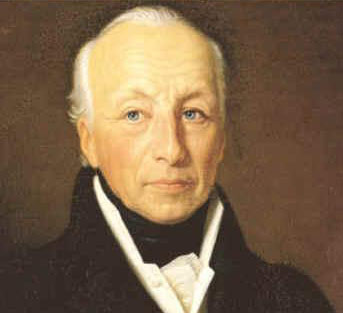 Duke Peter Friedrich Ludwig of Oldenburg (1755 - 1829)
1920
- 26 March 1920
The teacher training college becomes a higher educational institution and is replaced in 1926 by "Pädagogische Lehrgänge", a two-year teacher training course. Teacher training is discontinued after the start of the war in 1939.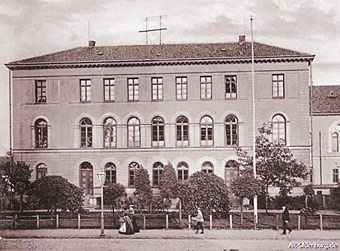 The teacher training building erected in 1846
1945
- 1 October 1945
The newly founded Pädagogische Akademie in Oldenburg (renamed Pädagogische Hochschule in 1948) is the first teacher training institution allowed to open its doors in the four occupation zones after the war.
1959
- 23 February 1959
Request from the Oldenburg City Council to the Lower Saxony state government and the state parliament to establish a second state university in Oldenburg.
1970
- 25 August 1970
Decision by the state government to establish universities in Oldenburg and Osnabrück.
1971
- 1 March 1971
Establishment of a founding committee in Oldenburg, consisting of one third each of professors, academic staff and students.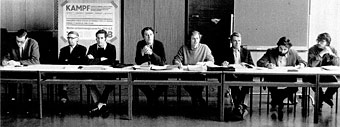 Panel discussion with members of the founding committee
1972
- 26 April 1972
Foundation of the Universitätsgesellschaft Oldenburg e.V.
1973
- 5 December 1973
The "Law on the Organisation of the Universities of Oldenburg and Osnabrück" passed by the Lower Saxony state parliament on 3 December 1973 comes into force. This law establishes the University of Oldenburg - with the simultaneous integration of the University of Education. The foundation is followed in April 1974 by the start of study operations with eight degree programmes and the "single-phase teacher training" pilot project, which runs until the early 1980s.
1974
- 29 May 1974
The Council unanimously adopts the university charter submitted by the founding committee and also unanimously approves the naming of the university after Carl von Ossietzky. However, the state government refuses.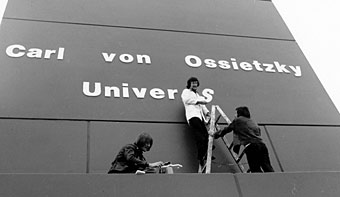 Protest by the students: Attachment of the name to a building
 - 17 December 1974
Cooperation agreement between the University of Oldenburg and the German Trade Union Confederation (DGB), Lower Saxony district, the first of its kind in the Federal Republic of Germany.
1980
- 17 April 1980
First co-operation agreement with a foreign university, the Rijksuniversiteit Groningen.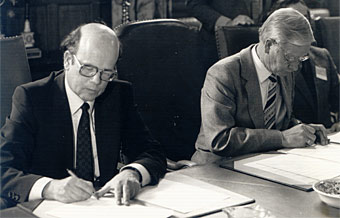 Signing of the co-operation with Groningen: Jan Bleumink (Groningen) and Hans-Dietrich Raapke (Oldenburg)
 - 18 December 1980
Ground-breaking ceremony for the energy laboratory, symbolising the research focus on "alternative energy sources".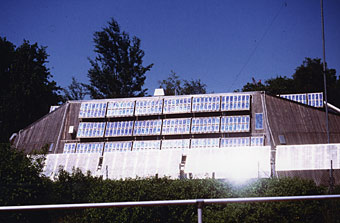 The Oldenburg energy laboratory, which covers its own energy needs
1985
- 22 October 1985
Commencement of studies in the subject of Computing Science with 55 students.
1989
- 30 May 1989
Green light from the state government for the expansion of marine research in Oldenburg and foundation of the Institute of Chemistry and Biology of the Marine Environment (ICBM).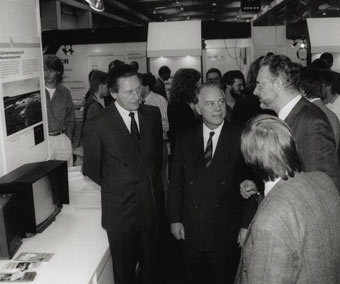 Biotechnica 1989: Science Minister Cassens and Minister President Albrecht at the ICBM stand
1990
- 12 December 1990
Joint declaration by the Universities of Oldenburg and Bremen on the coordinated expansion of research and teaching and the creation of a "Northwest Science Region".
1991
- 3 October 1991
Official ceremony to name the university after Carl von Ossietzky with Minister President Gerhard Schröder.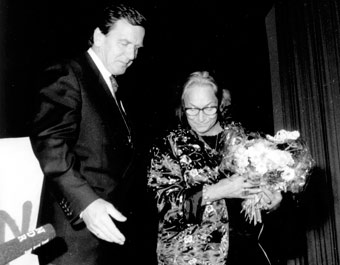 Official ceremony to name the university:
Gerhard Schröder with Rosalinde von Ossietzky-Palm, Carl von Ossietzky's daughter.
1992
- 29 January 1992
Opening of the OFFIS computer science institute as an affiliated institute.
1996
- 8 February 1996
Foundation of the Hörzentrum as an affiliated institute, followed five years later by the establishment of the HörTech Center of Competence as a non-profit limited company.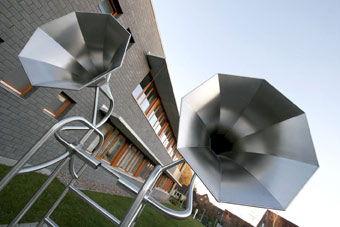 The Oldenburg Haus des Hörens
1997
- 13 October 1997
Opening of the Hanse-Wissenschaftskolleg (HWK) in Delmenhorst.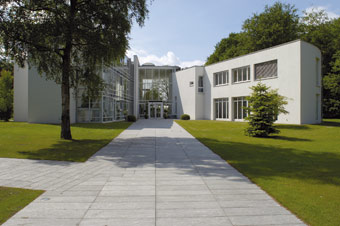 Research centre for renowned scientists from all over the world: the HWK
2001
- 14 November 2001
Establishment of the "Center for Distributed Learning" (later C3L), which bundles further education degree programmes and e-learning projects.
2002
- 16 October 2002
The Hanse Law School, a joint project of the University of Oldenburg, the Rijksuniversiteit Groningen and the University of Bremen, is launched.
2003
- 1 August 2003
The Centre for Wind Energy Research (ForWind) starts work - an institution of the Universities of Oldenburg and Hanover (since 2009 also with the University of Bremen).
2004
- 18 October 2004
Conversion of the study structure to Bachelor's and Master's degrees.
2008
- 28 February 2008
Successful application of Oldenburg as "City of Science 2009". Programme booklet for the City of Science
2009
- 13 August 2009
Opening of the EWE research centre for energy technology NEXT ENERGY with a research focus on renewable energies, energy efficiency and electricity storage as an affiliated Institute.
2012
- 15 June 2012
The University of Oldenburg is successful with its "Hearing4all" proposal as part of the Excellence Initiative of the German federal and state governments. Partners are the Hannover Medical School and the University of Hannover.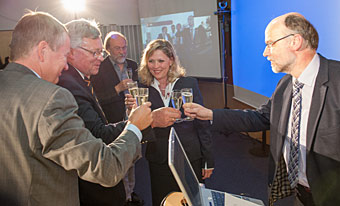 Excellence Initiative: delighted with the great success
 - 20 June 2012
Amendment to the Lower Saxony Higher Education Act (NHG), which creates the legal framework for the European Medical School Oldenburg-Groningen (EMS) and thus also the prerequisite for the establishment of a School of Medicine at the University of Oldenburg. - 23 October 2012
Official opening of the European Medical School Oldenburg-Groningen (EMS) with Lower Saxony's Minister President David McAllister, who welcomes the first 40 students. - 28 November 2012
The hearing research team Prof. Dr Dr Birger Kollmeier, Prof. Dr Volker Hohmann (both University of Oldenburg, Cluster of Excellence "Hearing4all") and Dr Torsten Niederdränk (Siemens AG) receive the German Future Prize from the hands of Federal President Joachim Gauck. They succeeded in significantly improving the technology of hearing systems.
2013
- 7 September 2013
The Karl Jaspers House is opened in the Dobbenviertel district. The villa houses the 12,000-volume library of the famous Oldenburg psychiatrist and philosopher and is home to the Karl Jaspers-Gesellschaft e.V. and the EWE Foundation. The Karl Jaspers House with two flats for visiting academics
1793 - 1969
1793
- 7 March 1793
Establishment of a teacher training college by Duke Peter Friedrich Ludwig (pictured) according to plans by the Superintendent General Esdras Heinrich Mutzenbecher.Duke Peter Friedrich Ludwig of Oldenburg (1755 - 1829)
1807
- 24 July 1807
Inauguration of the first seminary building in Wallstraße in Oldenburg, 1846 takeover of the seminary building in Peterstraße, which housed the teacher training college until 1927 and the teacher training college from 1945 to 1966.The teacher training building erected in 1846
1920
- 26 March 1920
The teacher training college becomes a higher education institution and is replaced in 1926 by teacher training courses, which include a two-year course with initial academic requirements.
1932
- 10 December 1932
The NSDAP-led state government orders the closure of the teacher training courses and, together with the state of Prussia, establishes a university for teacher training, which ceases teaching again after the start of the war.
1945
- 1 October 1945
The newly founded Pedagogical Academy in Oldenburg is the first teacher training institution allowed to open its doors in the four occupation zones after the war.
1948
- 1 January 1948
The Pedagogical Academy is renamed the College of Education (PH).
1959
- 23 February 1959
Request from the Oldenburg City Council to the Lower Saxony state government and the state parliament to establish a second state university in Oldenburg.
1966
- 24 November 1966
The new building complex on AmmerländerHeerstraße is handed over to the university.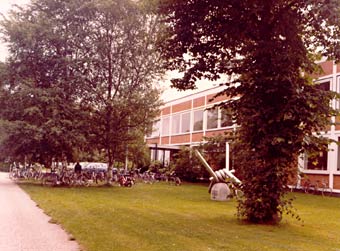 The new PH complex on Ammerländer Heerstraße
1969
- 1 April 1969
The teacher training colleges in Lower Saxony are granted the status of academic universities and two years later the right to award doctorates.
1970 - 1980
1970
- 13 May 1970
The "Memorandum on the Founding of the Universities of Oldenburg and Osnabrück" by the Ministry of Education and Cultural Affairs of Lower Saxony is published. - 17 July 1970
Positive vote by the German Council of Science and Humanities in favour of the founding of universities in Oldenburg and Osnabrück.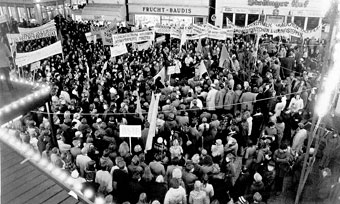 Demonstration in Oldenburg city centre in favour of the founding of a university
 - 25 August 1970
Decision by the state government to establish universities in Oldenburg and Osnabrück.
1971
- 1 March 1971
Establishment of a founding committee in Oldenburg, consisting of one third each of professors, academic staff and students.Panel discussion with members of the founding committee
1972
- 11 July 1972
Approval of the model experiment for single-phase teacher training (ELAB). - 26 April 1972
Foundation of the Universitätsgesellschaft Oldenburg e.V. (UGO). Founding meeting of the UGO
1973
- October 1973
Draft statutes of the structural commission of the founding committee with the naming of the university after the publicist and Nobel Peace Prize winner Carl von Ossietzky
(1889 - 1938).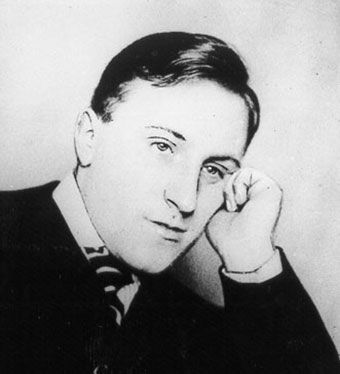 Carl von Ossietzky
 - 5 December 1973
The "Act on the Organisation of the Universities of Oldenburg and Osnabrück" passed by the Lower Saxony state parliament on 3 December 1973 comes into force. This law establishes the University of Oldenburg - with the simultaneous integration of the University of Education. The foundation is followed in April 1974 by the start of study operations with eight degree programmes and the "single-phase teacher training" pilot project, which runs until the early 1980s.
1974
- 1 March 1974
Establishment of the bodies of the University of Oldenburg with the four departments of Education and Socialisation, Communication/Aesthetics, Social Sciences and Mathematics/Natural Sciences. - 1 April 1974
Official start of the first semester of the University of Oldenburg with 2507 students enrolled in eight degree programmes (social sciences, economics, mathematics, physics, chemistry, biology, spatial planning, education) and sixteen teaching degree programmes. - 1 May 1974
Prof. Dr Rainer Krüger takes up his post as the first Rector of the University of Oldenburg (term of office 1974 - 1979). - 29 May 1974
The Council unanimously adopts the university charter submitted by the founding committee and also unanimously approves the naming of the university after Carl von Ossietzky. However, the state government rejects the proposal.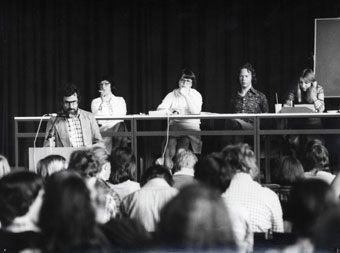 Discussion of the university charter in the Council with founding rector Rainer Krüger at the lectern
 - 16 October 1974
One day after the start of the semester, students affix the name "Carl von Ossietzky University" in large letters to the tower of the General Availability Centre (AVZ), visible from afar. The Rectorate sees this initiative as a demonstrative act intended to express the united will of the university. - 17 December 1974
Cooperation agreement between the University of Oldenburg and the German Trade Union Confederation (DGB), Lower Saxony district, the first of its kind in the Federal Republic of Germany.
1975
- 27 June 1975
Under the protection of 200 police officers, painters remove the lettering on behalf of the State Building Authority.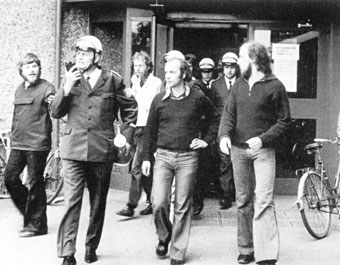 Police operation during the removal of the lettering ordered by the state government
1976
- 24 January 1976
Recommendation by the German Council of Science and Humanities to expand the university to 9,300 places by 1985. - 13 - 16 June 1976
Four-day bicycle demonstration to Hanover with 1,500 university members against the state government's plans to reduce the university to 5,700 places. The target figures are later set at 6,800 places by 1985.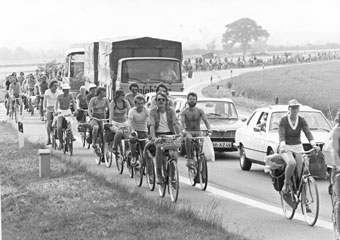 Caused a sensation: the bicycle demonstration to Hanover
1978
- 4/5 May 1978
First "Ossietzky Days" to mark the 40th anniversary of Carl von Ossietzky's death. Participants include the former Governing Mayor of Berlin, Heinrich Albertz, Federal Constitutional Court judge Helmut Simon and DGB Federal Chairman Heinz-Oskar Vetter. Continuation of the Ossietzky Days in the 1980s with a focus on socio-political issues.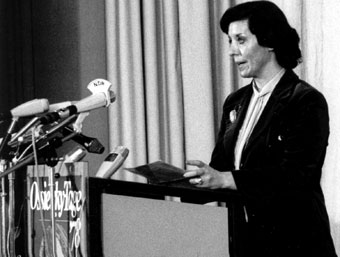 Ossietzky Days1978 with the Irish 1976 Nobel Peace Prize winner Mairead Corrigan-Maguire
1979
- 8 May 1979
Demonstration by around 2,000 students, university lecturers, academic staff and employees of the University of Oldenburg and the Oldenburg and East Frisia Universities of Applied Sciences in Hanover against the state government's plans to reduce expansion planning, particularly in the natural sciences.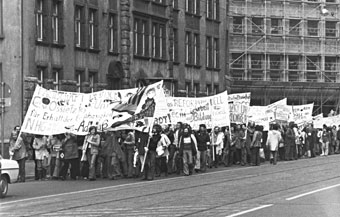 Demonstration in Hanover against the state government's plans to reduce university expansion programmes
 - 1 October 1979
Following the resignation of founding rector Prof. Dr Rainer Krüger, the Oldenburg educational scientist Prof. Dr Hans-Dietrich Raapke is appointed "Representative for the performance of the duties of the President", as all candidates for the office withdraw their candidacy.
1980
- 17 April 1980
First co-operation agreement with a foreign university, the Rijksuniversiteit Groningen.Signing of the co-operation agreement with Groningen: Groningen Rector Jan Bleumink (r.) and Hans-Dietrich Raapke - 1 October 1980
Dr Horst Zilleßen takes office as the first elected President of the University of Oldenburg (term of office 1980 - 1986) - 18 December 1980
Ground-breaking ceremony for the energy laboratory, symbol of the research focus on "alternative energy sources" promoted in particular by Prof. Dr Hans-Joachim Luther and the first building for the natural sciences on the Wechloy site.Landmark of Oldenburg's energy research: the energy laboratory
1981 - 1990
1981
- 11 March 1981
Recommendation by the expert commission appointed by the state government to establish a Department of Law. - 16 April 1981
Reorganisation of the university by charter issued by the Ministry of Science, after no agreement could be reached within the university’s governing bodies. Formation of nine faculties (FB) instead of the previous four: Faculty 1: Education, Faculty 2: Communication/Aesthetics, Faculty 3: Social Sciences, Faculty 4: Economics and Law, Faculty 5: Philosophy/Psychology/Sports Science, Faculty 6: Mathematics/Computing Science, Faculty 7: Biology, Faculty 8: Physics, Faculty 9: Chemistry. - 1 June 1981
The university establishes a branch in Wilhelmshaven for its research into coastal and marine biology. - 3 July 1981
Three expert reports commissioned by the Lower Saxony Ministry of Education and Cultural Affairs give a positive assessment of the single-phase teacher training programme (ELAB). Nevertheless, the pilot scheme is discontinued by the state government. - 16 December 1981
Unanimous resolution by the University Senate ‘requesting’ the state government not to initiate any preliminary disciplinary investigations against civil servants and employees ‘who are accused solely of standing as candidates for the DKP’.
1982
- 23 June 1982
University Senate resolution on the establishment of Institutes. - 15 October 1982
Handover of the new buildings on Uhlhornsweg, comprising the university library, the sports facilities and the canteen.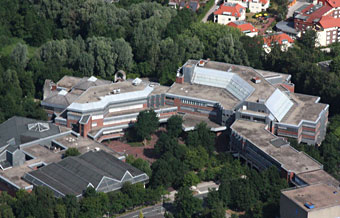 The university expands: new building complex on Uhlhornsweg
 - 8 December 1982
University Senate resolution to introduce Magister degree programmes alongside the Diplom and teaching degree programmes. The Magister degree programmes were launched in the summer semester of 1984.
1983
- 21 April 1983
Signing of the first co-operation agreement with an Eastern European university, the Nicolaus Copernicus University in Toruń (Poland). - 15 August 1983
Signing of the first agreement with a US university, the University of South Dakota.
1984
- 16 February 1984
The Lower Saxony State Parliament rejected the establishment of a Faculty of Law in Oldenburg by 85 votes to 83. - 28 June 1984
Opening ceremony for the natural sciences complex at the Wechloy site. - 1 October 1984
The DIALOG centre is established to facilitate better cooperation between the university and industry.
1985
- 17 March 1985
First participation in the Hannover Messe trade fair, presenting research in the field of ‘renewable energy sources’. - 22 October 1985
The Computing Science degree programme commences with 55 students.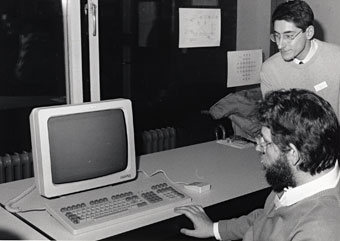 First steps towards public engagement: Computing Science Day 1988
1986
- September 1986
To reach out to the public, the university presented its research for the first time as part of an exhibition in the city. Exhibition opening with President Horst Zilleßen (2nd from right)
 - 1 September 1986
The Wolfgang Schulenberg Institute for Educational Research and Adult Education, named after the educational researcher who died in 1985 and was one of the pioneers behind the university’s foundation, begins its work.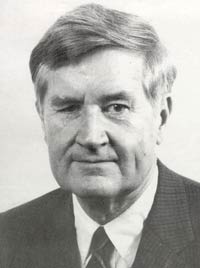 Wolfgang Schulenberg (1920–1985)
 - 1 October 1986
Prof. Dr Michael Daxner begins his 12-year term as President of the University of Oldenburg. - 10 December 1986
Adoption of the ‘Guidelines for Increasing the Proportion of Women in Academia’.
1987
- 22 September 1987
Cooperation agreement with Towson University (Maryland, USA).
1988
- 1 April 1988
Start of research work on the critical complete edition of Carl von Ossietzky’s works, funded by the German Research Foundation (DFG). - 7 May 1988
Willy Brandt speaks about Carl von Ossietzky during the Ossietzky Days ’88 and advocates for the university to be named after him. Participants at the five-day event included Robert Jungk, Lev Kopelev, Ossip Flechtheim and Erich Fried.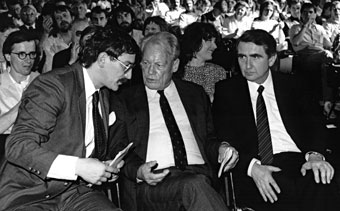 Willy Brandt at the university – welcomed by President Michael Daxner (left) and Lord Mayor Horst Milde (right)
1989
- 30 May 1989
The state government gives the green light for the expansion of marine research in Oldenburg and, consequently, for the Institute of Chemistry and Biology (ICBM). By 1994, 40 million marks will have been invested in the building and equipment.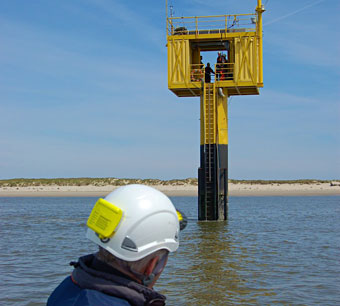 The ICBM’s measuring pole off the island of Spiekeroog enables important data to be collected in the Wadden Sea regardless of the season.
1990
- 3–4 April 1990
Launch of the ‘Karl Jaspers Lectures on Contemporary Issues’, initiated by Prof. Dr Rudolf zur Lippe, featuring the Indian philosopher Raimondo Panikkar. Guests of the lecture series, which continues to this day, have included Carl Friedrich von Weizsäcker, Lev Kopelev, Hans-Georg Gadamer, Ivan Illich, Jürgen Habermas and Willard V. O. Quine. - 20 March 1990
Announcement of the publication of a 25-volume critical complete edition of Tucholsky’s works by the Germanist Prof. Dr Dirk Grathoff and the political scientist Prof. Dr Gerhard Kraiker, who are also among the editors of the complete works of Ossietzky. The final volume of this edition is due to be published in 2010. - July 1990
Establishment of the university’s first DFG-funded research training group on the topic: ‘Environmental and Resource Economics’. - 11 October 1990
For the first time, the number of students rose to over 10,000. - 12 December 1990
President Prof. Dr Michael Daxner and the Rector of the University of Bremen, Prof. Dr Jürgen Thimm, sign a “Joint Declaration” stating their intention to coordinate the expansion of research and teaching, thereby laying the foundations for a “North-West Science Region”.
1991 - 2000
1991
- 9 July 1991
Resolution of the General Assembly of the German Research Foundation (DFG) to accept the University of Oldenburg. - 3 October 1991
Official ceremony to name the university after Carl von Ossietzky with Minister President Gerhard Schröder, who apologises to Ossietzky's daughter for the inappropriate behaviour of the state government in naming the university. The Lower Saxony state parliament had previously cleared the way for the naming by amending the law.Official naming ceremony:
Gerhard Schröder with Rosalinde von Ossietzky-Palm, Carl von Ossietzky's daughter
1992
- 29 January 1992
Opening of the Oldenburg Research and Development Institute for Information Technology Tools and Systems (OFFIS) initiated by Prof. Dr Volker Claus and Prof. Dr Hans-Jürgen Appelrath. - 1 October 1992
Prof. Dr Joachim Luther, founder of Oldenburg's energy research, becomes Director of the Fraunhofer Institute for Solar Energy Systems. His successor in Oldenburg is Prof Dr Jürgen Parisi.
1993
- 6 October 1993
Admission by the University Senate to participate in the Lower Saxony pilot project to test a global budget, which gives the universities greater freedom of action.
1994
- 13 April 1994
Launch of "Campusradio" on Radio Bremen, a 50-minute weekly magazine programme about the universities of Oldenburg and Bremen by young university graduates who receive one year of media training in Oldenburg and produce around 1,400 contributions. - 8 October 1994
Rowohlt Verlag presents the Oldenburg Complete Edition of Carl von Ossietzky's writings at the Frankfurt Book Fair. The editors are the German scholar Prof. Dr Dirk Grathoff, the political scientist Prof. Dr Gerhard Kraiker and the historians Prof. Dr Werner Boldt and Dr Elke Suhr. Ossietzky Complete Edition
1995
- 10 February 1995
First New Year's reception of the University and the University Society in the Oldenburg State Theatre. - 21 June 1995
Inauguration of the OFFIS building with around 5,000 square metres on Escherweg. The building becomes the nucleus of the newly emerging IT quarter Oldenburg on the site of the "Alte Fleiwa".
- 30 October 1995
UNESCO declares the Karl Jaspers Lectures on Contemporary Issues to be the German contribution to the World Decade for Cultural Development. - 29 November 1995
The DFG approves the first Collaborative Research Centre (SFB) for the University of Oldenburg, "Neural Foundations of Cognitive Performance", in which the University of Bremen is also involved. Prof Dr Reto Weiler is temporary spokesperson for the SFB.
1996
- 8 February 1996
The Hearing Centre initiated by Prof. Dr Dr Birger Kollmeier is founded and becomes an affiliated Institute of the University.The Haus des Hörens in Oldenburg
1997
- 13 October 1997
Opening of the Hanse-Wissenschaftskolleg in Delmenhorst, which is intended to provide the universities of Oldenburg and Bremen with close links to world-leading scientists.Research centre for renowned scientists from all over the world: the HWK - 21 November 1997
Signing of the contract for the first endowed professorship. EWE AG, the business association "DER KLEINE KREIS e.V." and the foundation of the Oldenburgische Landesbank (OLB) fund a C3 professorship for business informatics for five years.
1998
- 27 April 1998
Opening of the lecture hall centre on the Haarentor campus with Dr Jürgen Rüttgers, Federal Minister of Education, Science, Research and Technology, as keynote speaker. Lecture hall centre at night
 - 15 July 1998
First award of the prize for good teaching. - 1 October 1998
Prof. Dr Siegfried Grubitzsch takes office as President (1998 - 2004).
1999
- 3 February 1999
Foundation of the "Laboratory for Thermophysical Properties" initiated by the chemist Prof. Dr Jürgen Gmehling, which becomes an Institute of the University of Oldenburg. - 1 July 1999
Foundation of the Hannah Arendt Research Centre under the direction of Prof. Dr Antonia Grunenberg Visit by Richard von Weizsäcker to the Hannah Ahrendt Research Centre with President Siegfried Grubitzsch (l.) and Antonia Grunenberg (r.)
2000
- 28 April 2000
Establishment of the interdisciplinary Neurosensory Science Centre, in which scientists from the fields of biology, physics, psychology and computing science work together. - 20 September 2000
The University Senate decides to establish the "Centre for Interdisciplinary Women's and Gender Studies" (ZFG).
From 2001
2001
- 30 March 2001
Handover of the new building for the Faculty of Economics on the Haarentor campus. - 27 June 2001
The University Senate approves a new university structure comprising 5 Schools (instead of 11 departments), Institutes and centres for interdisciplinary research. - 14 November 2001
Establishment of the ‘Centre for Distributed Learning’ (CeDeL), intended to bring together further education degree programmes and e-learning projects. Later, the responsibilities for further education and further education degree programmes are brought together under the umbrella of the Centre for Lifelong Learning (C3L). - 15 November 2001
Together with the Oldenburg Protestant Hospital, the HörTech Center of Competence is founded as a non-profit limited liability company (GmbH).
2002
- 16 October 2002
The Hanse Law School, a joint project between the University of Oldenburg, the University of Groningen and the University of Bremen, is launched; it is financially supported by regional institutions. This marks the launch of the first law degree programme offering Bachelor’s and Master’s degrees. - 1 November 2002
A cooperation agreement is signed with the City of Oldenburg.
2003
- 29 January 2003
Opening of the Oldenburg Technology and Start-up Centre (TGO), initiated by the university and the University Society, which provides support to young entrepreneurs starting their own businesses.
- May 2003
The Evaluation Commission of the State of Lower Saxony issues a certificate stating that the University has a strong research profile in the field of environmental sciences. - June 2003
The Sophie Drinker Institute for Musicological Women’s and Gender Studies becomes an affiliated institute of the University of Oldenburg. - 1 August 2003
The Wind Energy Research Centre (ForWind) – a joint initiative of the Universities of Oldenburg and Hanover (and, since 2009, also the University of Bremen), based in Oldenburg – commences operations. The centre is dedicated not only to research but also to issues of efficient knowledge transfer between academia, industry and politics.
- 17 November 2003
Formation of the University Council, required for the first time under the Lower Saxony Higher Education Act (NHG). The Chair is Dr Werner Brinker, Chief Executive of the energy group EWE AG. - November 2003
The German Research Foundation (DFG) approves the large-scale, cross-regional project “Automatic Verification and Analysis of Complex Systems” (AVACS) as a Collaborative Research Centre (SFB), with Prof. Dr Werner Damm as its spokesperson.
2004
- 18 February 2004
The Oldenburg KinderUniversität is inaugurated with the double lecture ‘The Little Man in the Ear’, attended by almost 2,000 children aged between eight and twelve. The KinderUniversität proves extremely popular
 - 29 June 2004
The university is awarded the “Family-Friendly University” certificate in Berlin. - 1 October 2004
Prof. Dr Uwe Schneidewind takes office as President (2004 – 2008). - 18 October 2004
With the transition of its degree structure to Bachelor’s and Master’s degrees, the University of Oldenburg becomes one of the first higher education institutions in Germany to comply with the Bologna decisions of the EU Ministers of Education.
2005
- 1 April 2005
Funding for the Research Training Group “TrustSoft – Trustworthy Software Systems” from the German Research Foundation (DFG). - 7 May 2005
Decision by the German Research Foundation (DFG) to fund Oldenburg’s third Collaborative Research Centre, ‘The Active Ear’, at the Institute of Physics. - 13 July 2005
Adoption of the mission statement for the university’s development up to 2010, which sets the student intake at 10,000. - 11 November 2005
First presentation of the Klaus von Klitzing Prize – named after the Nobel Laureate in Physics and worth 15,000 euros – for dedicated teachers of science subjects, awarded by the University and the EWE Foundation.
2006
- 20 June 2006
Establishment of the Centre for Sustainability and Environmental Research (COAST), which brings together expertise from the natural sciences, economics and Computing Science in this field. - 14 October 2006
Introduction of university studies for secondary school students, enabling highly gifted school pupils to undertake university-level study whilst still at school. The youngest participant is 13 years old. President Uwe Schneidewind with pupils who are studying
 - 31 October 2006
Opening of the CENTOS centre (Oldenburg Center for Sustainability Economics and Management), which brings together the University of Oldenburg’s expertise in sustainability research in the fields of economics and social sciences.
2008
- 23 February 2008
Launch of the ‘Jaspers Year’ to mark the 125th anniversary of the birth of the philosopher, psychologist and Oldenburg native Karl Jaspers (1883–1969), with significant international participation. - 28 February 2008
Oldenburg’s successful bid for the title ‘City of Science 2009’, awarded by the Stifterverband für die Deutsche Wissenschaft, beating Heidelberg, Konstanz, Lübeck, Rostock and others.Programme booklet for the City of Science - 19 August 2008
Announcement of Prof. Dr Uwe Schneidewind’s resignation from the office of President. The Vice-President for Administration and Finance, Dr Heide Ahrens, takes over as acting President until 2010. - 1 September 2008
The Max Planck Junior Research Group for ‘Marine Biogeochemistry’ commences its work; the second group approved by the Max Planck Society, ‘Inorganic Biogeochemistry and Analytics’, follows in 2011. - 2 December 2008
The Fraunhofer Project Group for “Hearing, Speech and Audio Technology” is launched at the HörTech Center of Competence.
2009
- 21 January 2009
With a gala at the Oldenburg State Theatre and lectures by the KinderUniversität at the EWE Arena, Oldenburg, as the “City of Science 2009”, launches an extensive annual programme featuring over 600 events.
- 10 March 2009
The Fraunhofer Institute for Manufacturing Technology and Applied Materials Research IFAM in Bremen, in close co-operation with the Department of Energy and Semiconductor Research at the University of Oldenburg and the EWE Research Centre NEXT ENERGY, is setting up an expert group to focus on componentsand system development of energy storage systems for electric cars. - 30 June 2009
Establishment of the NOWETAS Foundation by the Universities of Oldenburg and Bremen, Jacobs University and the Hanse-Wissenschaftskolleg, with the aim of linking research and teaching. - 13 August 2009
Opening of the EWE Research Centre for Energy Technology NEXT ENERGY, an affiliated institute with a research focus on renewable energies, energy efficiency and electricity storage. - 1 September 2009
Split of the Oldenburg, East Frisia, Wilhelmshaven University of Applied Sciences (FH) into two independent universities: FH East Frisia and FH Wilhelmshaven/Oldenburg/Elsfleth (WOE). The co-operation between the University of Oldenburg and FH WOE (later Jade University of Applied Sciences) is enshrined in law. - 28 September 2009
The University and the University of Applied Sciences announce that they intend to implement the plan arising from the ‘Oldenburg City of Science 2009’ project and to build the so-called ‘Smart House Oldenburg’ in Oldenburg city centre as a venue for showcasing science. - 29 October 2009
First award of the ‘Helene Lange Prize’, initiated by the University and funded by the EWE Foundation, for early-career researchers in the fields of mathematics, natural sciences, Computing Science and engineering. - 18 November 2009
Approval by the German Research Foundation (DFG) of the “Roseobacter” Collaborative Research Centre in the field of marine research, with Prof. Dr Meinhard Simon as spokesperson. - 16 December 2009
Following a strike by students lasting several weeks, calling for changes to study conditions within the Bachelor’s/Master’s structure, the University Senate discussed their concerns, accepted some of their demands and subsequently implemented them in its decisions.
2010
- 1 February 2010
Prof. Dr Babette Simon takes up the post of President of the University of Oldenburg. - October 2010
Funding is awarded by the German Research Foundation (DFG) for the Research Training Group ‘Self-Formations – Practices of Subjectification from a Historical and Interdisciplinary Perspective’ and the Collaborative Research Centre/TR 51 ‘Roseobacter’. - 12 November 2010
Positive recommendation from the German Council of Science and Humanities regarding the German-Dutch joint project “European Medical School Oldenburg-Groningen”. From the 2012/13 winter semester onwards, 40 students from each university per academic year will be able to undertake a joint six-year medical degree programme.
2011
- May 2011
As part of the federal-state programme “Quality Pact for Teaching”, the University will receive around seven million euros for the project “Focus on Research-Based Learning” (FLiF) until the end of 2016; around one million euros is available for the joint application “eCompetence and Utilities for Learners and Teachers” (eCULT). Funding begins in the 2011/12 winter semester. - 16 May 2011
Funding for the Research Training Group ‘Models of Gravity’ at the Universities of Oldenburg and Bremen by the German Research Foundation (DFG). - 18 November 2011
Funding for the Research Training Group “SCARE – System Correctness under Adverse Conditions” by the German Research Foundation (DFG). - 8 December 2011
Following the German Council of Science and Humanities’ favourable recommendation regarding the establishment of a European Medical School (EMS), a joint project with the University of Groningen (Netherlands), the state parliament, acting on a proposal from the government, approves core funding, thereby paving the way for the establishment of a School of Medicine.
2012
- 31 January 2012
The foundation stone was laid for the new building housing the Research Centre Neurosensory Science and Safety-Critical Systems (NeSSy). - 15 June 2012
The University of Oldenburg’s proposal, ‘Hearing4all’, is successful under the Federal and State Excellence Initiative. The Hannover Medical School and the University of Hannover are also involved in the cluster of excellence, which is led by the University of Oldenburg. Funding for five years: 28 million euros.Excellence Initiative: Delight at the great success - 13 November 2012
Funding for the Research Training Group “Molecular Basis of Sensory Biology” by the German Research Foundation (DFG).
2013
- 7 September 2013
The Karl Jaspers House opens in the Dobbenviertel district. The villa houses the 12,000-volume library of the famous Oldenburg psychiatrist and philosopher, and is the headquarters of the Karl Jaspers Society e.V. and the EWE Foundation. The Karl Jaspers House, with two flats for visiting scholars