
Solar eclipse and Perseid meteor shower on 12 August 2026
Solar eclipse and Perseid meteor shower on 12 August 2026

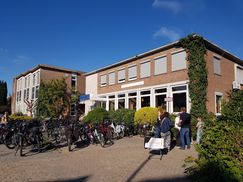
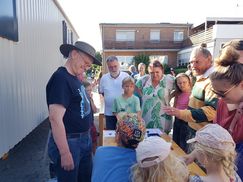
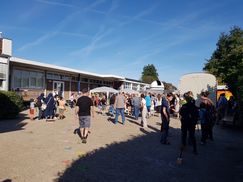
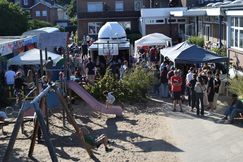
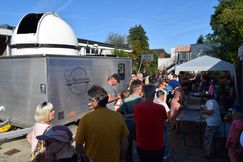
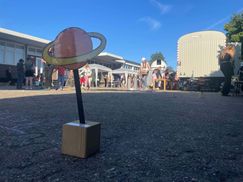
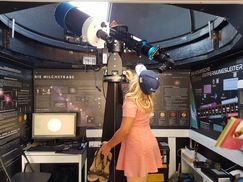
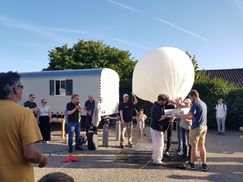
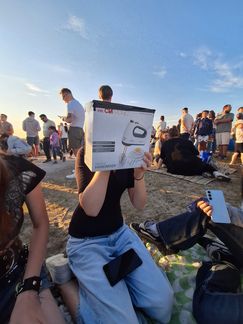
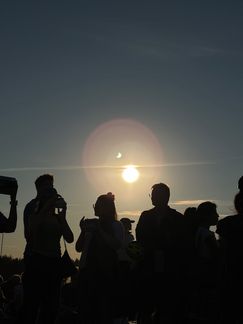
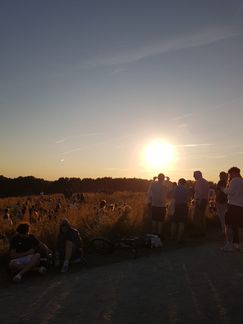
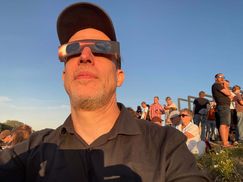
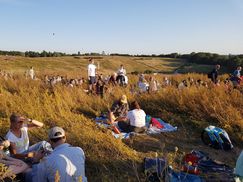
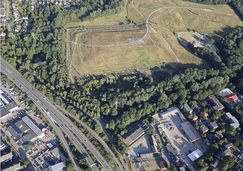
The solar eclipse on 12 August 2026 was a very special experience in Oldenburg. In co-operation with LEB-Lower Saxony, the Astro-AG, the Oldenburg Astronomy Society and the Freie Schule Oldenburg, an informative programme on the solar eclipse and the Perseids was organised at these venues. Several hundred visitors, including many children, gathered in the school playground of the Freie Schule Oldenburg to get in the mood for the solar eclipse together. On the Utkiek, it is thought that several thousand people watched the rare celestial spectacle.
On this page, we’ve now compiled a few more moments for you!
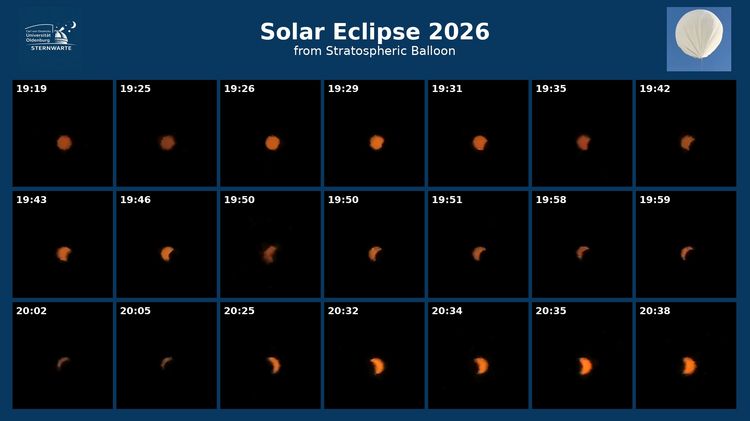
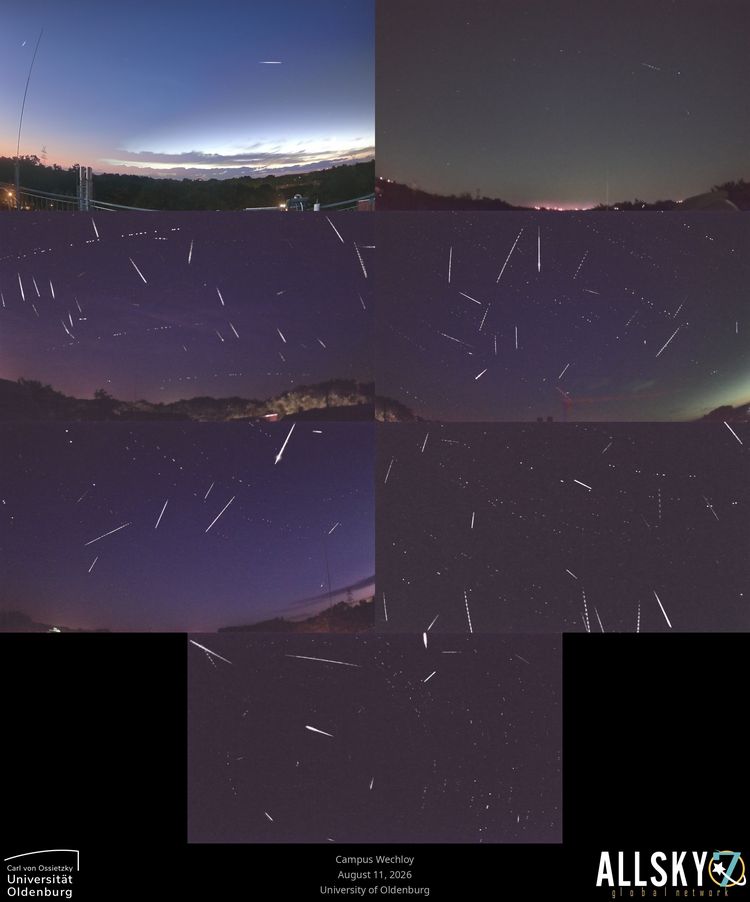
Our stratospheric balloon also completed its flight successfully and returned with spectacular images taken from an altitude of around 30 to 35 kilometres. The footage shows Oldenburg and north-west Germany from the stratosphere, the solar eclipse from a completely unusual perspective, and the sunset over north-west Germany. Later, the glowing horizon moved further and further west across the Atlantic – and during the night, the cameras even managed to capture some Perseids. From the many images, a film has been created covering the entire balloon flight and this extraordinary day. It can be found below in our media library. Preliminary results can also be found on arXiv.
Our special thanks go to all the volunteers who, with great dedication, time and enthusiasm, helped to make this day possible in the first place. We would also like to thank all the visitors who looked up at the sky with us and made the solar eclipse such a wonderful shared experience.
Many thanks to everyone who was there!
Our event in the media (selection)
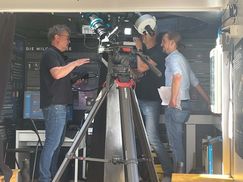
We would like to thank the media staff who covered our event!
Long Night of Astronomy: Recording of the live broadcast from the Berlin Planetarium
OL-1: Instagram Reel
Sat-1 Regional: Solar eclipse: Schoolchildren in Oldenburg witness the natural spectacle
RTL Regional: Preview
Course of the solar eclipse in Oldenburg
This illustration and the video show the progression of the solar eclipse in Oldenburg. The Moon will first pass in front of the Sun at 19:14. The Sun’s altitude above the horizon will then be approximately 14.6° (about 1.5 fists high). To help you visualise this, we have also given the altitude in typical human measurements. Stretch out your arm, make a fist and place the underside of your fist as if it were resting on the horizon. The top of your fist will then be about 10° above the horizon. At the peak of the solar eclipse, the Sun’s altitude will be just 3–4 fingers’ width. The illustration shows the respective stages of coverage.
