Students on the Master's degree courses in Landscape Ecology, Sustainability Economics and Management and Water and Coastal Management returned from a week-long excursion to the Palatinate Forest-North Vosges UNESCO biosphere reserve on 12 August. Under the guidance of Ingo Mose, the students inspected numerous projects in agriculture and forestry, viticulture, landscape conservation, tourism and sustainability education that are being implemented under the biosphere reserve label. Biosphere reserves are officially certified by UNESCO and serve as model regions for sustainable forms of land use, sustainable use of resources and sustainable management. Various stakeholders from the biosphere reserve were also available to talk to the students in person, including the director of the biosphere reserve, Dr Friedericke Weber. One day of the programme was dedicated to a visit to the French part of the international protected area in the Alsatian Northern Vosges. The group stayed at the Naturfreundehaus Finsterbrunnertal. Naturefriends have been active in the Palatinate Forest since the beginning of the last century as promoters of nature-orientated, gentle tourism and are still involved in numerous environmental protection issues in the region today. The Palatinate Forest-North Vosges biosphere reserve is one of 16 biosphere reserves recognised by UNESCO in Germany to date; there are currently 686 worldwide.

Archive 2018
Archive 2018
Student employee from Brazil in the working group
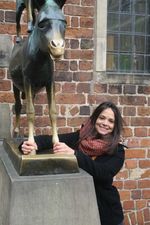
From August to December 2018, Clara Castilho, a student of geology
at the University of Ouro Preto, Brazil, is a guest in the research group
Applied Geography and Environmental Planning. Clara is a DAAD scholarship holder
as part of the IAESTE programme and is working on various research projects in the working group during her stay in
Oldenburg.
Dr Elisabeth Gruber as a guest
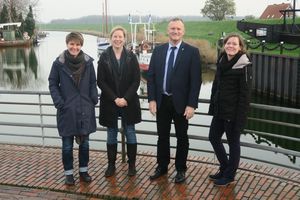
From 12 to 17 November, Dr Elisabeth Gruber from the Institute of Geography and Regional Research was a guest of the Applied Geography and Environmental Planning working group as part of an ERASMUS exchange. Dr Gruber is a population geographer and spatial planner and an expert on demographic change in rural areas in Austria. During her stay, she contributed to various workshops and seminars at the university with keynote speeches and lectures. Her programme also included a visit to the municipality of Wangerland, a partner in the "Wat nu?" research project. She was welcomed there by Mayor Björn Mühlena and Kirsten Zander from the municipal administration and presented the results of her research to several interested parties.
Urban gardening project
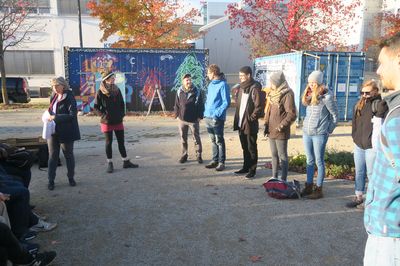
Master's students from the "Space and society" seminar visited the urban gardening project on Lucie-Flechtmann-Platz in Bremen's Neustadt district on 8 November. They were welcomed by Eva Kirschenmann from the "Ab geht die Lucie" initiative and Käthe Protze from the planning office p+t Planung, who told the group about the origins, planning realisation and current challenges of the project.
Ingo Mose becomes a member of LAG Nordwest
Prof Dr Ingo Mose, head of the Applied Geography and Environmental Planning working group, was recently elected as a member of the Bremen/Hamburg/Lower Saxony/Schleswig-Holstein LAG of the Academy for Spatial Research and Planning (ARL), Leibniz Forum for Spatial Sciences. The ARL was founded in 1946 and is based in Hanover. It is an autonomous and independent spatial science institution under public law that serves as a forum and Centre of Excellence for research into spatial structures and developments and their political and planning control options in Germany. There are seven LAGs throughout Germany, whose primary tasks lie in the dialogue between science and practice at Federal State level and in the field of spatial research with a primarily regional focus.
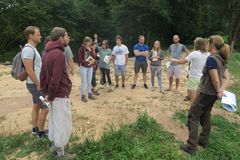
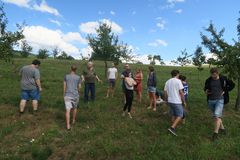
Excursion to the Palatinate Forest-North Vosges biosphere reserve
Students on the Master's degree courses in Landscape Ecology, Sustainability Economics and Management and Water and Coastal Management returned from a week-long excursion to the Palatinate Forest-North Vosges UNESCO biosphere reserve on 12 August. Under the guidance of Ingo Mose, the students inspected numerous projects in agriculture and forestry, viticulture, landscape conservation, tourism and sustainability education that are being implemented under the biosphere reserve label. Biosphere reserves are officially certified by UNESCO and serve as model regions for sustainable forms of land use, sustainable use of resources and sustainable management. Various stakeholders from the biosphere reserve were also available to talk to the students in person, including the director of the biosphere reserve, Dr Friedericke Weber. One day of the programme was dedicated to a visit to the French part of the international protected area in the Alsatian Northern Vosges. The group stayed at the Naturfreundehaus Finsterbrunnertal. Naturefriends have been active in the Palatinate Forest since the beginning of the last century as promoters of nature-orientated, gentle tourism and are still involved in numerous environmental protection issues in the region today. The Palatinate Forest-North Vosges biosphere reserve is one of 16 biosphere reserves recognised by UNESCO in Germany to date; there are currently 686 worldwide.
Promotion of Vasco Brummer
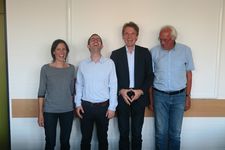
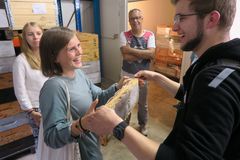
On 27 June, Vasco Brummer, a long-standing member of the working group, successfully completed his doctorate in Oldenburg. In his cumulative dissertation, he focussed on the emergence, role and functioning of citizen energy cooperatives in Germany, the UK and the USA. The first examiner was Prof Dr Ingo Mose, the second examiner Prof Dr Jannika Mattes. Prof. Dr Rainer Buchwald participated in the thesis defence as a further examiner. Congratulations from the members of the working group and former colleagues! Vasco Brummer is now working as a research coordinator at Offenburg University of Applied Sciences.
Successful completion of the doctoral project
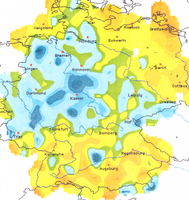
Reinhard Wegener-Kopp, who works in the Science Planning and Research Funding Department of the Senator for Science, Health and Consumer Protection in Bremen, has successfully defended his dissertation and was awarded a doctorate. The topic of his doctoral thesis is "Potential analysis of sealed and unsealed surfaces for the solar low-temperature heat supply of buildings in urban neighbourhoods". Prof Dr Ingo Mose (first reviewer), Prof Dr Joachim Peinke (second reviewer) and Prof Dr Gudrun Massmann were involved in the examination. The Applied Geography and Environmental Planning working group, which has been associated with Reinhard Wegener-Kopp for many years, would like to congratulate him warmly!
Participation in the international workshop in Torino, Italy
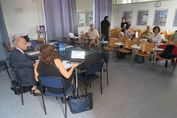
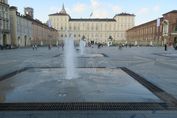
At the invitation of the Dipartimento Interateneo di Science, Progetto e Politiche del Territorio of the Politecnico di Torino and the Università degli Studi di Torino, Ingo Mose took part in an international workshop on "Biodiversity, Landscape and Life Quality. Protected Areas for Urban Sustainability and Resilience" in Torino, Italy. As part of the event, he spoke about the current challenges of settlement development in the north-west German coastal region, paying particular attention to the model function of the Lower Saxony Wadden Sea biosphere reserve for sustainable regional development. In addition to participants from various other Italian universities, scientists from Switzerland, Austria, Morocco and Japan also took part in the event. Representatives of several protected area administrations from the Piemonte region were also present. Finally, a well-known protected area near Torino, the Parco Naturale La Mandria, was also the destination of a full-day excursion, which focussed on various issues of protected area management.

Excursion to the Hamme-Wümme lowlands and the Devil's Moor
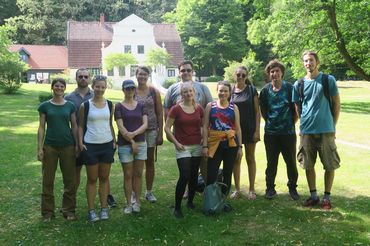
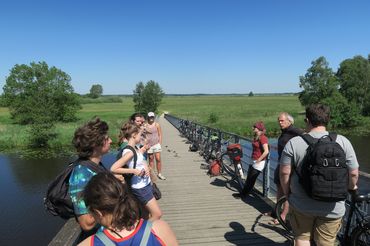
On 24 May 2018, Master's students from the "Nature Conservation in Practice" module explored the Hamme-Wümme lowlands and Teufelsmoor on bicycles.
Led by Ingo Mose, the group travelled to several selected locations that bear witness to the rich history of the natural and cultural landscape in the north-east of Bremen. The highlight of the excursion was a guided tour by Dr Hans-Gerhard Kulp from the Osterholz Biological Station through the landscape and nature conservation areas between Osterholz-Scharmbeck and Worpswede. Three international guest students from Austria, Norway and Argentina also took part in the excursion!
Visit from Switzerland
On 7 and 8 May 2018, the working group was visited by Ms Annina Michel from the Institute of Geography at the University of Zurich.
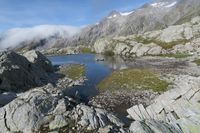
Ms Michel gave a lecture in the seminar "Protected areas and regional development" (Ingo Mose) on the failed project of a new national park in the Adula Alps in the border area of the Swiss cantons of Graubünden and Ticino. The "case" is of great interest from the point of view of international area protection: For the first time since 1914, the founding year of the (so far only) "Swiss National Park", another national park was to be established. It failed due to the negative outcome of a referendum in the municipalities involved, whose participation is a prerequisite for the establishment of new protected areas in Switzerland. Valuable insights for other protected area projects can be gained from the experience gained in the Adula. Annina Michel's presentation met with a lively and interested response from the students. The scientist also used her stay for a short visit to the North Sea resort of Dangast, where she was able to see the zoning system of the Lower Saxony Wadden Sea National Park and visit the local National Park House in glorious weather.
Visit to Kingston University London
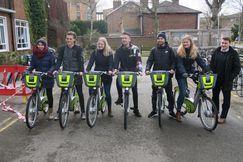
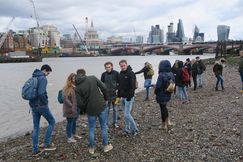
A total of 29 students from several Bachelor's and Master's degree programmes in environmental science visited Kingston University London, which has a partnership with the University of Oldenburg, from 5 to 9 March 2018. Led by Ingo Mose and Peter Schaal, the group discussed various issues relating to river basin management in the catchment area of the River Thames, selected problems of coastal spatial development in the South Downs National Park and the Brighton and Lewes Downs Biosphere as well as sustainable urban development in Kingston-upon-Thames and London. Dr Stuart Downward from the School of Geography, Geology and the Environment once again acted as the Oldenburg guests' local partner.
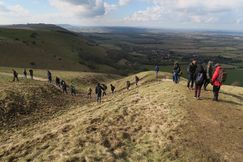
Annual conference of the "Rural Areas" working group in Kiel
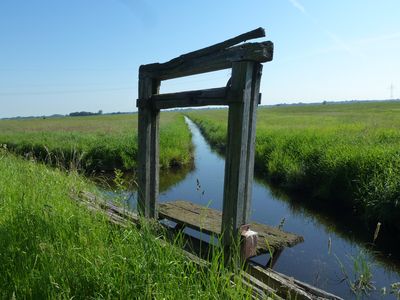
At the annual conference of the "Rural Areas" working group of the German Society for Geography (DGfG), which took place in Kiel from 23 to 24 February 2018, Prof. Dr Ingo Mose, head of the Applied Geography and Environmental Planning working group at the University of Oldenburg, was confirmed as spokesperson for a further two years. The working group is organised within the German Geographical Society (DGfG) and is one of the largest in the society with around 220 members nationwide. The DGfG is the umbrella organisation for geographical associations and societies in Germany.
Excursion to the climatic health resort Bad Zwischenahn
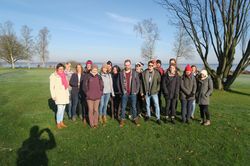
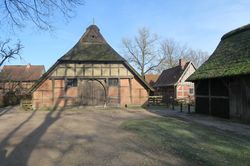
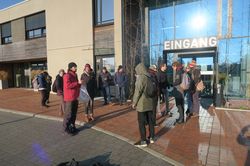
Students on the Master's degree programmes in Landscape Ecology, Sustainability Economics and Management and Water and Coastal Management completed the "Sustainable tourism" seminar (Ingo Mose) with an excursion to the climatic health resort of Bad Zwischenahn on 8 February 2018. The excursion group's first destination was the local tourism company. Ms Ina Schuler and other employees gave the participants an overview of the objectives and tasks of tourism marketing for the destination of Bad Zwischenahn. The ensuing discussion focussed in particular on issues relating to the sustainable orientation of the tourism offering and the as yet untapped potential for development. After a tour of the local open-air museum, which dates back to 1910 and is one of the oldest in Germany, the group visited the Lower Saxony Garden Culture Centre - Park der Gärten gGmbH on the site of the former State Garden Show in the Rostrup district. The managing director of the park, Mr Christian Wandscher, gave the group an overview of the development of the site, its structure, its significance for tourism in Bad Zwischenahn and plans for the future development of the site. Questions from the students about the importance of sustainability for the Park of Gardens and its offerings concluded the visit on site.