
Archive 2025
Archive 2025
Congratulations
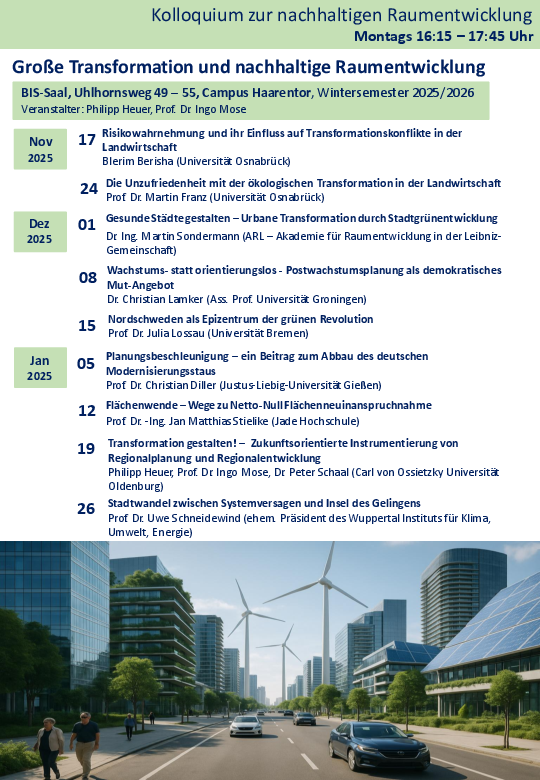
Ms Marieke Stammermann successfully completed her doctorate in December 2025 with a cumulative dissertation on the topic of "Climate adaptation on the North Sea coast of Lower Saxony". The team at the Department of Applied Geography and Environmental Planning would like to congratulate her!
Closing event "Branding in Protected Areas - Experiences from European Regions"
On 24 and 25 September, the final event of the project on regional brands in large protected areas funded by the German Research Foundation (DFG) took place in Bad Urach. The project was dedicated to marketing initiatives in which the name of protected areas is used to market regional products and services. In addition to the project members from the University of Oldenburg and RWTH Aachen University, the event was supported by the administration of the Swabian Alb biosphere reserve.
Not only were the research project and its results presented. The participants also presented and discussed scientific and practical contributions from seven European countries. As part of an excursion, the participants not only saw more of the biosphere area, they also gained insights into the work of a protected area ranger and a member company of the regional brand "Albgemacht".
Although the topic has gained practical relevance in Europe in particular, the opportunities for information and exchange appear to be limited. In addition to the technical content, the participants appreciated the opportunity for international networking all the more. A short German-language programme was also put together for the last evening to provide insights for regional players. This event also met with great interest.
The diversity of content and the enriching exchange of ideas emphasised the relevance of the topic and rounded off the three-year research project.
Retirement
Prof Dr Ingo Mose retired on 1 October 2025 after 20 years at the University of Oldenburg. However, he will continue to work as a researcher as part of the "Future Proof Grasslands" research project and will also continue to teach to a limited extent.
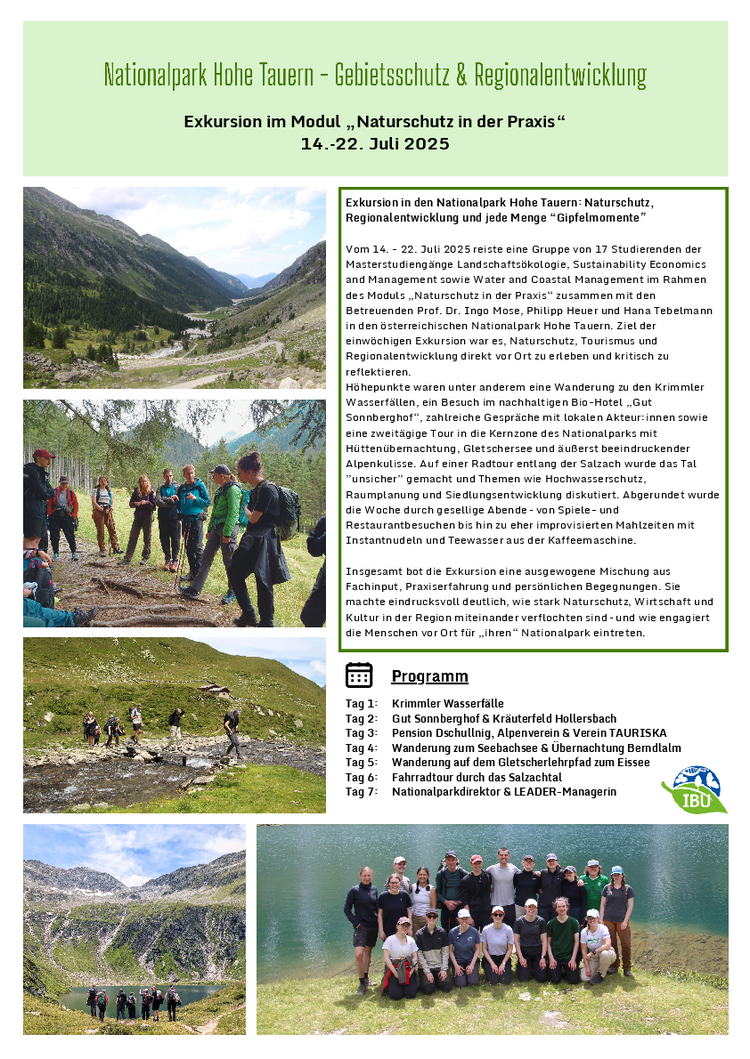
Excursion to the Hohe Tauern National Park: Nature conservation, regional development and plenty of "summit moments"
From 14 to 22 July 2025, a group of 17 students from the Master's degree programmes in Landscape Ecology, Sustainability Economics and Management and Water and Coastal Management travelled to the Hohe Tauern National Park in Austria with their supervisors Prof. Dr Ingo Mose, Philipp Heuer and Hana Tebelmann as part of the "Nature Conservation in Practice" module. The aim of the week-long excursion was to experience and critically reflect on nature conservation, tourism and regional development directly on site.
The journey from Oldenburg went smoothly - apart from the almost obligatory delay on the German railway. After arriving in Neukirchen am Großvenediger, the first day was dedicated to a hike along the impressive Krimml Waterfalls. Accompanied by a national park ranger, we were given fascinating insights into the ecology, tourism and conservation concepts of this unique natural attraction. The day was rounded off with a visit to the museum, where everything revolved around the element of water.
The following days offered a mixture of excursions, expert discussions and hikes. The visit to the organic hotel "Gut Sonnberghof", which combines sustainable tourism with traditional agriculture in an exemplary way, was particularly impressive. Equally fascinating was the herb garden in Hollersbach, where we not only gained professional insights but also had very personal consultations with the manager - and quite a few of us left with new herbal teas in our luggage.
In addition to theoretical input, including from representatives of the Austrian Alpine Association, the TAURISKA cultural and regional development initiative and the LEADER region, we also repeatedly took the opportunity to go on mountain hikes. For example, we took the cable car to the nearby ski area and then to the nearby summit of the Wildkogel, followed by two intensive days of hiking in the core zone of the national park: first to the Seebachsee lake, followed by a stop for refreshments and an overnight stay at the Berndlalm, then the next day on to an impressive glacial lake, where glacial moraines, cirques and other glacial forms could be experienced up close. The weather was perfect and the fantastic views rewarded the sometimes strenuous climbs - and some brave participants even dared to take an ice-cold dip.
Another item on the programme was a bike tour along the Salzach with a focus on settlement development and flood protection. This highlighted differences in spatial planning between Austria and Germany, as well as local challenges caused by urban sprawl and competing tourist infrastructure.
On the last day, discussions with the National Park Director and a visit to the exhibition at the National Park Centre in Mittersill were on the agenda. The week was rounded off with sociable evenings - from games and restaurant visits to rather improvised meals with instant noodles and tea water from the coffee machine.
Overall, the excursion offered a balanced mix of specialised input, practical experience and personal encounters. It made it impressively clear how closely nature conservation, business and culture are intertwined in the region and what challenges are associated with this - and how committed the local people are to "their" national park.
Excursion to Bremen
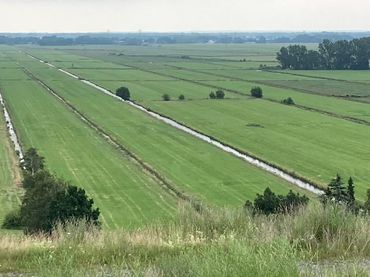
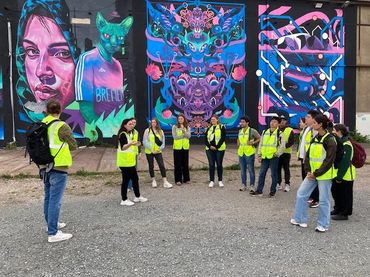
A three-day excursion took M.Sc. Water and Coastal Management students and other interested parties to Bremen on 24, 26 and 27 June 2025. Led by Ingo Mose, the group met with Hauke Krebs (Dike Construction Unit at the Senator for the Environment, Climate and Science) to discuss coastal protection in Bremen and were given a guided tour of the allotment garden area of the "Green West of Bremen" by Lisa Hübotter (Green Order Department at the Senator for the Environment, Climate and Science), visited the managing director of the Bemische Deichverband on the right bank of the Weser, Stephan Levin, to discuss water management in the catchment area of the Wümme and finally paid a visit to the "Überseeinsel" project to develop a sustainable urban neighbourhood on the site of the former Kellog factory on the Weser.
Excursion to Hiddensee
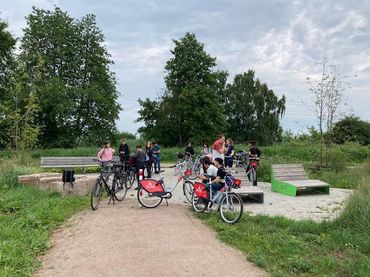
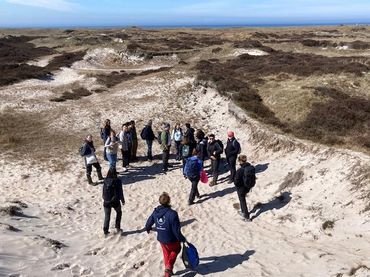
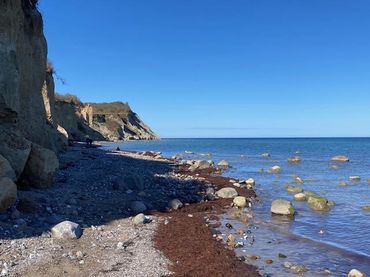
An excursion as part of the "Nature Conservation in Practice" module took students from several Master's degree programmes to the island of Hiddensee in the Western Pomerania Lagoon National Park from 7 to 11 April. Led by Ingo Mose and Anne-Marie Walczuch, the group studied the natural features of the island, held discussions with selected stakeholders on the relationship between the national park and tourism and took part in a nature conservation project in the coastal heathland. Accommodation was provided at the University of Greifswald's research centre in Kloster.

Workshop as part of the Future Proof Grasslands (FPG) project
On 27 March 2025, we met for the second time as part of the Future Proof Grasslands (FPG) project with the work packages and project partners from the Grassland Centre, the Jade University of Applied Sciences Wilhelmshaven, the Johann Heinrich von Thünen Institute, the Georg August University Göttingen and the Osnabrück University of Applied Sciences at the Hanse-Wissenschaftskolleg in Delmenhorst.
A brief introduction was followed by a lively exchange on the latest developments and an outlook on the next project steps. The focus was on various evaluation concepts that can be used to classify and analyse the relevant/investigated ecosystem services of grassland in the future.
In addition, a master's thesis written at the University of Oldenburg was presented, which deals with the previously uncovered recording of cultural ecosystem services in the Ovelgönne study area in the Wesermarsch. The individual work packages then presented their current status in the form of fact sheets. In the discussions that followed, questions of understanding were clarified and challenges were discussed and solved constructively and collaboratively.
After a refreshing lunch, the participants' creativity was called upon. In an interactive visualisation format, artificial intelligence was used to design various future scenarios for one of our research areas. This method enabled the work packages to forecast possible changes in grassland on the basis of the available data and to design their visions for the sustainable development and design of grassland in the north-west German coastal region.
This brought an insightful and productive workshop to a successful conclusion.


Workshop on regional planning in the digital age
For the second time, the Applied Geography and Environmental Planning working group organised a full-day workshop on regional planning on 20 February 2025 as part of the joint project "4 N - Nordwest Niedersachsen Nachhaltig Neu". This year, the focus was on the potential and challenges of the digital age. Once again, around 40 representatives from districts, independent cities, planning offices and other institutions accepted the working group's invitation to the University of Oldenburg.
In addition to the technical input from V.-Prof. Dr.-Ing. Julia Binder (BTU Cottbus-Senftenberg), Roland Hachmann (IPSYSCON), Oliver Mund (Leer district) and Kathrina Fesel (TU Dortmund University), the focus was once again on the personal experiences of the participants. In the three groups "Planning fundamentals and digital planning information", "Digital planning processes" and "Planning results in the digital age", the participants took an in-depth look at the challenges and opportunities of the digital transformation in regional planning.
The workshop concluded with the agreement to continue the conference format next year with a further meeting on a current topic.


40 years of perceptual geography studies
The Perceptual Geography Studies series has been published at the University of Oldenburg for 40 years. It was founded on the initiative of Prof Dr Rainer Krüger, himself a university lecturer in the subject of geography and also founding rector of the University of Oldenburg. The first (double) issue was published in 1984 under the title Wahrnehmungsgeographische Studien zur Regionalentwicklung. The initiation of the series was associated with a double innovation at the time: firstly, the establishment of a research direction that was orientated towards humanistic geography in its methodological outline, and secondly, the application of qualitative research methods to human geography projects. Since 1984, a remarkably wide range of thematically and methodologically diverse volumes have been published, both monographs and anthologies. The 31st volume was published in 2024. Further information about the series can be found here.
The editors of the series, Prof. Dr Rainer Danielzyk (Hanover), Prof. Dr Jürgen Hasse (Frankfurt am Main) and Prof. Dr Ingo Mose (Oldenburg), are taking the 40th anniversary of the series as an opportunity to organise a small workshop. The aim is to recall the history and the spectrum of ideas, approaches and topics that have shaped the profile of the series to this day, while at the same time focussing on a topic that is once again highly topical today: the perception, construction and evaluation of landscapes.
The workshop will take place on 31.01.2025 at the University of Oldenburg from 13:30 - 17:30 on the Haarentor campus in the Senate Meeting Room, Lecture Centre (A 14), 1st floor.
In addition to a review of the 40-year development of the series, three specialised lectures will be at the centre of the workshop. Prof. Dr Olaf Kühne (University of Tübingen), Prof. Dr Tanja Mölders (University of Freiburg) and Dr Johannes Hermes (University of Hanover) have been invited to speak.
