

InTech Cup 2023
Results InTech Cup 2023
All result lists of the InTech Cup 2023 can be found here:
- Overall ranking
- Cross-country results list
- Results list handball training
- Result lists backwards, forwards, go!
Timetable and schedule
You can view the finalised schedule here. The allocation of the individual teams to the starting groups in the three disciplines will be communicated on arrival on the day of the competition. In discipline 3, there will also be intermediate rounds for the top places in a starting group to qualify for the final round.
Evaluation forms (update)
The updated evaluation forms (as of 17 June 2023) used by the referees in the competition can be downloaded here.
For makers
For the cross-country discipline, the 3D print template for the uneven part of the path is available for download. A photo is also available.
- 3D print template (Save linked content as... (pay attention to the .stl extension). Scale for other print bed sizes if necessary)
- Photo
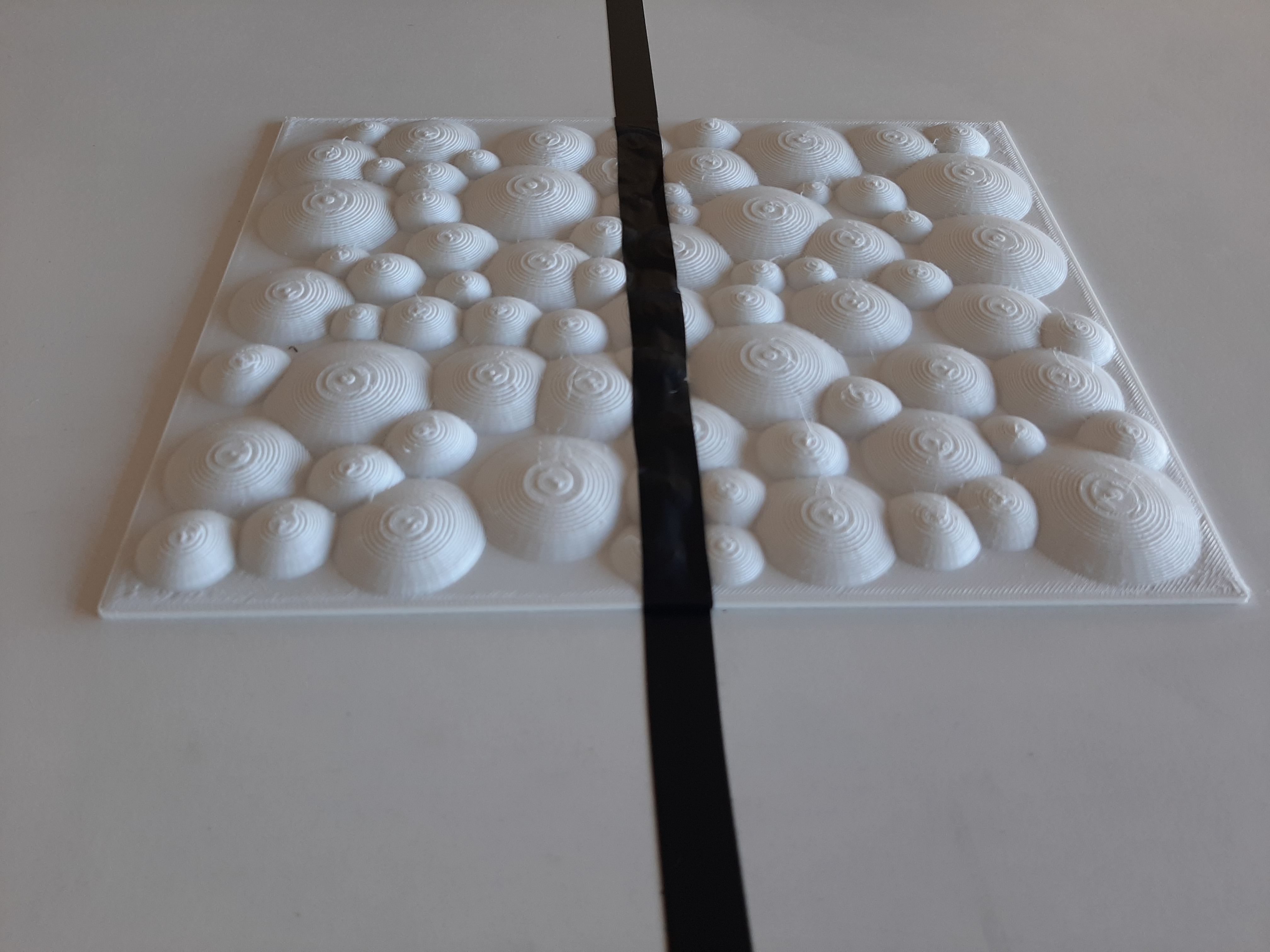
Note: If you are unable to produce a printout yourself or have problems doing so, please contact Mr Moll. If - despite testing on our part - there are major difficulties in overcoming the obstacle, please re-registering students.
There is also an alternative for the cross-country discipline with round timber and wooden edging to fix the seesaw. Simply print it out twice and fix it to the underside of the seesaw plate or to the track plate with some double-sided adhesive tape.
InTech Cup 2023
The 12th InTech Cup took place on Saturday, 24 June 2023. The host school this time was Gymnasium Eversten in Oldenburg. We would like to thank the participating colleagues and the school for their willingness and support.
The results lists can be accessed via the side menu.
After last year's good response and participation by the participating schools, this year 100 pupils from 12 schools came together in 35 teams to celebrate this robot festival.
The tasks and rules
The rules document for the InTech Cup 2023 is now available for download. We wish you every success with your preparations.
FAQ - Questions about the rules and rule precisions (as of 21/06/2023, 07:00)
Questions about the rules can be sent to moll@informatik.uni-oldenburg.de. These FAQs will be published here at regular intervals. The most recently added or amended entries are shown in bold.
You should therefore check here regularly.
General questions
Question: If a team attaches a pressure sensor for starting (e.g. for "Backwards, forwards, go!"), does this sensor count towards the limit on the number of sensors?
Answer: If the sensor is used solely for the start function, then it can be used in addition to the maximum number of sensors.
Question: Do the rotation sensors installed in the NXT and EV3 motors count when limiting the number of sensors?
Answer: Rotation sensors are excluded from such restrictions for all Lego systems. However, original Lego rotation sensors must be used. If the number of sensors is restricted, this applies to all other types of sensors.
Question: Does changing the undercarriage between disciplines still count as a permitted change or is this considered different base constructions?
Answer: Changing the chassis between disciplines is possible as long as the motors are not also changed. The basic construction includes the brick and the drive motors as well as the brackets for the various attachments and their connecting construction.
Question: Is a second battery pack permitted as a weight?
Answer: The restriction to an RCX, NXT or EV3 brick also applies to the associated power supply. Either only one battery pack or one set of AA batteries or AA rechargeable batteries are allowed in the brick used. Beyond that, no rechargeable batteries or batteries of any kind may be installed. The use of other original Lego parts remains permitted.
Question: What are all prohibited adhesives?
Answer: All substances that hold two Lego parts together, either by means of an adhesive connection between the parts or by gluing the parts together from the outside using adhesive strips or stickers, are prohibited. This also applies to original Lego stickers. These may only be used if they are not glued over several parts, but only on the brick, for example.
Question: Are alternative rubber rings allowed (e.g. household rubbers)?
Answer: Even with rubber rings, only original Lego parts are permitted. As rubber rings do not have a Lego label for checking purposes, we decide whether it is credible that it is an original Lego rubber ring based on its appearance and colour.
Questions about the discipline "Cross-country"
There are no questions yet.
Questions about the discipline "Handball training"
Question: Are empty or filled bottles used as defenders?
Answer: The bottles are originally filled water bottles (still water).
Question: Can a programme be selected after the ball has been handed over?
Answer: According to the rules, >the< programme may then be started. The programme must therefore be selected beforehand. A selection or change of programme is then no longer permitted. The robot should therefore be able to recognise the correct colour!
Questions on the discipline "Backwards, forwards, go!"
Question: If the robots get stuck in a duel and parts come loose, can they be reattached for the next duel?
Answer: Any parts that may have fallen off may be reattached to the robot before the next start, as long as the reattachment can be done in a few simple steps in a reasonable amount of time. In case of doubt, the referee decides.
Question: If a robot loses parts, do they remain in place or are they removed?
Answer: If a robot loses parts, they are removed by the referee if it is likely that they could hinder the opponent. If it can be assumed that the robot has deliberately lost or discarded parts, a score is awarded in favour of the opponent.
Question: Can a robot deliberately damage another robot (e.g. parts fall off)?
Answer: A robot may not deliberately damage another robot. Otherwise the run is scored in favour of the opponent. If the intention to cause damage is not clear, it is at the judge's discretion whether the run is repeated or how the run is scored. If it is assumed that the damage was accidental, it is at the judge's discretion whether the ride is repeated or continued.