

Meaning of the water colour
Meaning of the water colour
The "Eye On Water" app can be used to determine the colour of bodies of water. But why is colour important?
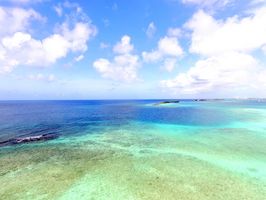
Scientists have been observing the colour of various bodies of water, such as lakes or oceans, for many years. It says a lot about the ingredients and quality of the water. Different factors, such as the climate, can influence the colour. If many people use the app, researchers can quickly recognise when a body of water is changing and warn of possible harmful consequences.
The influence of light
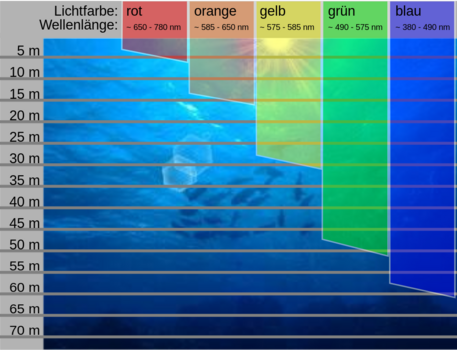
Water from the tap is colourless. Only many ingredients give the water a colour. The depth of the water is also decisive. Light consists of several wavelengths. When it hits a water surface, some of the wavelengths are absorbed, i.e. taken up by the water. Other wavelengths are reflected. Some of the absorbed wavelengths reach deeper into the water than others, because the light encounters particles in the water that scatter and distribute the light. The wavelengths of blue light can penetrate very deeply into the water and are then scattered by the particles in the water, which often makes the sea appear blue.
But what kind of particles are in the water?
Phytoplankton - the smallest have a big impact
Phytoplankton plays an important role. These are various small types of algae in the water. When there is a lot of algae in a body of water, it usually has a greenish colour and contains a lot of nutrients. However, if the algae multiply greatly, they can also become too numerous, which can have harmful effects on other living organisms in the water. A body of water with very few algae species is usually bluish in colour and low in nutrients. If the amount of phytoplankton changes, this can have a major impact on the food web in the water.

Dissolved organic substances
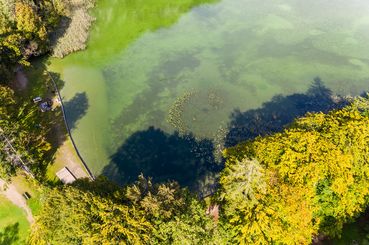
The water also contains dissolved organic substances, i.e. very small particles of various substances. These colour the water yellow to brown. The bottom of a body of water also has an effect on the colour. A white sandy bottom makes the water look lighter in colour than a dark muddy bottom.
The colour of a body of water can therefore say a lot about the water. If the colour changes, this can have various causes and consequences. That is why it is important that scientists observe the colour of water bodies with the help of the people who use the app.
Not all blue is the same
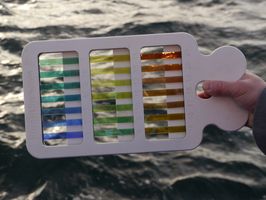
How do researchers measure colour? There is the so-called Forel-Ule scale. This is a colour palette with a range of 21 colours in different shades of brown, green and blue. If you hold the colour palette over the surface of the water, you can compare the colour of the water with the colours on the scale and consider which of the 21 shades is most similar to the colour of the water. The scale is integrated into the app so that even a layperson can determine the colour of a body of water and contribute to research.
To read more:
www.eyeonwater.org/