
Oldenburg Climate Symposium 2026

Oldenburg Climate Symposium 2026
Oldenburg Climate Symposium 2026
7–9 October 2026: ‘Climate, People and Energy’
Following on from the 2024 Climate Symposium, which focused on the oceans and their role in climate and society, this year’s Climate Symposium – under the title ‘Climate, People and Energy’ – will examine socio-technical energy transitions from an interdisciplinary perspective. As with previous Climate Symposia, this year’s programme is diverse and aims to promote dialogue between science, industry and society, whilst providing insights into current and future perspectives on energy transitions.
The following programme items await you at the Oldenburg Climate Symposium 2026:
Wednesday, 7 October 2026, from 6.00 pm at CORE Oldenburg:
- A public evening lecture by Prof. Dr Claudia Kemfert (Leuphana University of Lüneburg and DIW Berlin). This event is aimed in particular at the interested public in Oldenburg.
- The lecture will be delivered in German and NO registration is required.
Thursday, 8 October 2026
Academic symposium, 9 am–5 pm in Lecture Theatre 1 (A14):
- An academic symposium in English featuring a total of seven presentations by renowned academics on the following key topics digitalised energy systems, policy, society andnd law and technological challenges of future energy systems.
- A poster session on research in the field of energy transitions.
- All energy researchers from Oldenburg, Bremen, Groningen, TEN.efzn and beyond are warmly invited to contribute to the poster session and discuss their work.
- The insights and content of the day will be visualised using graphical recording.
- Registration is via the registration form.
Film screening of “2040: We’re Saving the World!” at cine k from 6.30 pm
- Following the academic symposium, the film “2040: We’re Saving the World!” will be screened at cine k (Bahnhofstraße 11, 26122 Oldenburg). Admission is free.
Friday, 9 October 2026, 9.00 am–1.00 pm in Lecture Theatre Centre A14:
- A programme dedicated to knowledge transfer, as well as a science-policy dialogue between local decision-makers and students.
Further information can be found in the flyer here.
Click here for the general programme.
Registration is free of charge.
The Oldenburg Climate Symposium takes place every two years and is themed ‘Climate, People, X’. In 2026, the ‘X’ is energy.
The lecturers
Public evening lecture
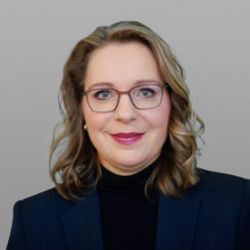
Leuphana University of Lüneburg and DIW Berlin
Lecture title:‘Climate, People and Energy’
The lecture demonstrates why climate protection and the energy transition are key foundations for prosperity, security and competitiveness. It focuses on the opportunities presented by renewable energy, storage and flexibility, as well as the political and social conditions necessary for a just transition. At the same time, it examines common misconceptions and myths surrounding energy policy and outlines ways in which the energy transition can be achieved decisively, whilst ensuring social and economic success.
Short bio:
Prof. Dr Claudia Kemfert has headed the Department of Energy, Transport and the Environment at the German Institute for Economic Research (DIW Berlin) since 2004 and is a professor of energy economics and energy policy at Leuphana University. She is co-chair of the German Advisory Council on the Environment at the Federal Ministry for the Environment, Nature Conservation, Building and Nuclear Safety, as well as a member of the Presidential Board of the German chapter of the Club of Rome; Kemfert is one of the most renowned figures in her subject. She is the author of over 600 publications, including several books. Her book *Schockwellen* (Campus Verlag) was published in spring 2023, followed by *Unlearn CO2* (Ullstein Verlag) in 2024 and *Kurzschluss* (Campus Verlag) in March 2026 (www.claudiakemfert.de).
Session: Policy and Digitalised Energy Systems
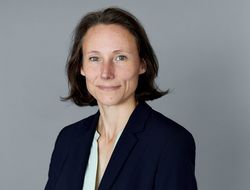
Prof. Dr Anke Weidlich
University of Freiburg
Lecture title:“Herculean coordination: Grid operations under high variable renewable penetration”
Short Bio:
Prof. Dr Anke Weidlich has been Professor of Energy Distribution Technologies at the University of Freiburg since 2017, where she conducts research in the field of energy system analysis at the interface between electricity grids and electricity markets. She is a member of several relevant committees in energy research and practice, such as the Expert Commission on Energy Transition Monitoring, the Energy Research Centre of Lower Saxony, the Executive Board of the Academies’ Initiative “Energy Systems of the Future” (ESYS) and the Advisory Board for the 8th Energy Research Programme of the Federal Ministry for Economic Affairs and Energy (BMWE).
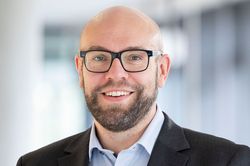
FAU Erlangen-Nuremberg
Lecture title:“Modern Climate Policy: Transition and technology policy for net-zero emissions by 2050”
Short bio:
Johan Lilliestam is Professor of Sustainability Transition Policy at Friedrich Alexander University Erlangen-Nuremberg. His research focuses on policies, strategies and instruments for the transition to a fully renewable energy system, including the effects of interactions between different energy policies. His work is highly interdisciplinary, drawing on transition studies and political science. He is a European Research Council grantee and Lead Author for Energy Systems in the IPCC’s forthcoming Assessment Report.
Before joining FAU, he was Professor of Energy Policy at the University of Potsdam and the Helmholtz Centre Potsdam, and Assistant Professor of Renewable Energy Policy at ETH Zurich.
Session: Technological Challenges
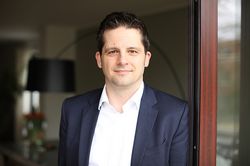
University of Oldenburg
Lecture title:“Grid Stability Is Easy. Humans Are Hard. Trust and Opinion Dynamics in the Energy Transition”
Short Bio:
Sebastian Lehnhoff is Professor of Energy Informatics at the University of Oldenburg, CEO of the OFFIS Institute for Information Technology, and spokesperson for the Energy Research Centre of Lower Saxony. His work lies at the intersection of computer science, energy systems and society – ranging from AI and digital twins to the resilience of critical infrastructures. Beyond research projects, he is active in scientific academies, supervisory boards, and open-source initiatives for the energy sector. And somehow, amidst all his management responsibilities, he still finds time for what he enjoys most: being curious, understanding complex systems, and shaping the future.

Assistant Professor Christina Papadimitriou
Eindhoven University of Technology (TU/e)
Lecture title:“Orchestrating Citizen-Centred Energy Communities: Balancing Decarbonisation and Privacy”
Short Bio:
Dr Christina Papadimitriou has been an assistant professor at Eindhoven University of Technology (TU/e) specialising in intelligent energy systems since 2022. She obtained her diploma in Electrical and Computer Engineering from the University of Patras, Greece, as well as her PhD on the control of distributed generation for its integration into microgrids (research excellence grant). In this context, she has managed and coordinated European and national projects in her main research areas, namely smart grid planning and operation for flexibility harvesting within the integrated grid. She has served as the technical coordinator of the eNeuron H2020 project (on which this talk will be based), whilst leading the DIgiRES project under CETPartnership; she is currently chair of the EU BRIDGE initiative’s Working Group on Business Models.
Session: Society and Law

University of Groningen (RUG)
Lecture title:‘The North Sea as a source for energy transition’
Short bio:
Martha Roggenkamp is Professor of Energy Law at the University of Groningen (RUG) and a leading expert in Dutch, European and international energy law. She was the first professor of energy law in the Netherlands and has played a major role in research and regulatory matters.
University of Groningen (RUG)
Lecture title:“Energy transition in dense contested spaces, towards inclusivity and area-based thinking”
Short Bio:
Christian Zuidema is a Full Professor at the University of Groningen, holding the Chair in Planning for Sustainable Transformation. His work focuses on the relationship between space, spatial planning and energy transition, with a particular emphasis on the institutional processes and innovation required for spatial energy planning. He has contributed to over a dozen (inter)national research projects on these subjects. He has published in a variety of international journals on topics related to integrated energy planning, marine spatial planning, offshore energy transitions and spatial energy modelling.
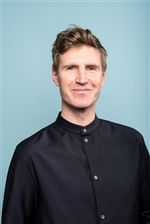
Assistant Professor Jesse Hoffman
Utrecht University
Lecture title:“Realigning energy transitions with the goals for a just and human world.”
Short bio:
Jesse Hoffman is an assistant professor at the Urban Futures Studio (UFS) and the Copernicus Institute of Sustainable Development. Jesse studies the politics of sustainability transitions, with a particular interest in the politics of large-scale infrastructures and ecosystems and the imagination of the future. He is interested in transformative, practice-oriented pedagogies and research approaches. In 2021, Jesse and his teaching team were awarded the Dutch Higher Education Premium for the innovative ‘Mixed Classroom’ and ‘Museum of the Future Past’ concepts. In 2018, he curated the exhibition ‘Places of Hope’ as part of Leeuwarden’s year as European Capital of Culture.