
Oldenburger Klimatage 2026

Oldenburger Klimatage 2026
Oldenburger Klimatage 2026
07.-09.10.2026: „Klima, Mensch und Energie“
Nachdem die Klimatage 2024 Ozeane und ihrer Rolle für Klima und Gesellschaft diskutiert haben, nehmen die diesjährigen Klimatage unter dem Titel „Klima, Mensch und Energie“ sozio-technische Energietransitionen aus einer interdisziplinären Perspektive in den Blick. Wie bereits bei den vergangenen Klimatagen, ist auch dieses Jahr das Programm vielfältig und soll den Dialog zwischen Wissenschaft, Industrie und Gesellschaft fördern und dabei Einblicke in aktuelle und zukünftige Perspektiven von Energietransitionen ermöglichen.
Folgende Programmpunkte erwarten Sie bei den Oldenburger Klimatagen 2026:
Mittwoch, 07. Oktober 2026, ab 18 Uhr im CORE Oldenburg:
- Ein öffentlicher Abendvortrag von Prof. Dr. Claudia Kemfert (Leuphana Universität Lüneburg und DIW Berlin). Dieser Programmpunkt richtet sich insbesondere an die interessierte Oldenburger Öffentlichkeit.
- Der Vortrag wird in deutscher Sprache gehalten und es ist KEINE Anmeldung notwendig.
Donnerstag, 08. Oktober 2026
Wissenschaftliches Symposium, 09-17 Uhr im Hörsaal 1 (A14):
- Ein englischsprachiges wissenschaftliches Symposium mit insgesamt sieben Vorträgen von renommierten Wissenschaftlerinnen und Wissenschaftlern entlang der Themenschwerpunkte digitalized energy systems, policy, society and law und technological challenges of future energy systems.
- Eine Postersession zu Forschungen im Bereich der Energietransitionen.
- Alle Energieforschenden aus Oldenburg, Bremen, Groningen, TEN.efzn und darüber hinaus sind herzlich eingeladen, sich in die Postersession einzubringen und ihre Arbeiten zu diskutieren.
- Erkenntnisse und Inhalte dieses Tages werden mittels Graphical Recording visualisiert.
- Die Anmeldung erfolgt über das Anmeldeformular.
Filmvorstellung „2040: Wir retten die Welt!” im cine k ab 18.30 Uhr
- Im Anschluss an das wissenschaftliche Symposium wird der Film „2040: Wir retten die Welt!” im cine k (Bahnhofstraße 11, 26122 Oldenburg) gezeigt. Der Eintritt ist frei.
Freitag, 09. Oktober 2026, 09-13 Uhr im Hörsaalzentrum A14:
- Einem dem Transfer gewidmeten Programm sowie einem Science-Policy-Dialog zwischen lokalen Entscheidungsträger*innen und Studierenden.
Weitere Informationen entnehmen Sie dem Flyer hier.
Zum allgemeinen Programm kommen Sie hier.
Die Anmeldung ist kostenlos.
Die Oldenburger Klimatage finden alle zwei Jahre statt und stehen unter dem Thema "Klima, Mensch, X". Im Jahr 2026 ist das "X" die Energie.
Die Vortragenden
Öffentlicher Abendvortrag
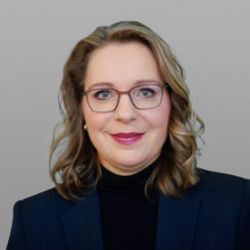
Leuphana Universität Lüneburg und DIW Berlin
Vortragstitel: „Klima, Mensch und Energie”
Der Vortrag zeigt, warum Klimaschutz und Energiewende zentrale Grundlagen für Wohlstand, Sicherheit und Wettbewerbsfähigkeit sind. Im Fokus stehen die Chancen erneuerbarer Energien, Speicher und Flexibilität, aber auch die politischen und gesellschaftlichen Voraussetzungen für eine gerechte Transformation. Zugleich werden energiepolitische Kurzschlüsse und verbreitete Mythen eingeordnet und Wege aufgezeigt, wie die Energiewende entschlossen, sozial und wirtschaftlich erfolgreich gelingen kann.
Short Bio:
Prof. Dr. Claudia Kemfert leitet seit 2004 die Abteilung Energie, Verkehr, Umwelt am Deutschen Institut für Wirtschaftsforschung (DIW Berlin) und ist Professorin für Energiewirtschaft und Energiepolitik an der Leuphana Universität. Sie ist Ko-Vorsitzende im Sachverständigenrat für Umweltfragen beim Bundesministerium für Umwelt, Naturschutz, Bau und Reaktorsicherheit, sowie im Präsidium der deutschen Gesellschaft des Club of Rome; Kemfert gehört zu den renommiertesten ihres Faches. Sie ist Autorin von über 600 Veröffentlichungen, darunter mehrere Bücher. Im Frühjahr 2023 erschien ihr Buch „Schockwellen“(Campus Verlag), im Jahr 2024 das Buch „Unlearn CO2“ (Ullstein Verlag) und im März 2026 das Buch "Kurzschluss"(Campus Verlag) (www.claudiakemfert.de).
Session: Policy and Digitalized Energy Systems
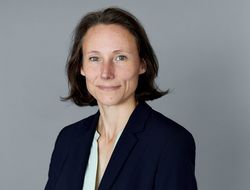
Prof. Dr. Anke Weidlich
Universität Freiburg
Vortragstitel: „Herculean coordination: Grid operations under high variable renewable penetration”
Short Bio:
Prof. Dr. Anke Weidlich ist seit 2017 Professorin für Technologien der Energieverteilung an der Universität Freiburg und forscht dort im Bereich Energiesystemanalyse an der Schnittstelle von Stromnetzen und Strommärkten. Sie ist Mitglied in mehreren relevanten Gremien der Energieforschung und -praxis wie der Expertenkommission zum Energiewende‑Monitoring, dem Energie-Forschungszentrum Niedersachsen, dem Direktorium der Akademieninitiative "Energiesysteme der Zukunft" (ESYS) oder dem Beirat zum 8. Energieforschungsprogramm des BMWE.
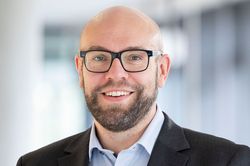
FAU Erlangen-Nürnberg
Vortragstitel: „Modern Climate Policy: Transition and technology policy for net-zero emissions by 2050”
Short Bio:
Johan Lilliestam is Professor of Sustainability Transition Policy at the Friedrich Alexander University Erlangen-Nürnberg. His research focus is policies, strategies and instruments for a transition to a completely renewable energy system, including the effects of interactions between different energy policies. His work is strongly interdisciplinary, rooted in transition studies and political science. He is a European Research Council grantee, and Lead Author for Energy Systems in the ongoing Assessment Report of the IPCC.
Before joining FAU, he was Professor of Energy Policy at the University Potsdam and the Helmholtz Centre Potsdam, and Assistant Professor of Renewable Energy Policy at the ETH Zürich.
Session: Technological Challenges
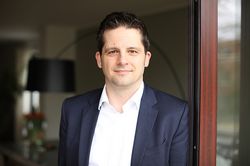
Carl von Ossietzky Universität Oldenburg
Vortragstitel: „Grid Stability Is Easy. Humans Are Hard. Trust and Opinion Dynamics in the Energy Transition”
Short Bio:
Sebastian Lehnhoff is Professor of Energy Informatics at the University of Oldenburg, CEO of OFFIS Institute for Information Technology, and spokesperson of the Energy Research Centre of Lower Saxony. His work sits at the intersection of computer science, energy systems, and society – ranging from AI and digital twins to the resilience of critical infrastructures. Beyond research projects, he is active in scientific academies, supervisory boards, and open-source initiatives for the energy sector. And somehow, between all the management responsibilities, he still finds time for what he enjoys most: being curious, understanding complex systems, and shaping the future.
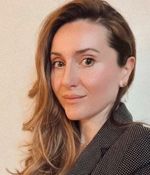
Assistant Professor Christina Papadimitriou
Universität Eindhoven University of Technology (TU/e)
Vortragstitel: „Orchestrating Citizen-Centred Energy Communities: Balancing Decarbonization and Privacy”
Short Bio:
Dr. Christina Papadimitriou is an assistant professor with Eindhoven University of Technology (TU/e) on intelligent energy systems since 2022. She has received her diploma in Electrical and Computer Engineering from the University of Patras, Greece as well her PhD degree on control of dispersed generation for their integration into microgrids (research excellence grant). In this context, she has managed and coordinated European and National projects on her main research interests that is smart grids planning and operation for flexibility harvesting of the integrated grid. She has been the technical coordinator of eNeuron project H2020 (this speech will be based on) while she leads the DIgiRES project under CETPartnership and she is currently the chair of EU BRIDGE initiative -Working Group on Business models.
Session: Society and Law

Universität Groningen (RUG)
Vortragstitel: „The North Sea as a source for energy transition”
Short Bio:
Martha Roggenkamp is Professor of Energy Law at the University of Groningen (RUG) and a leading expert in Dutch, European, and international energy law. She was the first professor of energy law in the Netherlands and has played a major role in research and regulation topics.
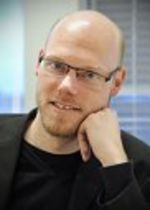
Universität Groningen (RUG)
Vortragstitel: „Energy transition in dense contested spaces, towards inclusivity and area based thinking”
Short Bio:
Christian Zuidema is Full Professor at the University of Groningen, holding the chair on Planning for Sustainable Transformation. His work concentrates on the relationship between space, spatial planning and energy transition, focussing mostly on institutional processes and innovation required for spatial energy planning. He has contributed to over a dozen (inter)national research projects on these subjects. He has published in a variety of international journals, on topics related to integrated energy planning, marine spatial planning, offshore energy transitions and spatial energy modelling.
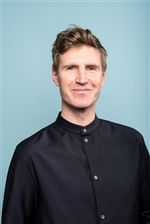
Assistant Professor Jesse Hoffman
Utrecht University
Vortragstitel: „Realigning energy transitions with the goals for a just and human world.”
Short Bio:
Jesse Hoffman is assistant professor at the Urban Futures Studio (UFS) and the Copernicus Institute of Sustainable Development. Jesse studies the politics of sustainability transitions, with a particular interest in the politics of large-scale infrastructures and ecosystems and the imagination of the future. He has an interest in transformative, practice-oriented pedagogies and research approaches. In 2021 Jesse and his teaching team were awarded the Dutch Higher Educational Premium for the innovative ‘Mixed Classroom’ and ‘Museum of the Future Past’ concepts. In 2018 he was a curator of the exhibition Places of Hope as a part of Leeuwarden Cultural Capital.
Sponsoring-Partner und Unterstützer: