Renewable strategies
Renewable strategies
"Energy transition - the greatest challenge of the 21st century"
Public panel discussion with experts
The term "energy transition" is often used. Especially now, ahead of the reform of the Renewable Energy Sources Act (EEG). Federal Minister for Economic Affairs and Energy Sigmar Gabriel wants to implement it on 1 August. And thus advance the turnaround that is to be realised in 2050. By then, most of the electricity in Germany will come from renewable energies: wind, water, sun or biomass. But what exactly are the building blocks and goals of the transition? How will it affect the north-west region? How much will it cost and to what extent will it affect citizens? "Energy transition - the greatest challenge of the 21st century" is the title of a public panel discussion on Friday, 21 March at 5.30 pm in the Congress Hall of the Weser-Ems-Halle Oldenburg. Bremer Landesbank is exclusively supporting the university's event as a partner of the "40 Years of the University of Oldenburg" project.
It is an explosive topic. Positions and facts are currently contradictory. For example, the share of renewable energies in electricity production is constantly increasing and all parties in the Bundestag have committed themselves to climate protection. And yet energy generation from lignite is currently booming and CO₂ emissions are rising. Just one inconsistency in a highly complex political field. And a challenge for the panellists to discuss: what are their predictions for the success of the "energy transition project"?
They are very familiar with the subject matter. For example, Prof Dr Claudia Kemfert from the German Institute for Economic Research (DIW). She will give a keynote speech and then join the panel discussion. There she will meet Lower Saxony's Environment Minister Stefan Wenzel, the President of the Wuppertal Institute for Climate, Environment and Energy, Prof Dr Uwe Schneidewind, the CEO of EWE AG, Dr Werner Brinker, and Dr Klaus Meier, founder of wpd AG in Bremen. The moderator is Ronny Meyer, Managing Director of the wind energy agency WAB
The panel discussion will take place as part of the programme celebrating the 40th anniversary of the University of Oldenburg. It is also part of the supporting programme of zukunftsenergien nordwest, Germany's largest job and education fair for renewable energies, which takes place on 21 and 22 March in the Weser-Ems-Halle.
The panellists
Dr Werner Brinker
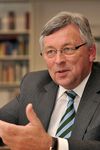
Werner Brinker has been a member of the Board of Management of EWE AG since 1996 and Chair since 1998. He can look back on more than 30 years of experience in the energy industry. He began his career at EWE in 1978 before moving to PreussenElektra AG (now E.ON Energie AG) in Hanover. In 1996, Brinker returned to EWE AG and took over the position of Chief Technical Officer. Brinker has been actively involved in the expansion of renewable energies, particularly offshore. From 2003 to 2013, he was Chairman of the University Council at the University of Oldenburg.
Prof Dr Claudia Kemfert

Claudia Kemfert is a recognised expert on energy and sustainability issues. She has headed the Energy, Transport and Environment Department at the German Institute for Economic Research (DIW) in Berlin since 2004 and has been Professor of Energy Economics and Sustainability at the Hertie School of Governance since 2009. She studied and gained her doctorate at the University of Oldenburg before heading a research group as a junior professor for four years. In 2004, she was appointed to the DIW with a professorship in environmental economics at Berlin's Humboldt University.
Dr Klaus Meier

As a trained lawyer, Klaus Meier was already advising farmers on the construction of individual wind turbines in the early 1990s. In 1996, he founded wpd GmbH in Bremen with the aim of planning wind farms in Germany. In 2001, the company was converted into a public limited company. In 2009, Meier moved to the Supervisory Board. Today, wpd is the largest German onshore wind farm operator and one of the leading developers of offshore wind farms. Around 860 employees work nationally and internationally on the expansion of renewable energies.
Ronny Meyer
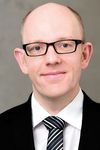
Ronny Meyer is Managing Director of the wind energy agency WAB and its subsidiary for innovation germanwind GmbH. He previously worked for the Boston Consulting Group in the energy sector, specialising in renewable energies. He began his academic appointment as a project leader for research and development in a small wind energy consultancy. There he led projects on the integration of wind energy into the electricity grid and developed software for the energy industry, among other things. Ronny Meyer studied physics at the University of Oldenburg.
Prof Dr Uwe Schneidewind

Uwe Schneidewind has been President and Scientific Director of the Wuppertal Institute for Climate, Environment and Energy - one of the leading sustainability think tanks in Germany - since 2010. Schneidewind began his academic appointment in the field of strategic environmental management consulting at Roland Berger & Partner in Düsseldorf. He then worked as a project leader at the Institute for Economics and Ecology at the University of St. Gallen, where he completed his doctorate and habilitation. In 1997, he was appointed to the professorship for "Business Administration, in particular Production Management and the Environment" at the University of Oldenburg. From 2004 to 2008, Schneidewind was President of the University of Oldenburg.
Stefan Wenzel

Stefan Wenzel has been Lower Saxony's Minister for the Environment, Energy and Climate Protection since 2013. In 1998, he became a member of the Lower Saxony state parliament in the Bündnis 90/Die Grünen parliamentary group, of which he was Chair from 2004 to 2013. Wenzel studied agricultural economics at the University of Göttingen. During a one-year stay in South America, he worked in an SOS Children's Village and a co-operative business start-up project, among other things. For ten years, he was a partner in a wholesale and retail business for organically grown wine. Wenzel was active in youth work and anti-nuclear initiatives for many years.
