
Humanoid Robot Patient
Humanoid Robot Patient
Development of a humanoid robotic simulation patient for medical further education and training
Background & Objective
An essential aspect of teaching on the medical degree programme is learning and practising how to take a patient’s history. From a teaching perspective, alongside theory-based lessons, simulated patients are used to recreate realistic scenarios. However, these require a significant organisational and financial investment, which limits the opportunities for students to practise.
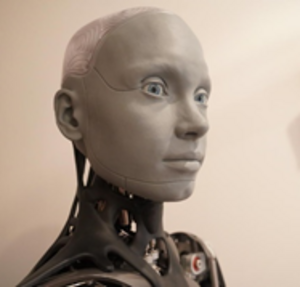
This project investigates whether a humanoid robotic simulation patient could be used for the independent collection of clinical findings and the formulation of diagnoses as part of medical training. Training in exploratory and diagnostic skills could thus be carried out much more easily and smoothly, with the intensity and complexity controlled by means of a suitably programmed robotic patient. The robotic simulation patient could therefore serve as a low-threshold, location- and time-independent training alternative, providing a valuable complement to traditional teaching with actors.
In particular, new-generation humanoid robots are attracting growing interest in the healthcare and education sectors, as their human-like appearance and social-interactive skills mean they are quickly accepted by people, which facilitates co-operation with them.
Approach
The core idea of the approach is that the robotic simulation patient can be individually configured using a model with pre-programmed sequences corresponding to a specific clinical profile. In this way, the trainer could vary or adapt the clinical presentation to model a new patient case. As the robot can simulate a wide variety of symptoms by combining, modifying and varying them, it can serve as a useful complement to training with actor patients and help strengthen students’ ability to identify mental health conditions or dementia in particular.
Furthermore, this could also enable students to familiarise themselves with clinical presentations that are otherwise rarely encountered in clinical settings. Through the increasing collection and processing of patient data, digital patient profiles can also be created; for example, individual patient cases can be reconstructed using the robot simulation to facilitate better analysis.
Publications
- Schwarz, Patricia; Hein, Andreas (2023): Conception of a Humanoid-Robot-Patient in Education to Train and Practice. In: 2023 IEEE 2nd German Education Conference (GECon), Berlin, Germany, 2023, pp. 1-5, doi: 10.1109/GECon58119.2023.10295118