

The Alpine Swift
The Alpine Swift
The Alpine Swift
Rondone maggiore - Alpine Swift - Apus melba (LINNAEUS 1758)
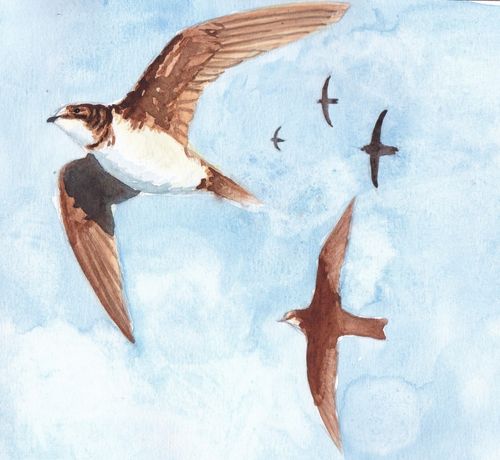
Of the three swift species found on Giglio, the Alpine swift is the largest and easiest to identify. Its wingspan of 54 to 60 cm is over 20 cm larger than that of the wall swift and the pallid swift. In contrast to the other two species, the throat patch of alpine swifts is just as white as their belly.
Alpine swifts breed on rock faces and high buildings. All swifts are highly adapted to life in the air and only touch solid ground to breed. They can be distinguished from swallows in particular by their short tails without conspicuous forks and their sickle-shaped wings. All three species are particularly vocal in the vicinity of their breeding colony. The call of the alpine swift is easy to recognise and, with a little practice, it is also possible to distinguish between wall swifts and pallid swifts.
Sources:
BAUER, H.-G.; BEZZEL, E.; FIEDLER, W. (2005): The compendium of the birds of Central Europe. 2nd edition. Aula-Verlag, Wiebelsheim.
SVENSSON, L.; GRANT, P. J.; MULLARNEY, K.; ZETTERSTRÖM, D. (2018): The Kosmos bird guide. Franckh-Kosmos-Verlags-GmbH & Co KG, Stuttgart.