

The little egret
The little egret
The little egret
Garzetta - Little Egret - Egretta garzetta (LINNAEUS 1766)
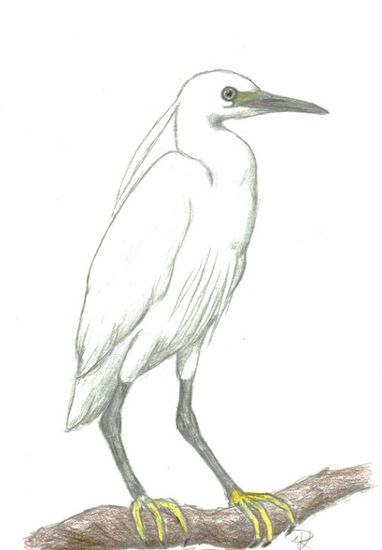
Little egrets were rather common on Giglio in 2019 with 12 observations[see the sightings pages].
With a body length of 55 to 65 cm and a wingspan of 88 to 106 cm, the pure white slender herons are significantly smaller than the grey heron, which is common in north-west Germany, and the great white egret, which is also white, but larger than the white cattle egret. Little egrets are easily recognised by their yellow toes, which stand out from their black legs, and their dark bill. They also have two elongated decorative feathers on the back of their neck when they are in full plumage.

Little egrets were observed on the rocky coast of Giglio in 2019. In general, they are mainly found in marshes and siltation areas, as well as on coasts and near human settlements in rice fields and small fish ponds. They actively hunt for their food - small fish, frogs, lizards, worms, molluscs, crustaceans and aquatic insects - in shallow water. Sometimes they also lie in wait. Little egrets are gregarious and form breeding colonies in bushes and trees on lagoons and shallow lakes.
The distribution area of the little egret is large. Its breeding range includes southern Europe, northern, western and southern Africa, Madagascar and southern Asia from Turkey to Japan as well as Australia and Oceania. Some little egrets are migratory birds that have regularly spent the winter in the Mediterranean region for around 70 years. It is estimated that there are between 68,000 and 94,000 breeding pairs in Europe, of which over 10,000 breed in Italy.
Sources:
BAUER, H.-G.; BEZZEL, E.; FIEDLER, W. (2005): The compendium of the birds of Central Europe. 2nd edition. Aula-Verlag, Wiebelsheim.
SVENSSON, L.; GRANT, P. J.; MULLARNEY, K.; ZETTERSTRÖM, D. (2018): The Kosmos bird guide. Franckh-Kosmos-Verlags-GmbH & Co KG, Stuttgart.