
Experience reports from the FWJ in the Biological Psychology Working Group
Experience reports from the FWJ in the Biological Psychology Working Group
Here, participants in the Voluntary Scientific Year (FWJ) report on their experiences in the Biological Psychology working group at the University of Oldenburg.
Greta Fuchs, FWJ 2025/2026
Why I thought: “Yes, I’ll give that a go!”
After my Abitur, it was clear to me that I wanted to do something before starting university. I’ve been interested in biology, particularly human biology, ever since I was a child. That’s how I got into research. However, as I’d had no previous experience of it, I wanted the chance to gain a realistic insight first. That’s why a voluntary year was ideal for me.
This is what a typical day looks like for me
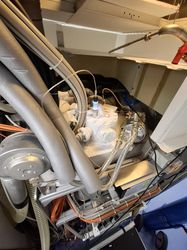
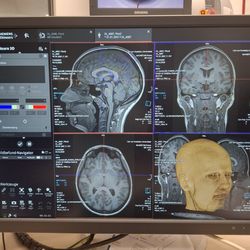
My days can vary greatly, as we have a wide range of tasks, such as supporting research studies, data processing or work in science communication (SCoP). There are days when we spend the whole day helping with studies, whether at the MRI centre or at the University of Bremen, and there are days when we spend most of our time on data preparation tasks in the office. Let’s take today as an example. I arrived at the office at 09:30. We had a lab meeting from around 10:15 to 11:15. By 11.30 am, I was already having lunch with the two FWJ participants from the research group below us. Afterwards, I translated a layperson’s summary, digitised questionnaires for an upcoming study and completed a small task for SCoP. I’m currently writing this experience report and will be heading off to my English course shortly, which we’re taking as part of the FWJ programme this semester. Last Wednesday, however, my daily routine looked completely different. I was at the MRI scan as early as 08:00 and spent the whole day helping with a study. We assist with the MRI scans, observe the psychological tests and carry out tasks such as the Tap-M (a reaction time test).
Challenges
The biggest challenge is definitely having to organise and motivate yourself. This can be very pleasant, as it gives you flexibility. However, it can also be very demanding. You have to learn which tasks to prioritise and work on them consistently – without anyone looking over your shoulder. This teaches you to really appreciate personal responsibility and good organisation.
And after that? Here’s what’s next for me
After the FWJ, I’ll (hopefully) go on to study medicine. Actually, at the start of the FWJ, I wanted to study biomedicine or perhaps molecular biology. The FWJ has given me the confidence and the resources to now feel confident enough to head in the direction of medicine after all.
My advice to anyone thinking about doing a FWJ
I can recommend a FWJ if you have the courage to ask questions and bring with you a keen interest and an open mind when it comes to learning.
Johann Stolle, FWJ 2025/2026
My FWJ in three words
Orientation, commitment, insight
After my Abitur, I didn’t want to just enrol anywhere; I wanted to find out first whether a career in research was really right for me. The Voluntary Research Year at the University of Oldenburg was my answer to that.
My day-to-day life mainly takes place in the office in the A7 building – punctuated by assignments in the Nessy building for MRI studies with participants and occasional trips to Bremen for further studies. A typical day starts early, hoping the train will run on time. Between office work and study sessions, my lunch break is spent going for a walk; after work, I take part in the university’s sports programme; and the journey home is once again a test of my optimism regarding local transport.
My most memorable moment was my first day at Nessy
Getting a behind-the-scenes look at an ongoing MRI study, experiencing how an examination with real participants is carried out, and seeing the technology in action for the first time. That’s when it dawned on me: I’ve really made it in science.
The most important realisation of the year was something else
Pure research work doesn’t fit my career profile. What drives me is the intersection of biology, nutrition and economics – science that has practical applications. The FWJ didn’t show me where I want to go by pointing me in the right direction, but by ruling out the wrong one. That’s just as valuable, if not more so.
What I learnt about myself in the process
You have to actively reach out to others and get involved in as many different work environments as possible. That’s the only way to find out what work you really enjoy. Anyone doing a FWJ should therefore try out as many different things as possible, attend lectures and network with colleagues from their own Department.
Next, I hope to get off to a flying start on the Industrial Engineering in Food Production degree programme at Osnabrück University of Applied Sciences, and the FWJ has given me the confidence that this is the right direction to take.
Tara Poppehoff, FWJ 2023/2024
Why did you decide to do a Voluntary Scientific Year?
Even while I was still at school, I had the desire to pursue my studies in a scientific direction in order to work in science in the future. The FWJ in biological psychology gave me the perfect opportunity to get to know everyday scientific life, different areas and interesting people. This gave me the opportunity to think about my exact choice of degree programme for another year and at the same time gain an insight into the possible world of work.
Where are you employed and what are your areas of responsibility?
I am employed at the Oldenburg Clinical Centre on the one hand and at the University of Oldenburg on the other. I work in biological psychology in the NBACCHI project, which deals with the neurobiological basis of changes in behaviour and experience in patients after a craniopharyngioma, a brain tumour in the region of the hypothalamus. Patients often suffer greatly from the consequences of their disease, such as hormonal deficits and severe weight gain. As part of the study, we collect endocrinological, neuropsychological and MRI data, in which I participate and work with both healthy controls and patients. I then send samples (e.g. saliva and blood) that we take during the endocrinological examinations to the laboratory at the clinic, label them, then decant them and freeze them before they are sent on. In addition to all the examinations, I also work a lot in the documentation and organisation of data, attend an English course and a Matlab seminar and have numerous opportunities to take part in lab meetings, symposia and courses. I have also received an MRI induction and will also receive an induction for the MEG in the future. In addition to the NBACCHI study, I also get to learn about other studies in biological psychology and have the opportunity to deal with a wide range of topics (ethics in medicine, observatory, study orientation) as part of the education days.
What challenges have you had to face so far?
I think working very independently and not being afraid to ask all kinds of questions was a bit difficult for me at the beginning. In the meantime, it is no longer a problem for me to familiarise myself with new tasks and to ask questions when things are unclear or to obtain the information I need for some problems independently.
What surprised you positively?
The team and the friendly interaction with us volunteers was a particularly positive surprise. As a volunteer, you naturally imagine that you won't be taken seriously because of your lack of knowledge, but that wasn't the case at all. I was very well accepted into the team and my comments and suggestions were always taken seriously. I could ask questions at any time and they were always answered in detail and at eye level. I also always had the feeling that it was important to everyone in my working group that the voluntary year helped me personally and I always had someone to talk to about this.