

Dittrichia viscosa (L.) GREUTER (sticky elecampane)
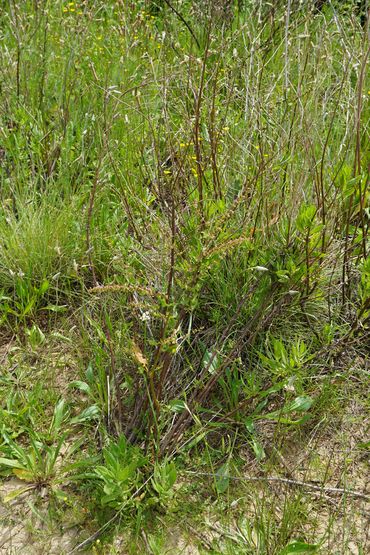
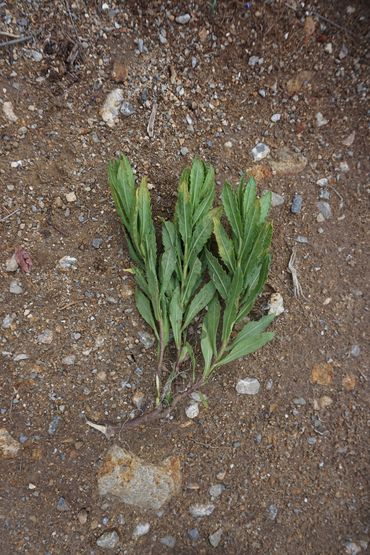
Dittrichia viscosa (L.) GREUTER (sticky elecampane)
Dittrichia viscosa (L.) GREUTER (sticky elecampane)
Family: | Asteraceae |
Habitat: | Ruderal grassland, garrigue, along roadsides, near the coast and in wasteland |
Growth habit: | woody semi-shrub at the base |
Plant size: | up to 1.5 m tall |
Flower colour: | yellow |
Flowering time | July - November |
Leaf characteristics: | Heads in the leaf axils at the stem ends, diameter up to 15 mm, tubular flowers orange, ray florets yellow, up to 15 mm long, leaves somewhat wrinkled, lanceolate to elliptic-lanceolate, alternate |
Flower characteristics: | lower leaves pointed, linear to oblong, distantly toothed, upper leaves somewhat stem-embracing, stalkless |
Fruits: | aachenes suddenly contracted at the end, hairy, about 2 mm long, cylindrical, hairy, pappus hairs fused close to the base |
Special features: | This versatile medicinal plant is a semi-shrub and is glandular and sticky in all parts, which is why it is sometimes used by farmers as a fly trap. Rubbing the leaves gives off a strong, spicy, unpleasant aroma. The pappus of the sticky elecampane consists of bristles that grow together at the base. In addition to the Mediterranean region, it is also found in the Canary Islands. A special feature is that the leaves of the plant adopt a compass position, i.e. the narrow side of the leaves is turned towards the light precisely when the sun's rays are at their highest.
|