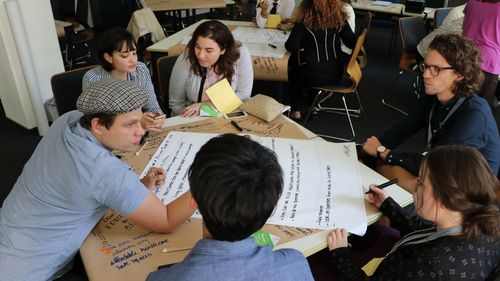
Students at the University of Oldenburg are well prepared to set up their own company. In the current start-up radar, the university ranks first among medium-sized universities.
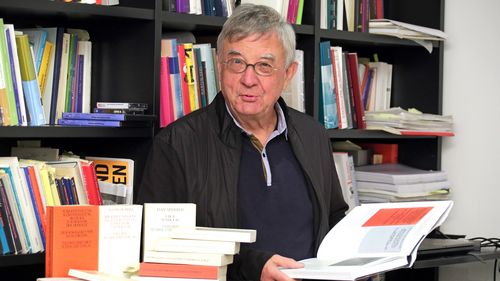
Literary fiction can open up new perspectives on scientific research. The Anglicist Anton Kirchhofer examines how novels are overriding stereotypes and prejudices and thus elucidating the role of science in society.
17 Biology students led by Dr Thomas Glatzel and Prof Dr Pedro Martίnez Arbizu from the Institute of Biology and Environmental Sciences (IBU) spent two weeks in Dahab on the Red Sea in Egypt in late summer.
How brain cells grow and connect is a constant source of fascination for anatomist Anja Bräuer. With her research, she wants to understand the basics of brain development and be able to better recognise and treat diseases such as Alzheimer's.
What exchange processes take place between groundwater and seawater on the beach? This question was addressed by 14 international Master's and doctoral students during a summer school on the topic of the Wadden Sea World Heritage Site.
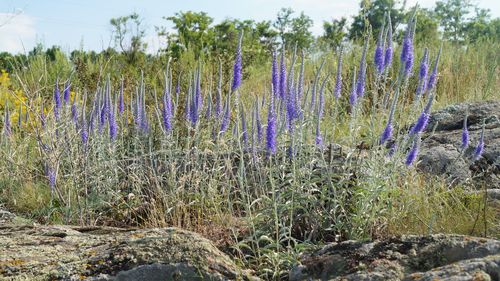
Stefanie Sievers-Glotzbach researches how commons-based rights on seeds and plant varieties can make plant cultivation more socially and ecologically sustainable – and help to future-proof agriculture.
With the "Digital Pact for Schools", the federal government wants to invest five billion euros in the digital expansion of schools. But what is the state of digitalisation in our educational institutions? An interview with Computing Science didactics expert Ira Diethelm.
Stop-motion films that bring exhibited museum animals to life and paper theatres in which animals set off in search of freedom - these works by students are currently on display at the Landesmuseum Natur und Mensch.
Why do some organic substances survive for many thousands of years in the sea? Geochemist Thorsten Dittmar and his team are investigating the mysterious mixture - and have now found an explanation for its longevity.
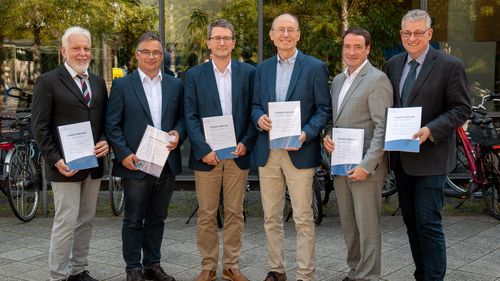
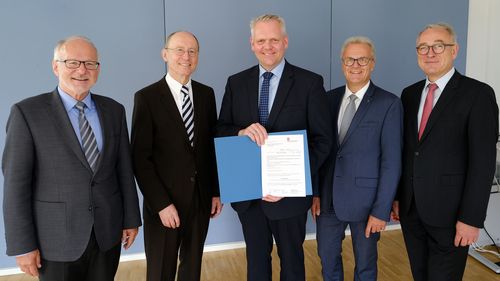
Sociologist Jannika Mattes, Junior Professor at the Institute of Social Sciences, has been awarded the Science Prize of the Lower Saxony Ministry of Science and Culture.
Dr Marc Alexander Bauch has supervised more than 140 Jugend-forscht projects in twenty years. A remarkable commitment, for which the maths and computer science teacher has now been honoured with the Klaus von Klitzing Prize.
Katrin Hansmeier from the German Institute for Humour will open the second Day of Teaching and Learning on Thursday, 29 November with her presentation. In this interview, she explains why teachers and learners in particular should have a sense of humour.
Every year around ten million tonnes of plastic waste end up in the oceans. Soon it could be possible to monitor the precise location of the debris from satellites. Oldenburg scientists are working on a solution.
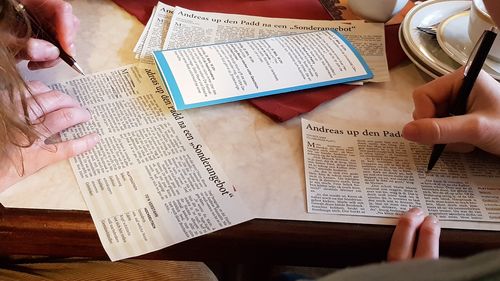
History students have analysed more than 500 letters from the First World War that were stored almost untouched in a cellar in Herford. They will present their insights into the lives of the "Two Brothers in the Great War" at a reading.
The Lower Saxony Ministry of Science is funding three projects at the University of Oldenburg. The aim is to further develop selected degree programmes - and to integrate research topics into everyday student life.
Excursions to science centres or museums are popular with schoolchildren and adults alike. But how exactly do they learn during such visits, what motivates them? This is what 16 doctoral candidates in the GINT doctoral programme are investigating.
A team of researchers led by Oldenburg chemist Thomas Müller has found important clues as to how novel, non-toxic catalysts - so-called "frustrated Lewis pairs" - cause hydrogen to react.
With Erasmus+, the university also offers administrative staff the opportunity to visit a European partner university. A profitable experience, say participants.