New subtropical house opened in the Botanical Garden
Cacti, spurges and other plants from arid regions have been given a new home in the Botanical Garden: The new subtropical house was officially opened on Wednesday in the presence of Oldenburg's Lord Mayor Jürgen Krogmann.
Carbon instead of silicon: the next revolution in electronics could be based on so-called organic semiconductors. Physicist Manuela Schiek is working on a group of these materials that react very specifically to light.
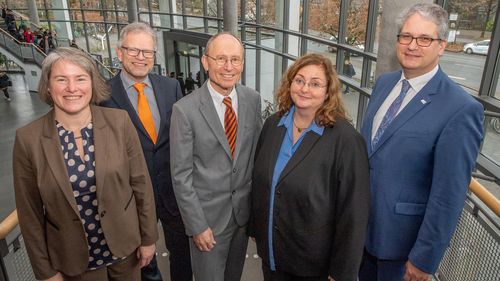
For two and a half years, the Presidential Board and Faculties I to V worked closely together to develop a structural plan - as a basis for the future planning of the faculties and therefore also the university. Last week, the stakeholders signed the document.
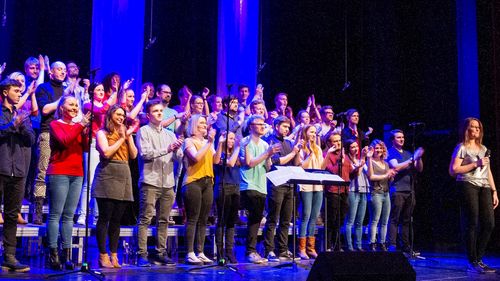
Despite the occasional downpour, hundreds of people celebrated the International Summer Festival together on Wednesday. International life at the university was creative and colourful.
Researchers led by Dirk Albach are on the trail of the secret of the success of the widespread plant genus Veronica. In doing so, they are addressing one of the most topical questions in biology: What actually is a species?
Bringing science directly to the people - that's what the Innovation(s)Mobil of the Innovative University of Applied Sciences Jade-Oldenburg is all about!
Low German is to become established as a teaching subject at schools in Lower Saxony - and it will also be possible to study it as such. The university is currently expanding its degree programme. Students can already choose the language as a specialisation.
The state of Lower Saxony is funding a joint project between the University of Oldenburg, Jade University of Applied Sciences and Emden/Leer University of Applied Sciences with around 2.25 million euros.
Ten minutes, scientific content and a lot of fun: these were the rules of the 9th Oldenburg Science Slam. Five young scientists competed this year in the sold-out Exerzierhalle.
First Qatar, now Oldenburg: the "2nd World Congress on Undergraduate Research" took place at the university at the end of May. Student Greta Lotte Kuhls was part of the organising team and looks back on three exciting days.
By Christoph Lienau. We discuss the story behind our recent Nature Nano paper introducing plasmonic nanofocusing as a powerful technique for light-scattering spectroscopy of single nano-objects with few nanometer spatial resolution and high sensitivity.
Work on the Centre for Marine Sensors is progressing: the foundation stone for the extension building was laid today at the Institute of Chemistry and Biology of the Marine Environment in Wilhelmshaven in the presence of Science Minister Björn Thümler.
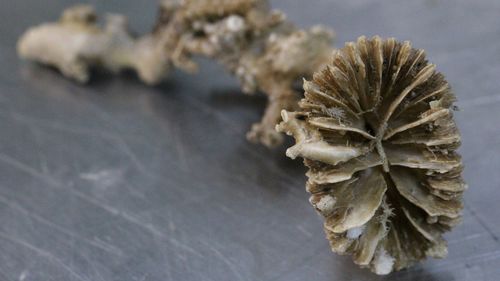
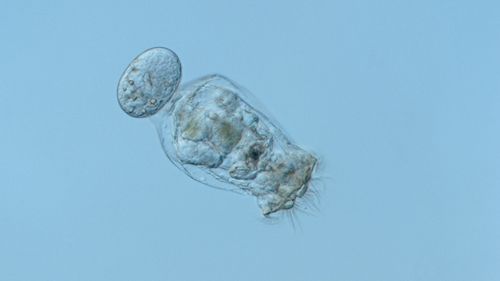
Scientists from Oldenburg and Bremen have shown that the associations of marine plankton in the present are markedly different from those of pre-industrial times. The study underlines how climate change effects biodiversity.
Hardly any other school subject is taught as often as politics. Yet this discipline contributes to the continued existence of democracy. Political didactics expert Tonio Oeftering on the value of political education - also with a view to the European elections.
Urologists from the Klinikum Oldenburg and scientists from the Faculty of Medicine are conducting joint research in the field of prostate cancer – with visible international success.
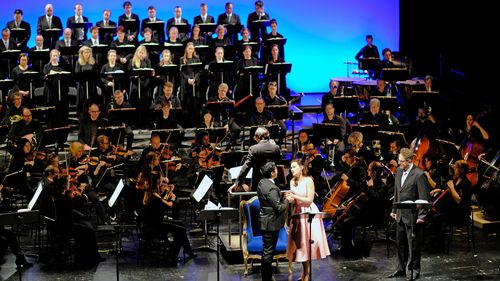
Significantly improved acoustics, new technology, more space for instruments: Over the past ten months, the Chamber Music Hall at the Institute of Music has been completely refurbished.
Sport is seen as the engine of integration. But is that even true? Two young Oldenburg academics take a critical look at the claims behind this theory - and put forward their own concept to counter it.
Special physical laws apply to distances of less than a hair's breadth. The physicist Svend-Age Biehs explores these amazing phenomena. He recently received the Gustav Hertz Prize from the German Physical Society.
On 11 May, Oldenburg Master's students will open the self-organised exhibition "HOW WE KNOW - Interfaces between research and everyday life". Pieces from the university's collections will be placed in an unusual context.