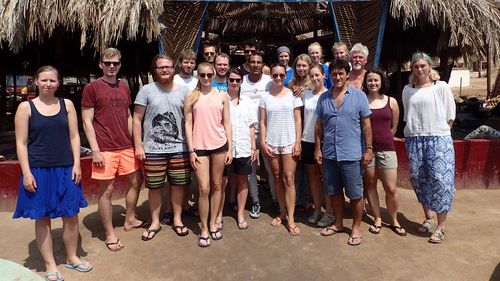
Bright sunshine, music, dancing and a huge culinary offering: the International Campus Festival attracted many visitors on Wednesday and Thursday. We show some impressions.
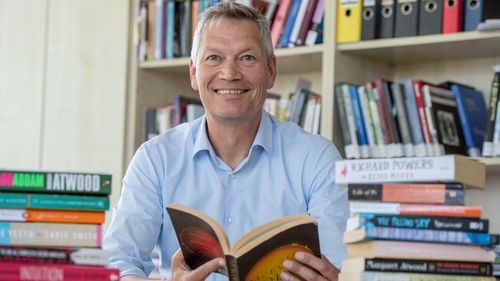
Henrik Mouritsen has been researching the magnetic sense of birds for more than 15 years. He has now summarised the current state of research in the journal Nature. In this interview, the neurobiologist talks about his fascination with birds and why basic research is so important.
Psychologist Josef Meekes is investigating neurofeedback - a method that could help paralysed stroke patients to relearn certain movements. In February, he received a "Carl von Ossietzky Young Researchers' Fellowship" from the university.
Athletics with a difference: at the university sports festival, to which Oldenburg students invited around 600 primary school pupils to the Wechloy campus, the main focus is on having fun with exercise. A concept that goes down well.
Excellence Strategy
Research
Top News
Marine Sciences
Bioreactor underground
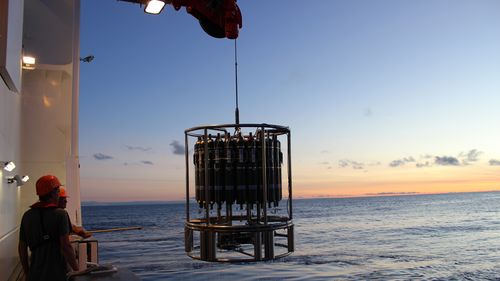
In the middle of the Atlantic, researchers have discovered a previously unknown part of the global carbon cycle. Subterranean microbes break down residues in the ocean crust that their relatives in the open ocean spurn. Thorsten Dittmar from the ICBM and colleagues report this in the journal Nature…
Hearing Research
Excellence Strategy
Research
Top News
New special research centre on hearing acoustics
The University is getting a new Collaborative Research Centre: the project on the topic of "Hearing Acoustics" is expected to receive around eight million euros in funding from the German Research Foundation (DFG) over the next four years. The head of the SFB is psychoacoustician Volker Hohmann.
Presenting concentrated science in ten minutes in an understandable way - that was the aim of the 8th Oldenburg Science Slam. Five young scientists from Oldenburg competed. In the end, the audience narrowly decided in favour of Jens-Steffen Scherer, who explained his penchant for octopuses.
Carl von Ossietzky, important publicist of the Weimar Republic and namesake of the university, died 80 years ago. In a reading on the eve of the anniversary of his death, the library brought his thoughts on current affairs back to life.
Scientists from the Alfred Wegener Institute and the Universities of Oldenburg and Potsdam have succeeded in identifying a new species of amphipod in the North Sea. To characterise the new species, they used genetic information that is otherwise used in other areas of genetics. This approach could…
With electricity against the cocktail party effect
A research team led by psychologist Christoph Herrmann wants to improve speech comprehension with a special form of electrical brain stimulation. The Oldenburg researchers and their partners want to develop a new hearing aid as part of a BMBF joint project.
A career in academia? The "Fem4Scholar" mentoring programme offers seminars and workshops to support female students who are considering a career in the humanities.
What do astrophysicists do? How does a scanning electron microscope work? And what does the everyday life of bookbinders look like? This year's "Future Day for Girls and Boys" provided exciting insights into study and training opportunities at the university: a series of pictures.
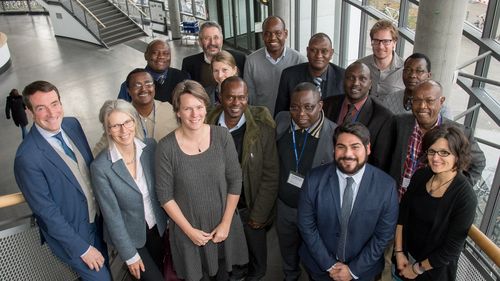
Starting signal for a historical research project that is one of the largest in Germany: The "Prize Papers" academy project was opened in Oldenburg Castle on Wednesday in front of around 130 guests from the worlds of science, politics and culture.
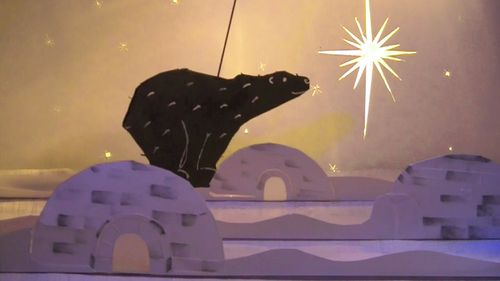
Amongst donkeys prancing, turtles dancing in slow motion and clucking chickens, Oldenburg students are learning what makes artistic work in an inclusive group so special. They are currently rehearsing "Carnival of the Animals". The play premieres on 5 May.
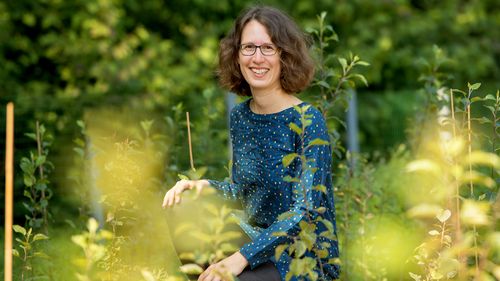
Chemist Jannika Lauth was awarded a Carl von Ossietzky Young Researchers' Fellowship this year. She is investigating two-dimensional nanoparticles using innovative laser processes. Possible applications include ultra-thin solar cells, fast transistors and energy-saving LEDs.
For the first time, a team of researchers led by Oldenburg has been able to scientifically describe a bacterium isolated from oil-contaminated samples from the Deepwater Horizon accident in 2010. It belongs to the Roseobacter group and is therefore one of the most important groups of marine…
Since summer 2016, the university has had its own student body for students on cooperative degree programmes. After all, studying at two universities at the same time brings its own challenges.
Deafness is one of the most common congenital diseases of the sensory organs in newborns. Cochlear implants can compensate for hearing loss in a good two thirds of those affected. However, the hearing prostheses do not help a third. Oldenburg scientists are on the trail of this phenomenon.
What does everyday life look like for people with and without disabilities? Are many things the same or do they live in separate worlds? Ten students at the university set out to find out - and designed an interactive exhibition.