Aging and old age affect everyone. Geriatrician Tania Zieschang and philosopher Mark Schweda approach the topic from different perspectives. An interview about protecting the elderly in the pandemic, robots in care – and what stays with us.
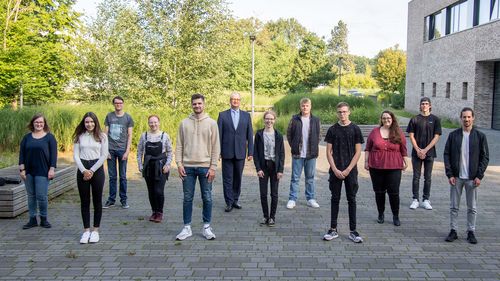
Getting children and young people interested in science and technology - that is the aim of the MINT Cluster NordWest. Physics didactics expert Michael Komorek plays a key role in the project, which is supported by the Federal Ministry of Education.
Marine biodiversity is threatened by climate change, pollution and overfishing. Biodiversity expert Helmut Hillebrand explains in this interview how research can help to improve marine conservation.
History is not only something you read about; it can also be heard and felt. Together with her team, musicologist Anna Langenbruch researches how music history is presented on stage.
Absolute case numbers, incidence, reproduction figures - a basic understanding of maths is needed to understand the coronavirus infection situation. Specialist didactician Astrid Fischer on a discipline between practical benefits and abstract concepts.
Because the whole is more than the sum of its parts
Can wind farms be treated as collective systems similar to insect swarms? Physicist and Ossietzky Fellow Michael Sinhuber is combining swarm and turbulence research with the goal of optimising wind farm control.
For the third time in four years, the 2020 Nobel Prize went to gravitational physics. Oldenburg expert Jutta Kunz explains why she finds nothing more exciting than black holes, neutron stars and gravitational waves.
Very little social contact, digital working groups and suspended stays abroad: a lot has changed for students at the University of Oldenburg in recent months. How did they experience the past year?
Today, coffee and tea are dietary staples for many people, but 400 years ago stimulants such as coffee and tea were exotic rarities. The collaborative research project "Intoxicating Spaces" investigates their impact on European societies.
University President Hans Michael Piper looks back on an eventful academic year in the wake of the pandemic. In a video message [YouTube] he talks about what holds the university together, about tough decisions and a glimmer of hope.
How does one go about studying three centuries' worth of literary journals? Haimo Stiemer is banking on digital analysis methods – and has secured a "Carl von Ossietzky Young Researcher's Fellowship" with this approach.
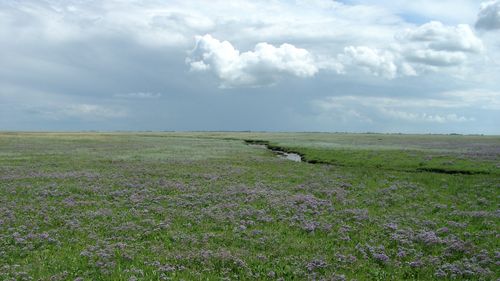
The German Research Foundation is funding a new research group at the university. The DynaDeep project, led by hydrogeologist Gudrun Massmann, is exploring a largely unknown habitat with a subterranean monitoring network on the island of Spiekeroog.
Excellent research and outstanding doctorates: physicist Ilia Solov'yov and lawyer David Saive receive this year's prizes from the Oldenburg University Society.
Prof. Dr. Ralph Bruder (57) will be the new President of the University. The Senate has voted unanimously for the director of the Institute of Human Factors and Ergonomics at the TU Darmstadt. The six-year term of office begins in August 2021.
The new Infection Protection Act was passed by the Bundestag in mid-November, but many people are still uneasy. Is parliament being bypassed? A guest article by Oldenburg constitutional law expert Volker Boehme-Neßler.
"Science in ten minutes" - this is the name of the new format from the Oldenburg Research Centre for Children's and Young Adult Literature (OlFoKi). In video contributions, experts analyse current children's and young adult books scientifically and didactically.
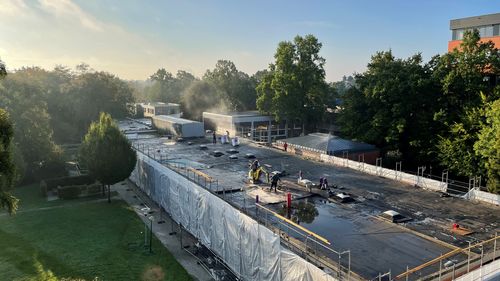
The number of photovoltaic systems at the university is growing: more modules at the sports centre and the lecture hall centre will soon be producing environmentally friendly electricity and contribute about five percent to the overall electricity needs.
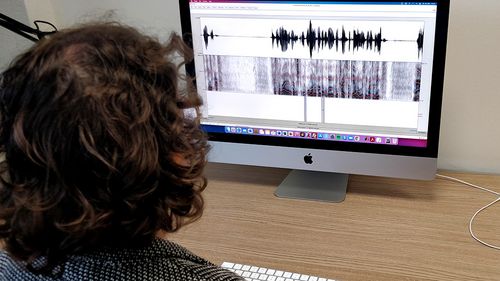
Using virtual reality to better understand auditory perception
How can virtual reality help to better investigate complex auditory processes? This is what Oldenburg researchers are investigating in three projects of the priority programm AUDICTIVE.