Is there a northern limit for dangerous algae? An expedition led by Oldenburg on the research vessel Maria S. Merian "MSM65" is currently investigating this key question. The scientists want to find out more about the impact of global climate change on biodiversity.
Great success for the University of Oldenburg and Jade University of Applied Sciences: the joint transfer project "Innovative University Jade-Oldenburg!" has been approved in the "Innovative University" funding initiative - the only one in Lower Saxony. The funding amounts to up to 13 million euros.
Modern lighting in the library and a new roof for the sports centre: In total, the university and the state of Lower Saxony are investing around 850,000 euros in a better energy balance. Something is also happening at Jade University.
Getting married even though your partner belongs to a different religion or denomination? In past centuries, such marriages were considered a disruptive factor. In this interview, historian Dagmar Freist talks about external pressure, escalating conflicts between parents over the faith of their…
Stephan Weil also stopped off at the ForWind wind researchers on his summer trip through the north. During his tour, the Minister President inspected the new WindLab and was impressed: "The University of Oldenburg is actively contributing to the success of the energy transition."
With the "Showtime" presentation days and an exhibition of the "Image Sequences" course, students of the Institute of Art and Visual Culture provide insights into their artistic works and project work and invite interested parties to join in the discussion.
On 14 June, the Oldenburg University Society (UGO) and the Konzert AG of the Institute of Music presented a special kind of summer concert in the university auditorium. Under the motto "coffeehouse unplugged", the pop and jazz choir, the Ossietzky Singers, the Ossietzky percussion ensemble and…
Networking with old acquaintances, friends or former fellow students and professors - that is the aim of the OldenburgConnect alumni platform. Since the beginning of the year, university alumni have been able to register on the social network, maintain contacts and expand their personal circle of…
Antarctic krill, a small crustacean, is the food source for many animals in the Southern Ocean - and one of the most abundant species in the world. New findings from researchers in Oldenburg now show that competition for food in particular causes krill populations in the Southern Ocean to fluctuate…
Open access publishing - thanks in part to a publication fund, more and more Oldenburg academics are utilising this method. The university has just submitted a follow-up application to the German Research Foundation (DFG).
It's a lateral move in the middle of the Master's programme, for some a leap in the dark: 275 student teachers at the university are currently completing their practical semester at primary, secondary and intermediate schools in the region. They are now teaching several days a week instead of…
Researching biodiversity in the oceans and developing practical concepts for nature conservation - this is the challenge that the scientists at the newly founded Helmholtz Institute for Functional Marine Biodiversity want to tackle. In this interview, biodiversity expert Helmut Hillebrand talks…
The canteen forecourt will be transformed into a colourful cultural meeting place on 8 June: once again this year, the University's International Summer Festival will come to life thanks to the efforts of many students. Preparations are in full swing.
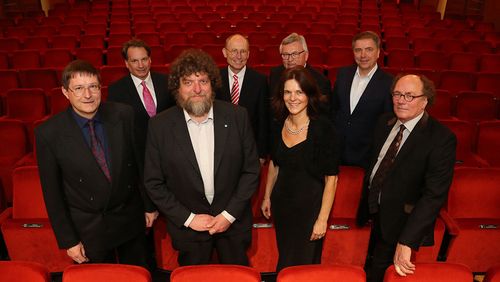
Helmholtz Institute for Functional Marine Biodiversity officially founded
Closing research gaps and creating a scientific basis for marine conservation - these are the goals of the Helmholtz Institute for Functional Marine Biodiversity. The Institute was officially founded at the University of Oldenburg on Wednesday.
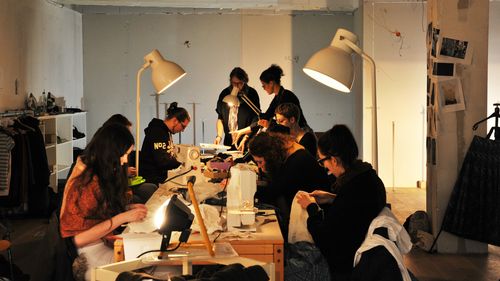
Clothes swap corner, snipping disco, repair café: how we can use resources responsibly is the focus of the Sustainability Week organised by the General Students' Committee (AStA) at the University of Oldenburg.
More and more young people are beginning to study after leaving school. However, some students leave university without a degree or change their degree programme. The reasons why some drop out of their studies and how the number of dropouts can be reduced are now being investigated by Oldenburg…
Monitoring and analysing oil spills from an aircraft: For years, this was the task of the "laser fluorosensor" developed by scientists in Oldenburg. Now the sensor, which was the model for many other models, has had its day and has travelled to Munich: in future, it will be accessible to researchers…
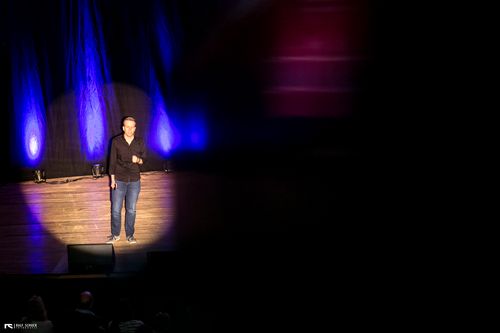
Presenting a complex research topic in just ten minutes in an entertaining way - six young scientists rose to this challenge at the university's 7th Oldenburg Science Slam. The prize for the best presentation, the "Golden Brain", went to Jannik Ehrich.
Mixtures of hydrocarbons - such as crude oil or natural gas - are the basis for many products, from painkillers to plastic packaging. How can carbon-hydrogen bonds be brought to direct reactions in a targeted manner? This is what doctoral students in a new Oldenburg research training group will soon…
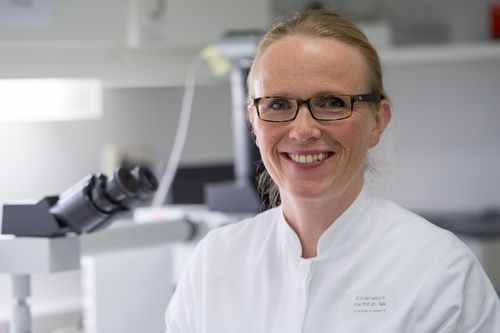
A team led by biochemists Karl-Wilhelm Koch and Farina Vocke has succeeded in elucidating the molecular basis of a genetic retinal disease. The findings could help to better understand more common forms of retinal degeneration.