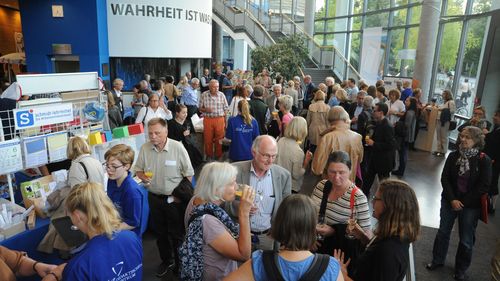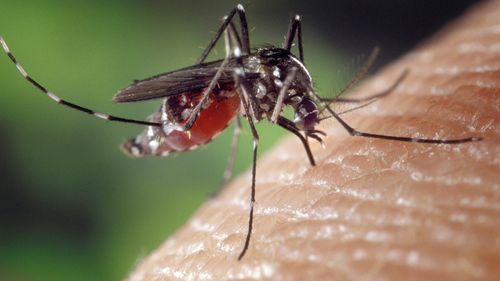
What happens at the molecular level during smelling, seeing and hearing? The "Molecular basis of sensory biology" research training group at the University of Oldenburg has been focussing on this question since 2013. The German Research Foundation (DFG) has now approved the continuation of the…
What do you do with old, broken or no longer fitting items of clothing? And what relationship do the people of Oldenburg have to their trousers, jumpers and skirts? The feelKLEID project explores these questions.
The protest actions of the Russian punk group Pussy Riot, their arrest and imprisonment are the focus of the theatre performance "Tage des Aufstands - Riot Days", which can be seen this week at the Kulturetage. Religious scholar and Russia expert Joachim Willems talks about solidarity in the West…
What happens to the voice when dialogue partners find the other person attractive? And what effect does sympathy have? A study with Oldenburg students has provided linguists Jan Michalsky and Heike Schoormann with initial answers.
Deception is fundamental in many sports. Oldenburg researchers led by sports scientist Prof Dr Jörg Schorer are investigating how variable people are in their movements. Among them is doctoral student Josefine Panten - her research in pictures.
In addition to their own research and teaching, they help steer the fortunes of the university: the part-time Vice Presidents Sabine Kyora, Esther Ruigendijk and - new to the Presidential Board - Meinhard Simon. Their two-year term of office began on 1 January.
The largest human sensory organ is the subject of her research and medical care: the skin. For dermatologist Ulrike Raap, it is "an architectural masterpiece", the building blocks of which she wants to understand even better in the service of new therapies.
Computing scientists Werner Damm and Martin Fränzle are researching an ethical concept for autonomous systems - such as self-driving cars. They rely on knowledge from other disciplines. In an interview for EINBLICKE magazine, they talk about their goals and challenges. An extract.
From educational research to environmental information systems: In this interview, Vice President Esther Ruigendijk and Jenka Schmidt, Head of the International Student Office, talk about why the university's diverse co-operations with universities in South Africa are important.
Jannik Ehrich is a doctoral candidate in theoretical physics. He knows how to make his subject accessible to laypeople. In May, he consequently took part in the Oldenburg Science Slam for the first time - only to be crowned one of the best German slammers just a few months later.
Religion - once again a social megatopic, at least since the turn of the millennium. How can we live together in a religiously diverse world? A question that religious education teacher Joachim Willems addresses.
In November, the Japanese University of Sendai welcomed 19 partner universities from 11 countries to its 50th anniversary celebrations. The University of Oldenburg was there too: sports students Sören Niewint, Patrick Weise and Mark-Robin Wirsching. An experience report.
How does hearing loss affect the experience of music? Hearing researcher Kai Siedenburg has been awarded a three-year "Carl von Ossietzky Researchers' Fellowship" by the university for his research at the interface between signal processing and music psychology.
An economist, a marine researcher, a curative educator and a musicologist: the university has honoured four lecturers for their outstanding achievements with the "Teaching Award".
One of the most important groups of marine bacteria is the focus of the "Roseobacter" Collaborative Research Centre. The German Research Foundation (DFG) is now funding the project for a further four years with 9.7 million euros.
Focus on good teaching: The first Day of Teaching and Learning will take place at the University of Oldenburg on Wednesday, 29 November. In an interview, Prof Dr Sabine Kyora, Vice President for Studies, Teaching and Equal Opportunities, explains why good teaching is so important to her.
They have mastered the most comprehensive examination of their degree programme: the first five students of the European Medical School Oldenburg-Groningen (EMS), founded in 2012, have passed the Second State Examination.
"More pleasure than burden?" is the title of the book, which describes the 40-year history of the University of Oldenburg from the perspective of its founding rector and former presidents.
As of 2018 Oldenburg University will take over the academic implementation of a project that has been included in Germany's largest research programme in the humanities: the "Prize Papers" project has been admitted to the Academy Programme, which is financed by the German federal and state…
Under this motto, students at the university have been organising the NachDenkstatt - a three-day conference on the topic of sustainability - for six years now. It's happening again next weekend.