Individual and online-supported - this is how Anke Hanft, Academic Director of the Centre for Lifelong Learning (C3L) at the University of Oldenburg, sees the future of academic teaching and further education. In this interview, she explains why the changing world of work is also affecting…
Students can have competences acquired outside the university credited towards their studies. Staff from PLAR Services and the University's Examinations Office will support them in this process.
Scientists from Oldenburg are currently travelling to the Antarctic on the research vessel Polarstern. Led by marine biologist Bettina Meyer, they are investigating, among other things, how climate change is affecting krill stocks in the Atlantic part of the Southern Ocean.
The more electricity comes from renewable sources, the more complex the electricity grid becomes. Energy computer scientists at the University of Oldenburg are researching the transformation to a flexible and intelligent system as part of a DFG Priority Programme.
In a joint project, scientists led by biology education specialist Corinna Hößle are investigating what pupils know about genome editing and how they evaluate it ethically. The researchers want to sensitise adolescents and their teachers to the topic.
How can the integration of refugee children be promoted? Special education students accompany 18 boys and girls for nine months and investigate which activities the children particularly benefit from.
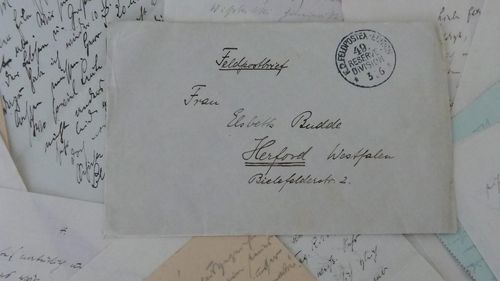
Paul Bekker was one of the most influential music critics of the early 20th century. One of his studies on Ludwig van Beethoven was considered lost for over 80 years - until the musicologist Anna Langenbruch discovered it.
Why did the carbon dioxide content of the atmosphere suddenly rise after the end of the last ice age? Processes at the bottom of the Southern Ocean could be responsible, report researchers led by geochemist Dr Katharina Pahnke in the journal Science.
A new teaching laboratory on the Wechloy campus will improve training in degree programmes such as Biology, Environmental Sciences, Medicine and Chemistry from March. Microbiologist Prof Dr Ralf Rabus is delighted with the new facilities, which will be used exclusively for block practicals.
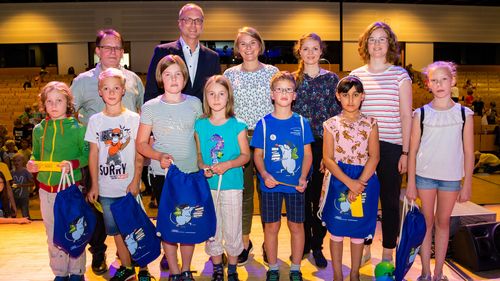
It's that time again in February and March: the Audimax opens its doors for the KinderUniversität. The first lecture on 28 February will focus on social networks. Social scientist Prof Dr Sebastian Schnettler reveals exactly what the children can expect in an interview.
Studying costs time, energy - and of course money. A scholarship can help and keep your back free. Many companies, foundations and private individuals award scholarships for students and doctoral candidates. An overview.
The Winter Olympics in Pyeongchang are still young, but there has already been the first case of doping. In this interview, sports scientists Prof Dr Dirk Büsch and Dr Katharina Pöppel talk about why testing and repression alone do not make sport cleaner.
On the trail of the monster wave phenomenon: an international team of researchers led by Oldenburg has succeeded in estimating the probability of a monster wave - a mountain of water up to 30 metres high - occurring based on the waves in the surrounding area.
The new Copyright Knowledge Society Act is intended to make it easier to use digital media in research and teaching. It comes into force on 1 March. What changes do university members need to be prepared for? An overview.
Using scientific findings for social debates - that is the aim of the new "Discourses on the Future" funding programme of the state of Lower Saxony. Three Oldenburg projects were successful in the call for proposals.
Getting to know a research project straight after school and getting involved in practical work: the Voluntary Scientific Year (FWJ) makes it possible. A-level student Rieke Wahlen has been working in the hydrogeology working group for five months - an interim assessment.
Inaugural visit by Björn Thümler to the university: Lower Saxony's Science Minister emphasised the central role of the OFFIS research institute in the state's digitalisation offensive. The university's position in medical training will be further strengthened by the expansion of study places at the…
Teaching-learning laboratory for economics education opened
Learning economics in the laboratory - this is made possible by the "Oldenburg Experimental Laboratory for Economics Education" (OX), which the University's Institute for Economics Education opened on Tuesday. In the OX, school classes and other learning groups can take part in experiments on…
Social processes of the regional energy transition - this has been the focus of the new junior research group led by Oldenburg sociologist Jannika Mattes since January. This was made possible by Mattes' inclusion in the renowned Emmy Noether Programme of the German Research Foundation (DFG), which…
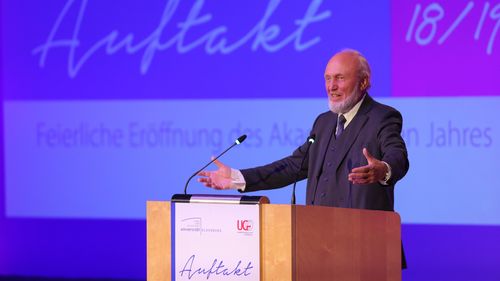
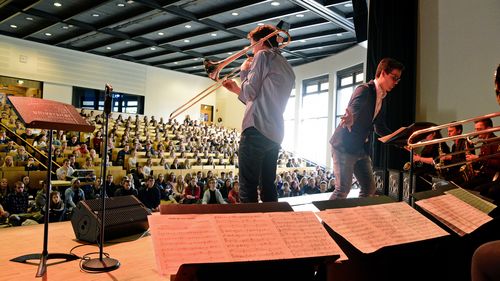
Four honours, classical concert pieces and standing ovations: Around 550 guests enjoyed an atmospheric evening at the New Year's reception of the University and University Society (UGO) at the Oldenburg State Theatre on Thursday.