
Team

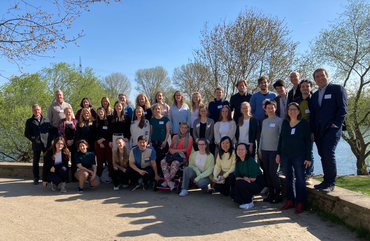
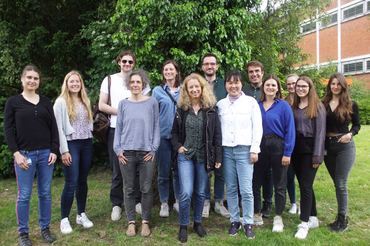
Team
GRK Sprecherin

Sprecherin des GRK

Co-Sprecherin des GRK
Beteiligte Wissenschaftler und Wissenschaftlerinnen


Post-Doktorand*innen

Dr. AmirHussein Abdolalizadeh Saleh
https://uol.de/biologische-psychologie/team
Education:
MD at Tehran University of Medical Sciences, Iran
Research Background:
Identification of the neurobiological underpinnings of neurologic and psychiatric disorders
Parkinson's disease, Multiple Sclerosis, Alzheimer's disease, Schizophrenia, Autism
neuroimaging tools including diffusion and functional MRI
Current Project: His current focus in RTG is on predicting the optimal neuromodulation and its outcomes in patients with Parkinson's disease using different statistical and imaging analytical methods.
Link to Scholar: scholar.google.com/citations
Doktorand*innen

Linda Bergmann
https://uol.de/amt/mitarbeiter/linda-bergmann
P4: Sensor-based tracking of upper limb use in domestic environments
PI: Hein
Collaborator: Kranczioch
Education:
(2023 - current) PhD in the Research Training Group for Neuromodulation

Rebekah Brückner
https://uol.de/biologische-psychologie/team
P6: Combining cognitive training and tACS in patients after stroke to improve interference control
PI: Özyurt,
Collaborators: Thiel und Herrmann
Education:
(2022 - current) PhD in the Research Training Group for Neuromodulation
(2018 - 2021) Master of Science in Neurocognitive Psychology, University of Oldenburg
(2013 - 2016) Bachelor of Arts in Psychology, University of California Berkeley
Research Background:
MEG, EEG, MRI and tACs techniques, Auditory processing, Stroke rehabilitation
Current Project: Combining cognitive training and tACs in patients after stroke to improve interference control

Monica-Denisa Cioara
P21: Computational identification of candidate network targets for tTIS in psychomotor slowing
PI: Thiel und Wessel; Collaborator: Grefkes
Education:
(2026 - present) PhD in the Research Training Group for Neuromodulation
(2023-2026) Master of Science in Neuroscience, Carl von Ossietzky University of Oldenburg, Oldenburg, Germany
(2020-2022) Master of Arts in Clinical Psychology, Psychological Counselling, and Psychotherapy, Babes-Bolyai University, Cluj-Napoca, Romania
(2017-2020) Bachelor of Arts in Psychology, Babes-Bolyai University, Cluj-Napoca, Romania
Research interest: fMRI, aging, neurodegeneration, executive functions

Jennifer Decker
https://uol.de/neuropsychologie/team/jennifer-decker-phd-candidate
P3a: Motor imagery neurofeedback training at home for upper-limb motor recovery in stroke and associated changes in cortical motor-prefrontal functional connectivity
PI: Kranczioch
Collaborators: Thiel, Grefkes
Education:
(2022 - current) PhD in the Research Training Group for Neuromodulation
Research Background:
Motor imagery, Neurofeedback, Electroencephalography (EEG), Functional magnetic resonance imaging (fMRI), Motor and cognitive assessment, Stroke patients
Repeated practice of movement sequences enables these movements to be learned and perfected. A similar effect can be achieved by simply imagining these movements, since the activity of the responsible brain areas strongly overlaps. This type of motor imagery (MI) training allows especially motor impaired individuals (e.g., stroke patients) to work on improving their actual motor skills on a cognitive level and is therefore promising in the context of neural rehabilitation. To provide feedback on performance during practice, additional neurofeedback (NF) can be provided based on individual brain activity during practice, often EEG-based. This allows for real-time objective error analysis as well as correction so that neural activity is specifically modulated.
Current Project: In this across-subjects multiple baseline study, extensive testing of motor function and cognition as well as structural and functional imaging using EEG and MRI will be performed before and after four weeks of MI-NF training. The aim is to further investigate the effects of intensive home-based MI-NF training on the connectivity of motor and prefrontal areas and on the recovery of upper limb motor function in stroke patients.

Motahare Delbari
https://uol.de/neuropsychologie/team
P2: TMS-induced EEG responses for the characterization of brain network integrity
PI: Debener, Grefkes
Collaborator: Herrmann
Education:
(2023 - current) PhD in the Research Training Group for Neuromodulation

Yan Deng
https://uol.de/biologische-psychologie/team
P10a: Noradrenergic and cholinergic modulation of functional connectivity related to motor performance and interference resolution in older volunteers and patients with Parkinson’s disease
PI: Thiel
Collaborators: Witt, Grefkes
Education:
(2022 - current) PhD in the Research Training Group for Neuromodulation
Tea Gjishti
P19: Comparing transcranial alternating current stimulation with EEG neurofeedback
PI: Herrmann, Kranczioch; Collaborator: Boetzel
Education:
(2025 - current) PhD in the Research Training Group for Neuromodulation

Paul Rotermund
https://uol.de/psychologie/statistik/paul-grupe
P8: Monitoring far-transfer effects of neuromodulation and cognitive training on interference control in daily activities after stroke by means of experience sampling methods
PI: Andrea Hildebrandt
Collaborators: Brütt, Özyurt, Kranczioch
Education:
(2023 - current) PhD in the Research Training Group for Neuromodulation
(10/2021 - 09/2023) MSc in Neurocognitive Psychology, University of Oldenburg
(09/2018 - 8/2021) BSc in Psychology, Leiden University, Netherlands

Shari Hiltner
P3b: Motor imagery neurofeedback training at home for upper-limb motor recovery in stroke and associated changes in cortical motor-prefrontal functional connectivity
PI: Kranczioch
Collaborators: Thiel, Grefkes
Education:
(2025 - current) PhD in the Research Training Group for Neuromodulation

Sina Khajei
https://uol.de/en/applied-neurocognitive-psychology/team/sina-khajei-msc
P7: Brain mechanisms of cognitive interference in coordination of realistic action sequences in virtual reality
PI: Rieger
Collaborator: Hein
Education:
(2024 - current) PhD in the Research Training Group for Neuromodulation

Thuy Tien Mai
P17: Transcranial Alternating Current Stimulation of patients with Parkinson’s disease at home
PI: Herrmann und Boetzel
Collaborators: Roheger und Witt
Education:
(2025 - current) PhD in the Research Training Group for Neuromodulation

Lea Mais
P1: The role of prefrontal cortex in motor recovery after stroke
PI: Grefkes
Collaborators: Debener, Kranczioch
Education:
(2023 - current) PhD in the Research Training Group for Neuromodulation

Sophie Paape
P18: Implicit assessment of dual task interference
PI: Debener
Collaborators: Hein, Witt
Education:
(2025 - current) PhD in the Research Training Group for Neuromodulation

Lara Papin
https://uol.de/neuropsychologie/team/lara-papin-phd-candidate-1
P12: Behavioral and neural correlates of cognitive-motor interactions during gait and balance in natural environments
PI: Debener, Witt
Education:
(2022 - current) PhD in the Research Training Group for Neuromodulation

Wolf Pink
https://uol.de/ambulantes-assessment-psychologie/team
P5: Frequency specific neurofeedback to promote interference reduction in memory consolidation
PI: Roheger, Kranczioch
Collaborator: Notbohm
Education:
(2024 - current) PhD in the Research Training Group for Neuromodulation
(2018 – 2024) Master of Science in Neurocognitive Psychology, University of Oldenburg
(2014 – 2018) Bachelor of Science in Psychology, University of Trier
Research Background:
EEG, Neurofeedback, Sonification

Lena Pinkert
https://uol.de/biologische-psychologie/team
P10b: Impact of cholinergic stimulation on cognitive motor dual task performance and brain activity in older adults;
PI: Thiel; Collaborators: Witt und Grefkes
Education:
(2024 - current) PhD in the Research Training Group for Neuromodulation

Selma Polte
https://uol.de/ambulantes-assessment-psychologie/team
P15: Smartphone-based assessment of daily cognitive fluctuations in Parkinson’s disease
PI: Roheger
Collaborators: Thiel und Abdolalizadeh
Education:
(2024 - current) PhD in the Research Training Group for Neuromodulation

Foroogh Razavi
https://uol.de/allgemeine-psychologie/mitarbeiter
P9: Interference resolution in older volunteers and patients with Parkinson’s disease
PI: Herrmann
Collaborator: Witt
Education:
(2024 - current) PhD in the Research Training Group for Neuromodulation

Luisa Schmidt
https://uol.de/neurologie/mitarbeiter
P11: Neurophysiological mechanisms & markers of transcutaneous auricular vagus nerve stimulation in health and Parkinson’s disease
PI: Witt; Collaborators: Thiel, Debener
Education:
(2022 - current) PhD in the Research Training Group for Neuromodulation

Linn Julie Schwarz
P20: Neuromodulation in the context of mirror visual feedback and mirror therapy: Brain activity and motor performance
PI: Kranczioch
Collaborators: Sterr, Dohle
Education: (2026 – present) PhD in the Research Training Group for Neuromodulation

Evgenii Shvedovskii
https://uol.de/humanmedizin/abteilungen/universitaetsklinik-kjpp/team
P16: Interference control across the lifespan: bridging neurological and psychiatric rehabilitation
PI: Thiel, A. Hildebrandt; Collaborator: external collaborator: Prof. Dr. Yulia Golub
Education and Work:
(2024 - current) PhD in the Research Training Group for Neuromodulation
(2023 - 2024) Clinical Neuropsychologist, Child Development Center “Jo-Ha-Ku” (Georgia)
(2014 – 2023) Research Fellow at the Laboratory of Clinical Psychology, Mental Health Research Center (Russia)
(2009 – 2014) Diploma in Clinical Psychology, Moscow State University of Psychology & Education (Russia)
Research interests
• Cognitive impairments in psychiatric and neurological states
• Substance use disorders
• Neuropsychological Assessment
• Autism Spectrum Disorders

Emelie Wienecke
https://uol.de/rehaforschung/mitarbeiter
P13: How to translate neuromodulation into routine care?
PI: Brütt, Witt
Collaborators: Hildebrandt, Hein
Education:
(2024 - current) PhD in the Research Training Group for Neuromodulation
Assoziierte Klinische Neuropsychologinnen

Gesa Gerding, M. Sc.
https://www.rehazentrum-oldenburg.de/therapie-pflege/therapiebereiche/psychologie/

Dr. rer. nat. Annika Notbohm
https://www.gesundheitnord.de/klinikum-bremen-ost/neurologie/team.html#c51457
Assoziierte (Post)Doktorand*innen und Stipendiat*innen

Miguel Contreras Altamirano
PI: Karsten Witt
https://uol.de/neurologie/team
Education:
(2025 - current) PhD associated with the Research Training Group for Neuromodulation
Dr. Cindy Boetzel
PI: Herrmann
Expertise and Background
I am a cognitive neuroscientist at the University of Oldenburg with expertise in
electroencephalography (EEG), event-related potentials, and non-invasive brain stimulation.
My work combines experimental cognitive paradigms with electrophysiological methods to
investigate the neural mechanisms underlying attention, learning, and memory. A particular
focus is transcranial alternating current stimulation (tACS) and its use to investigate and
modulate brain activity relevant to cognition.
Research Focus
My primary research objective is to understand how neural oscillations and event-related
brain responses contribute to perception, attention, and memory, and how these processes
can be selectively modulated. A central focus is the individualization of stimulation based on
endogenous oscillatory frequencies and the timing of specific brain responses. My current
research extends this work to learning and memory in cognitive aging and subjective
cognitive decline, with a focus on personalized stimulation approaches and individual
differences in their effects.
Translational Goal
I aim to connect mechanistic research on brain stimulation with its potential applications in
cognitive aging and clinical populations. My long-term goal is to establish how
electrophysiological characteristics can guide the selection and evaluation of personalized
interventions. This work seeks to provide an evidence base for neuromodulation approaches
that support attention and memory, with the broader aim of maintaining cognitive
functioning and independence in everyday life.

Dr. phil. Hadis Imani
PI: Witt
Expertise and Background
I hold a Diploma in Psychology and Clinical Neuroscience and a PhD in Neuroscience. My work is centered on Clinical Movement Science, focusing on motor learning, movement analysis, and motor development across the lifespan and in people with neurological conditions.
Research Focus
My primary research objective is to clarify how motor control, brain function, and cognitive processes work together during movement, and to explain the differences in how individuals learn motor skills. By identifying the behavioral, cognitive, and neural factors that shape sensorimotor learning, I seek to explain why some people respond well to training while others do not. A major pillar of my research investigates the therapeutic potential of non-invasive brain and neurostimulation techniques to modulate neural activity and behavior, particularly in the context of aging.
Translational Goal
I aim to advance our understanding of how these processes interact in health and disease. My ultimate goal is to translate this knowledge into personalized, evidence-based therapeutic strategies that enhance functional performance and dramatically improve the quality of life for individuals affected by neurological conditions.

Franziska Kiene
PI: Mandy Roheger
Education:
2022 - current: PhD Student Ambulatory Assessment in Psychology, Carl von Ossietzky Universität Oldenburg
2020 - 2022: M.Sc. Psychology, Universität zu Lübeck

Melanie Klapprott
https://uol.de/neuropsychologie/team/melanie-klapprott-phd-candidate
PI: Stefan Debener
Thesis Project: Effects of different acute sport interventions on memory performance and (neuro-)physiological correlates
Education:
(2023 - current) PhD associated with the Research Training Group for Neuromodulation
(2020 - 2023) MSc Neurocognitive Psychology, University of Oldenburg

Katharina Meier
https://uol.de/neurologie/team
PI: Witt
Education:
(2022 - current) PhD (Dr. med. Excellence program) associated with the Research Training Group for Neuromodulation
(2018 - current) studies of Medical Sciences, University of Oldenburg
Current Project: We are investigating the transcutaneous auricular vagus nerve stimulation and analyzing the effects of this neuromodulation procedure in healthy subjects and patients with Parkinson's disease. In the study, I am mainly focusing on analyzing pupil size, saliva alpha-amylase and adverse events. My goal is to continue pursuing this research direction in the future.
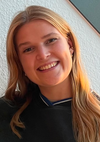
Luca Marie Reinema
https://uol.de/hals-nasen-ohren-heilkunde
PI: Radeloff, Herrmann
Education:
(01/2025 - 06/2025) MD Scholarship by the RTG Neuromodulation
(2019 - current) studies of Medical Sciences, University of Oldenburg
Current Project: Improvement of the side effect profile of alternating current (AC) stimulation of the ear by appropriate placement of the return electrode

Dr. med. Johannes Stalter
https://uol.de/neurologie/johannes-stalter
PI: Witt
Research Background:
Transcranial temporal interference stimulation (tTIS) is a new method to non-invasively stimulate
regions in the depth of the brain. The idea behind this is to send out two very-high frequencies that do not interfere with brain activity, which are slightly different (e.g. 2 kHz and 2,1 kHz) and are overlapping in the region of interest (ROI) in deep brain regions such as the basal ganglia. In this way, the frequencies extinct each other with only the delta of both frequencies (in this example 0,1 kHz) targeting in the ROI. This frequency then stimulates the deep laying regions. Overlying cortical layers are not affected by this technique. The current is applied by electrodes which are placed on the scalp of the participants. Previous studies demonstrated the efficiency of tTIS in an animal model and the safety of tTIS in humans. The studies of this application extent the research question to a proof of principle of tTIS in a disease model namely Parkinson’s disease (PD).
Current Project: In this project, tTIS will be applied for the first time in PD patients. One major symptom complex are the motor symptoms, which are caused by neuronal oscillation changes in the basal ganglia, namely the putamen. Another aspect of this disease are non-motor symptoms like apathy, which is defined by a lack of motivation. This is thought to be caused by changed oscillations in the region of the nucleus accumbens.
To provide an exact stimulation, we will simulate the stimulation on a single-subject level with individual MRI scans. In the second phase, the two different aspects of this disease are investigated. First, we stimulate the putamen of the participants. The change in motor performance will be measured with a finger tapping task, which is analyzed by a 3D video camera system. Another sequential finger tapping task is performed to measure motor learning. Second, the nucleus accumbens will be stimulated with a gamma frequency to enhance effortreward behavior and therefore modulate the motivation. This is tested with a well-established motivation task, in which the participants have to squeeze a hand grip to gain rewards. The studies will be accompanied by a standardized safety investigation. Using a cross-over real or sham design, the impact of tTIS on motor and non-motor symptoms will be investigated in order to perform feasibility, safety and a first prove of concept of tTIS to treat motor and non-motor aspects of a neurodegenerative disease.
Administration

Richelle Durano
GRK Büro
Finanzen und Verwaltung

Dr. Sandra Tolnai
GRK Büro
Wissenschaftliche Koordination
Ehemalige
Till Bömmer (assoziierter Doktorand)
Paria Jahansa (assoziierte Doktorandin)
Theresa Johannßen (Doktorandin)
Anna Röschel (Doktorandin)
Ina Wargers (Doktorandin)