PICTURES & BUILDINGS (2018/2019)
PICTURES & BUILDINGS (2018/2019)
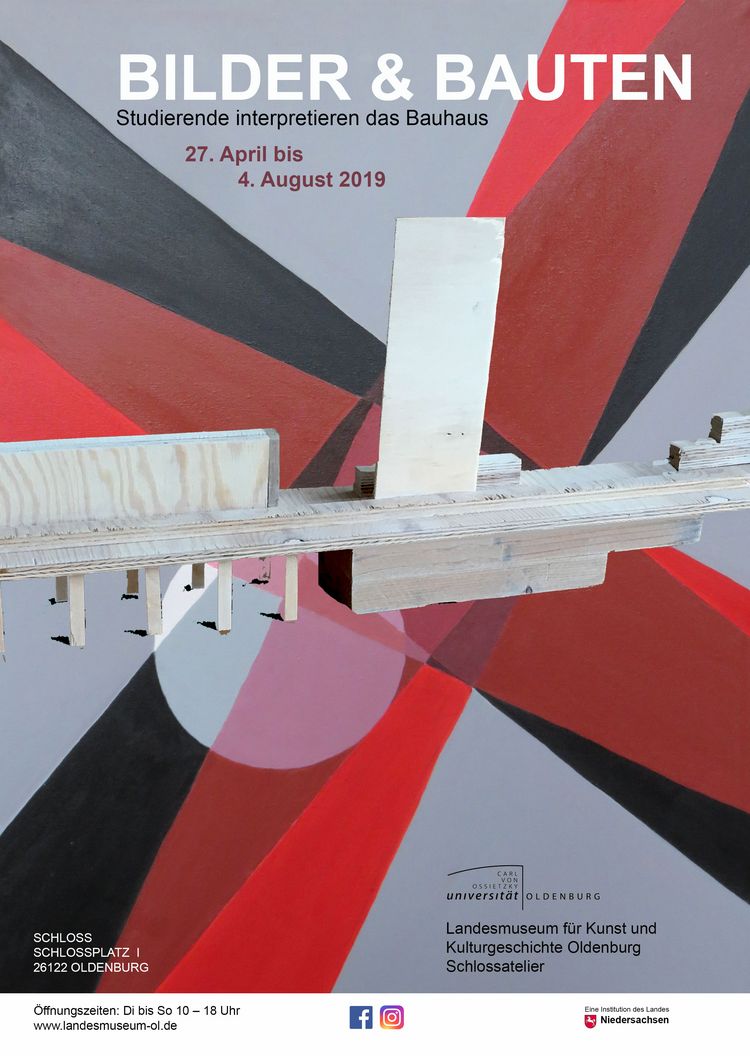
Students interpret the Bauhaus
Exhibition in the Schlossatelier of the State Museum of Art and Cultural History,
Oldenburg, Schlossplatz 1, 26122 Oldenburg
From 27 April to 4 August 2019
Tue to Sun 10 am - 6 pm
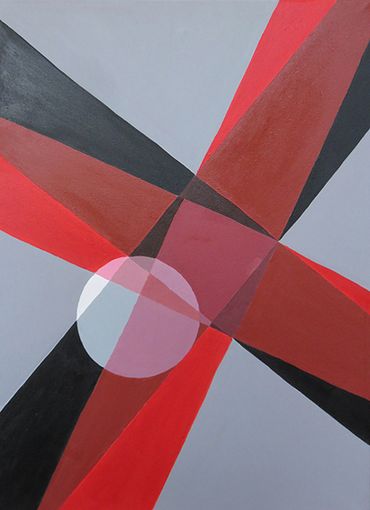
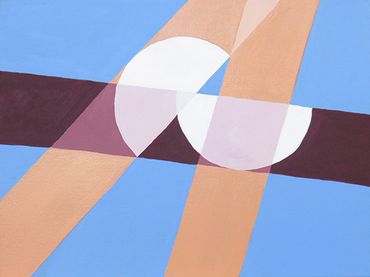
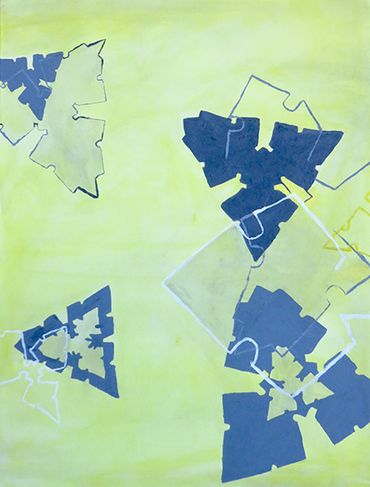
Students of the Institute of Art and Visual Culture at the University of Oldenburg are showing their artistic works that were created in response to the Bauhaus. The course was led by lecturer Natascha Kaßner. The participants were particularly inspired by works presented by the State Museum in the run-up to the exhibition "Between Utopias and Adaptation - The Bauhaus in Oldenburg". The students developed free works, whereby the choice of media, whether drawing, painting, object or photography, was left up to them.
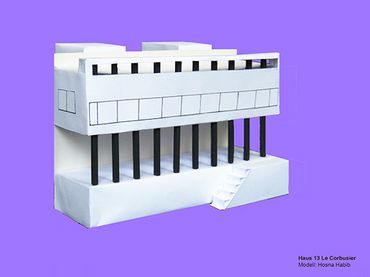
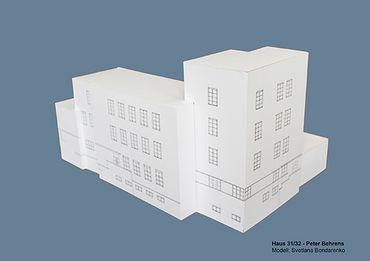
Introductory tasks presented the formal language of the Bauhaus and various possibilities for artistic work. For example, the houses of the Stuttgart Weissenhof Estate of 1927, which introduced the 'New Building' under the direction of Mies van der Rohe, were recreated from paper on a reduced scale.
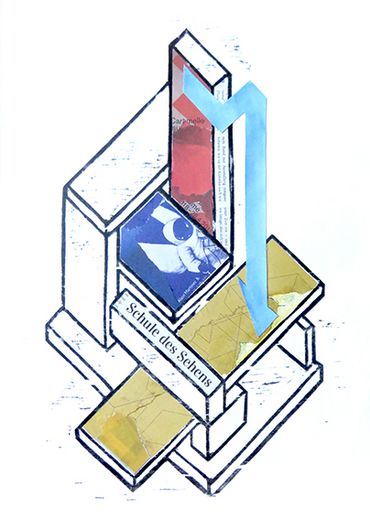
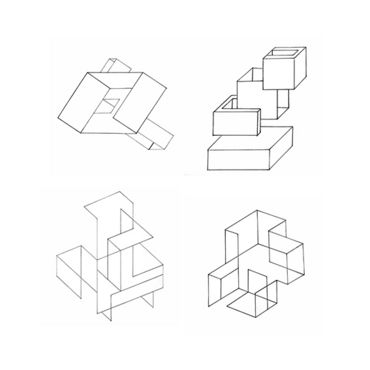
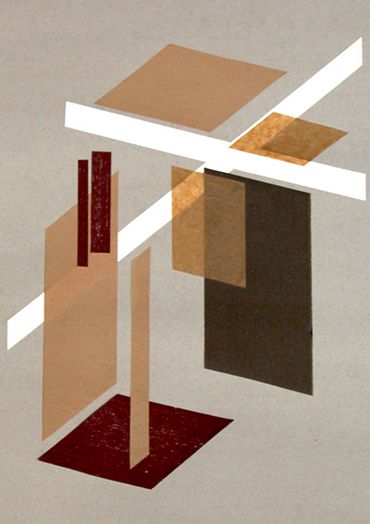
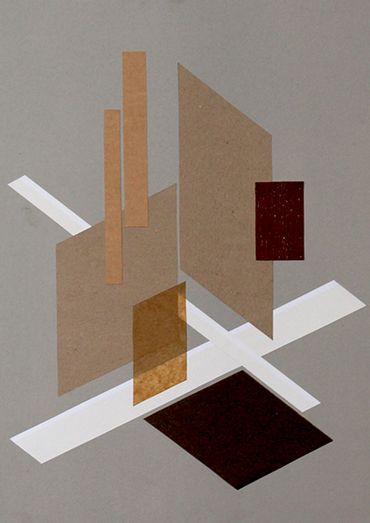
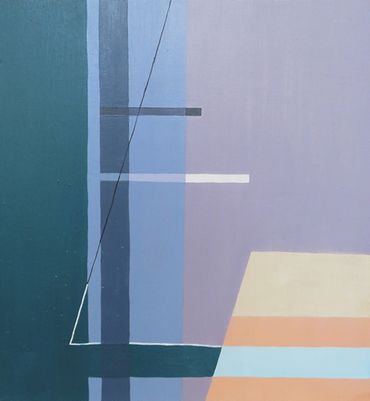
Own versions of Josef Albers' drawings of parallel-perspective abstract structures were developed. Pictures with abstract geometric surfaces by Bauhaus master Moholy-Nagy, on the other hand, were interpreted in a painterly manner before the students ventured into their own projects.
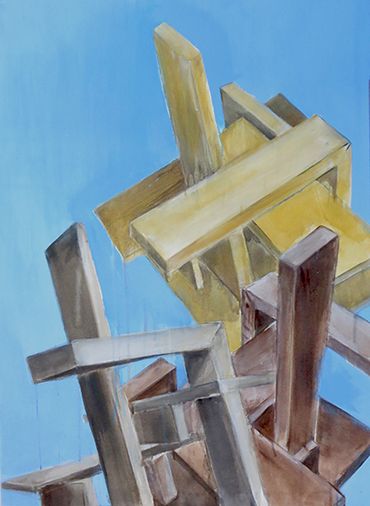
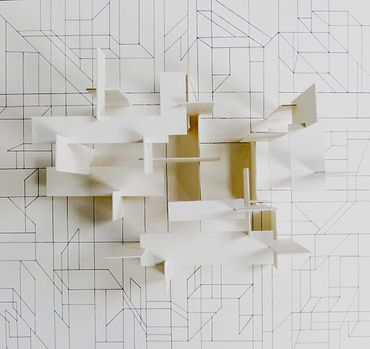
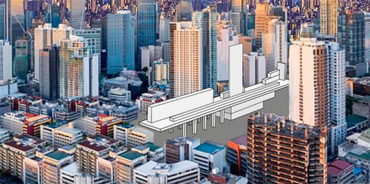
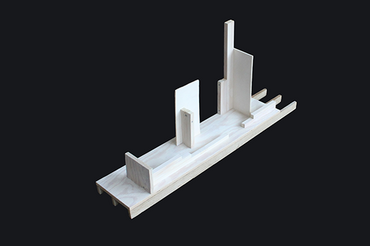
While Christina Kirchner and Tim Körner spontaneously assembled abstract architectural structures from wood scraps, Lea Pauls planned her model on the computer before realising it in sculpture. The models are the starting point for further works. Tim Körner's dynamic buildings, reminiscent of ships, and Lea Pauls' two-part composition were assembled into landscapes in the image processing programme, where they appear like real architectural models. In Katharina Kirchner's work, on the other hand, the object became a model for painting. She superimposed different views of her object in large-format paintings.
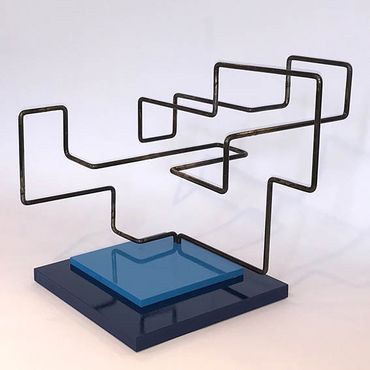
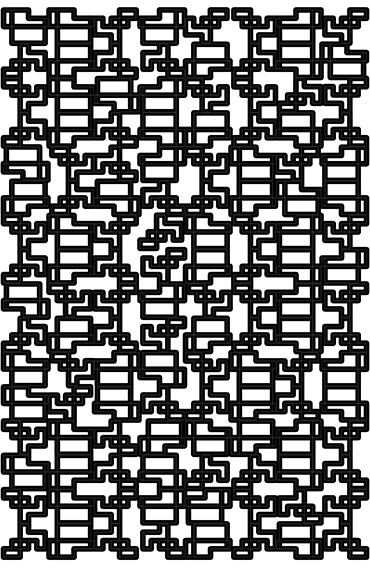
Hosna Habib's material was not wood but cardboard. She built an open architectural structure from cardboard surfaces, on the base of which she continued the system in two dimensions with lines. Lines were also a design element in Svetlana Bondarenko's work. She welded metal rods together to form an open structure that ultimately consists of a continuous, winding line. This sculpture in turn was the starting point for conceptual drawings.
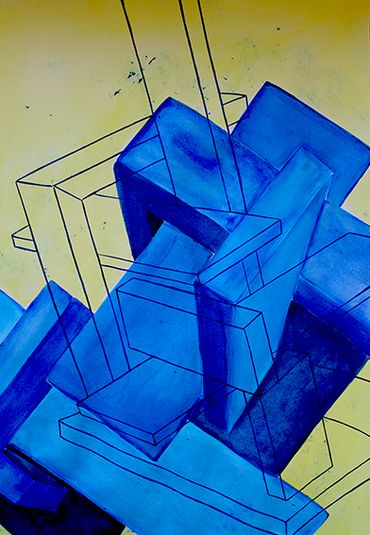
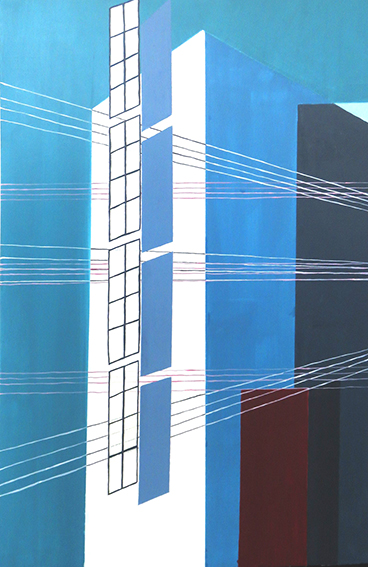
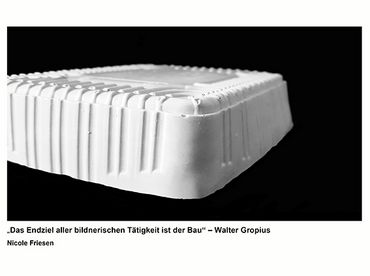
Lilli Bruns' painterly model is not a sculpture of her own, but Walter Gropius' consumer building. Nina Klee and Nina Moß, on the other hand, were inspired by Mies van der Rohe's architecture, whereby Nina Klee had his Barcelona Pavilion at the 1929 World Exhibition in mind when she developed her seemingly real architectural models. Nina Moß, on the other hand, painted a pair of pictures of van der Rohe's never realised architectural design 'Hochhaus an der Friedrichstraße' from 1927 by playing with its view and differently scaled and rotated building floor plans.
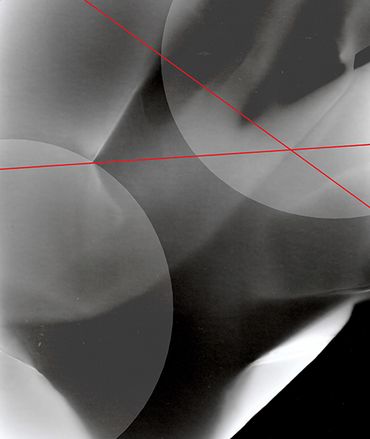
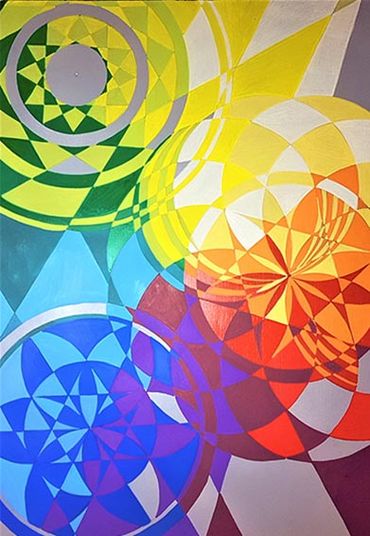
Inspired by Moholy-Nagy, Celine Haferkamp developed her own painterly variations and photograms. Malina Johannes' collages were also abstract compositions of trapezoidal surfaces, which she developed from papers of different colours and surfaces. In contrast, Nicole Friesen's flower-like circular shapes constructed with a compass float above the pictures.
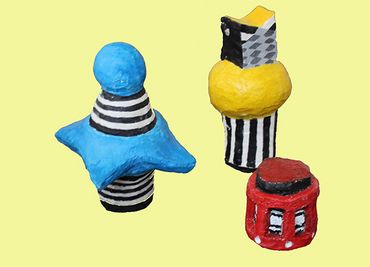
Talea Geisthart departed from representationalism by abstracting the sea, ship and waves into a painting of geometric shapes on the computer. Much less abstract than the works just described are Lea May's three chess pieces, King, Queen and a Pawn, which were created using the plaster casting technique. On the one hand, the chess set developed by Josef Hartwig in 1924 provided the inspiration, and on the other, the figures from Oskar Schlemmer's Triadic Ballet.
Participants:
Lilli Bruns, Talea Geisthardt, Celine Haferkamp, Katharina Kirchner, Nina Klee, Lea May, Sophie Meyer, Lea Sophie Pauls, Svetlana Bondarenko, Nicole Friesen, Hosna Habib, Kathrin Hatting, Malina Johannes, Tim Körner, Nina Moß
Lecturer: Natascha Kaßner